Drawing Primarily: Creighton Michael
a brief and annotated history of my relationship with drawing
Part One
from painting to sculpture by way of drawing
“Drawing is primary, not preliminary.”
“For over two decades Creighton Michael has challenged conventional definitions of the basic categories of art: painting, sculpture and drawing. Through a process-driven approach built around the activity of mark making, Michael has sought to expand the possibilities of drawing while exploring its relationship to other forms of representation.”
Max Weintraub, President & CEO. Allentown Art Museum.
Early influences and Interests
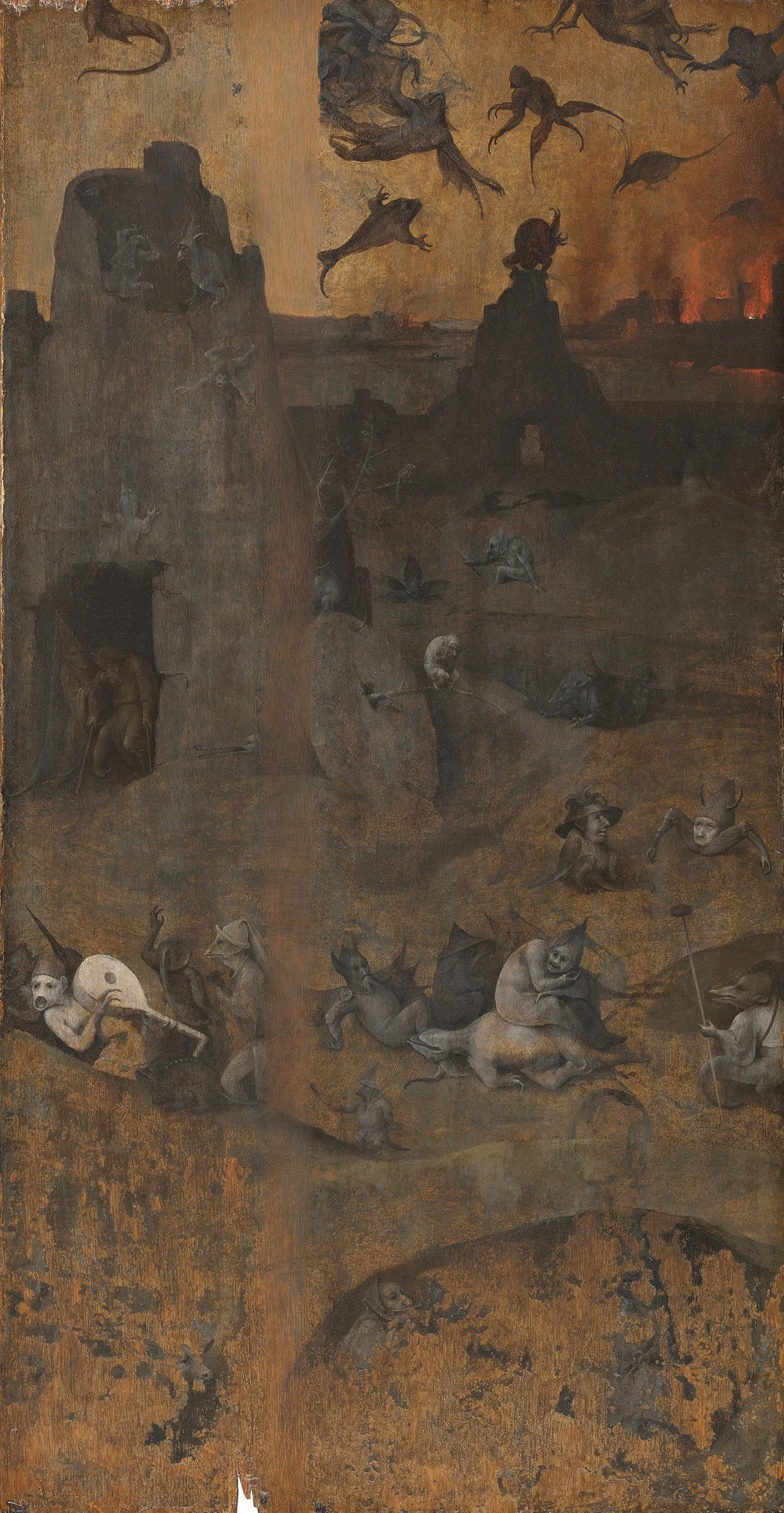
Hieronymus Bosch and studio, Hell. Oil on panel 27.2 x 13.8” circa 1515. Museum Boijmans van Beuningen, Rotterdam, Netherlands.
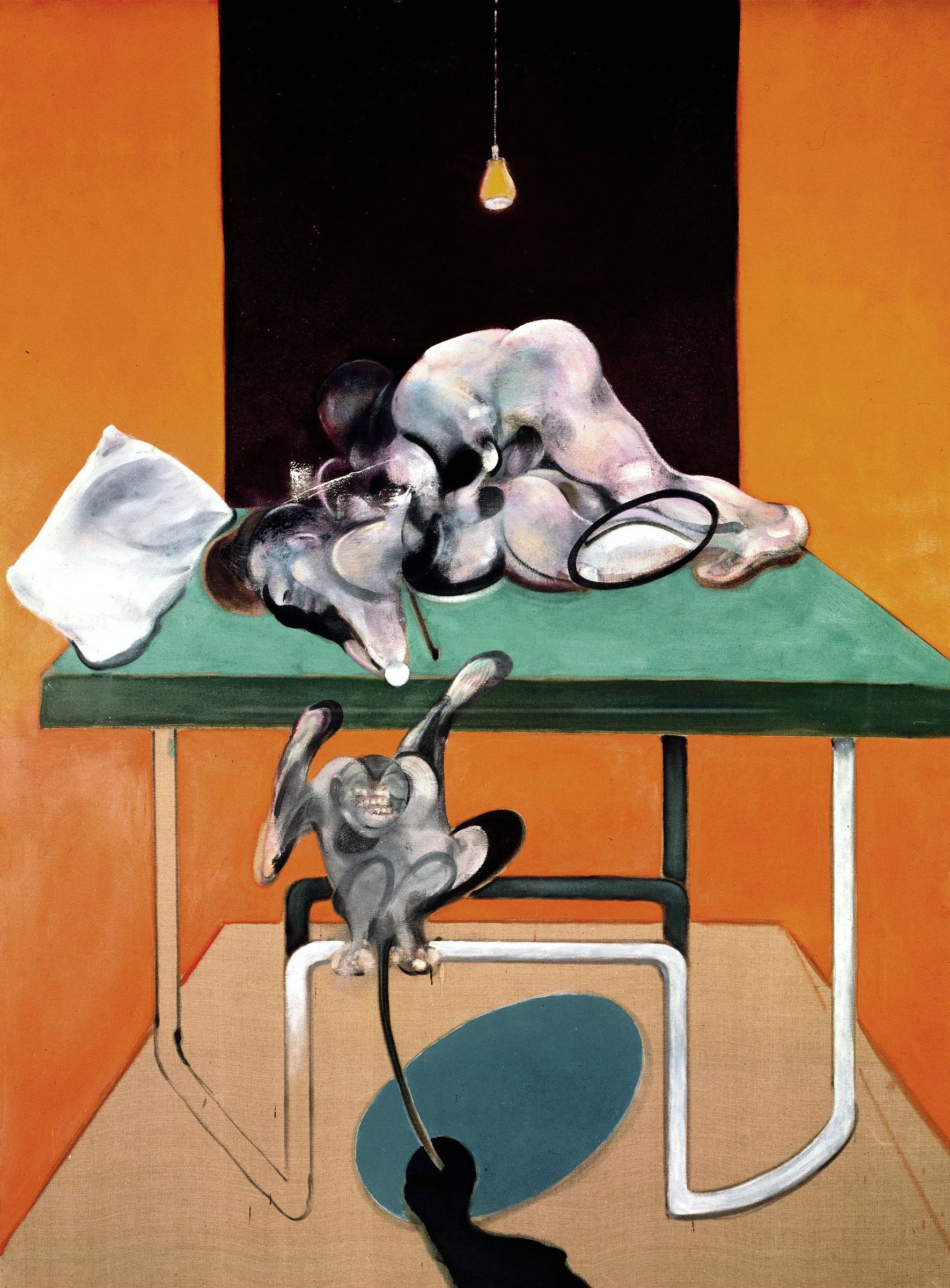
Francis Bacon, Two Figures with a Monkey. Oil on canvas, 78 x 581/8”, 1973. The Estate of Francis Bacon.
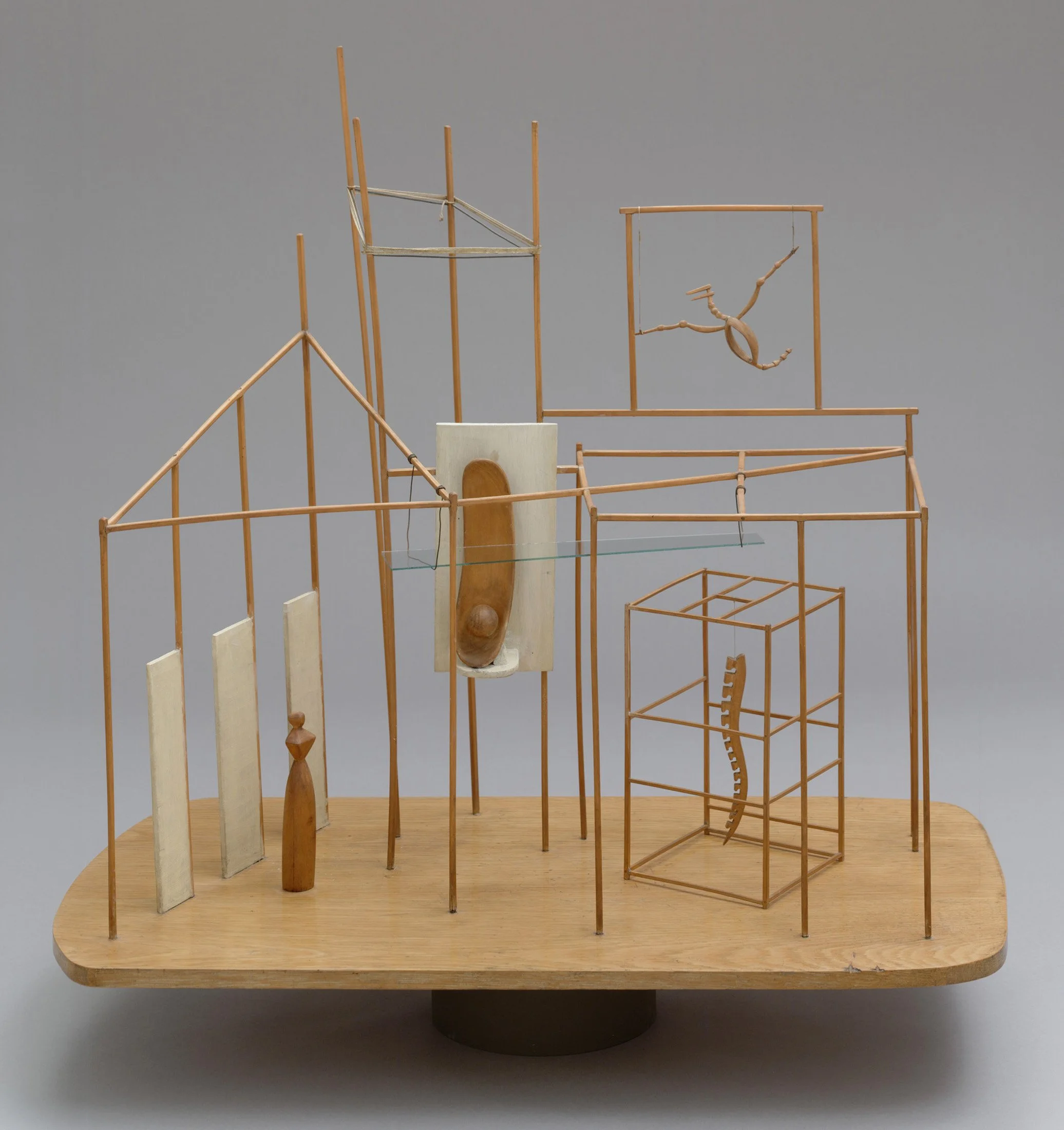
Alberto_Giacometti, The_Palace at 4aM. wood, glass, wire and string. 25x28.25x15’’.

Max Ernst, L’oeil du silence. Oil on canvas 43.25 x 56.25" 1943–44. Collection: Mildred Lane Kemper Art Museum Washington University in St. Louis, Missouri.
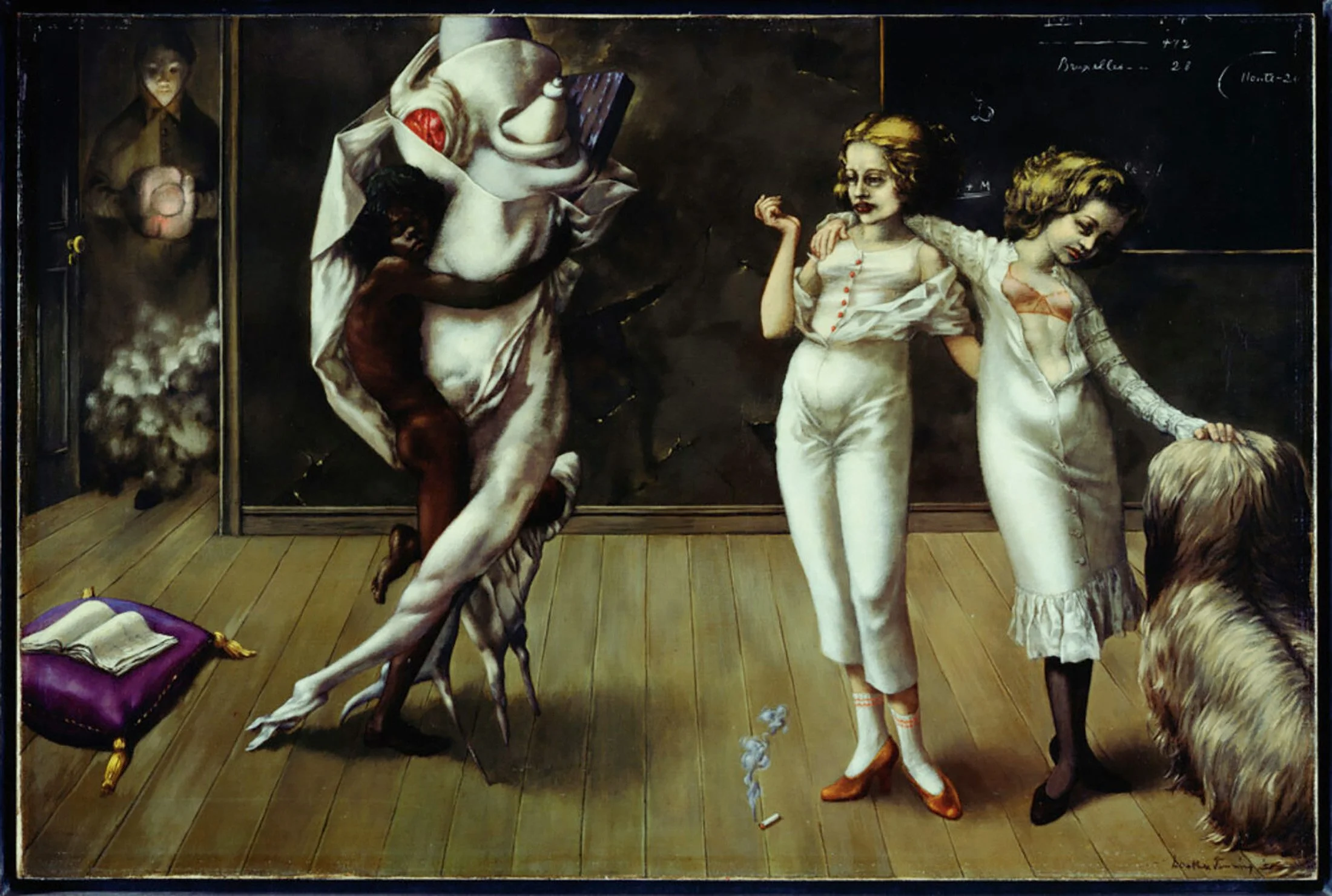
Dorothea Tanning, Palaestra. Oil on canvas, 24.5 x 17.5” 1949. Collection: The Dorothea Tanning Foundation.
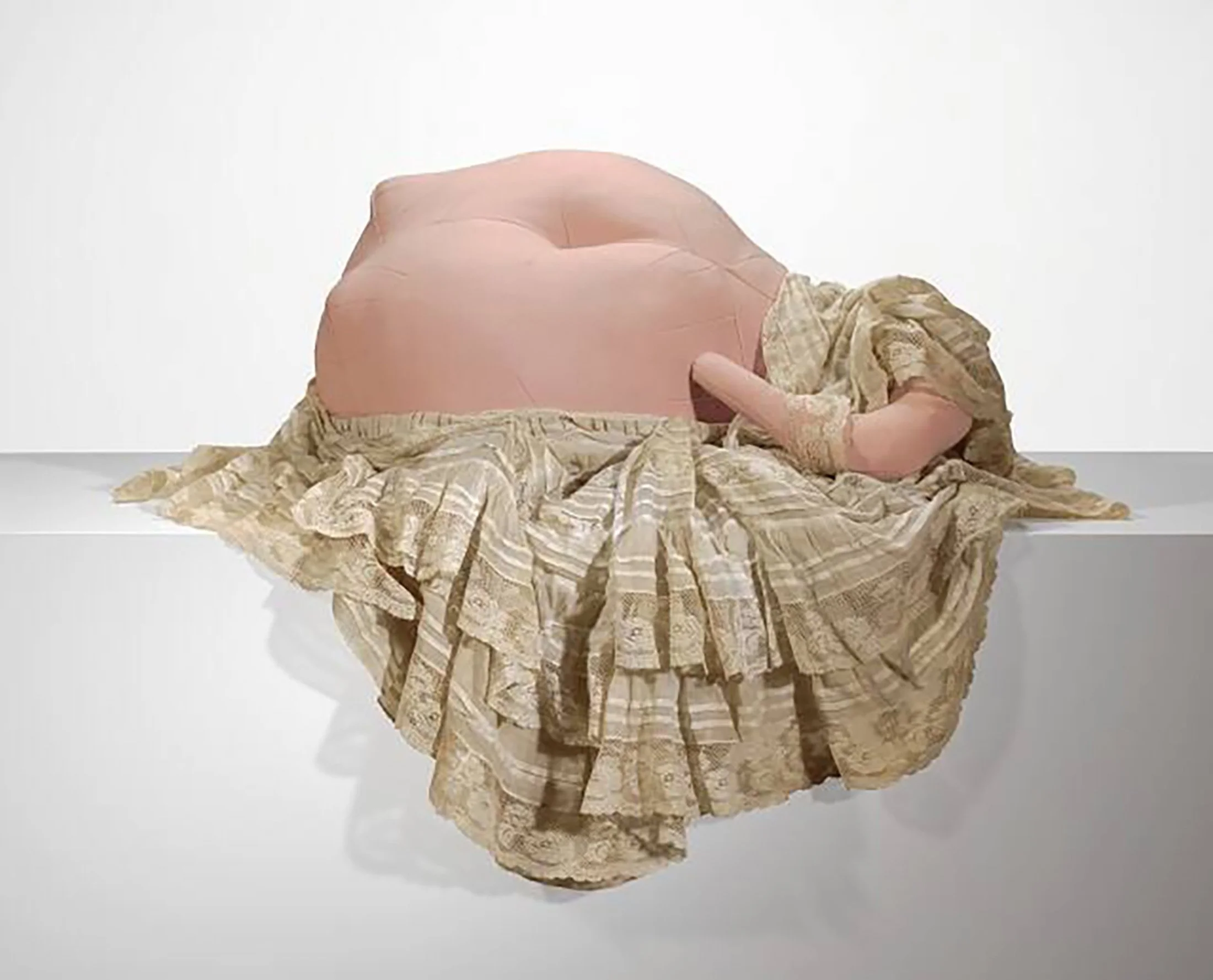
Dorothea Tanning, Emma 1970. Fabric, wool, lace. 11 11/16 x 25 3/8 x 21 5/8”, 1970. Collection: The Nelson-Atkins Museum of Art, Kansas City, Missouri.
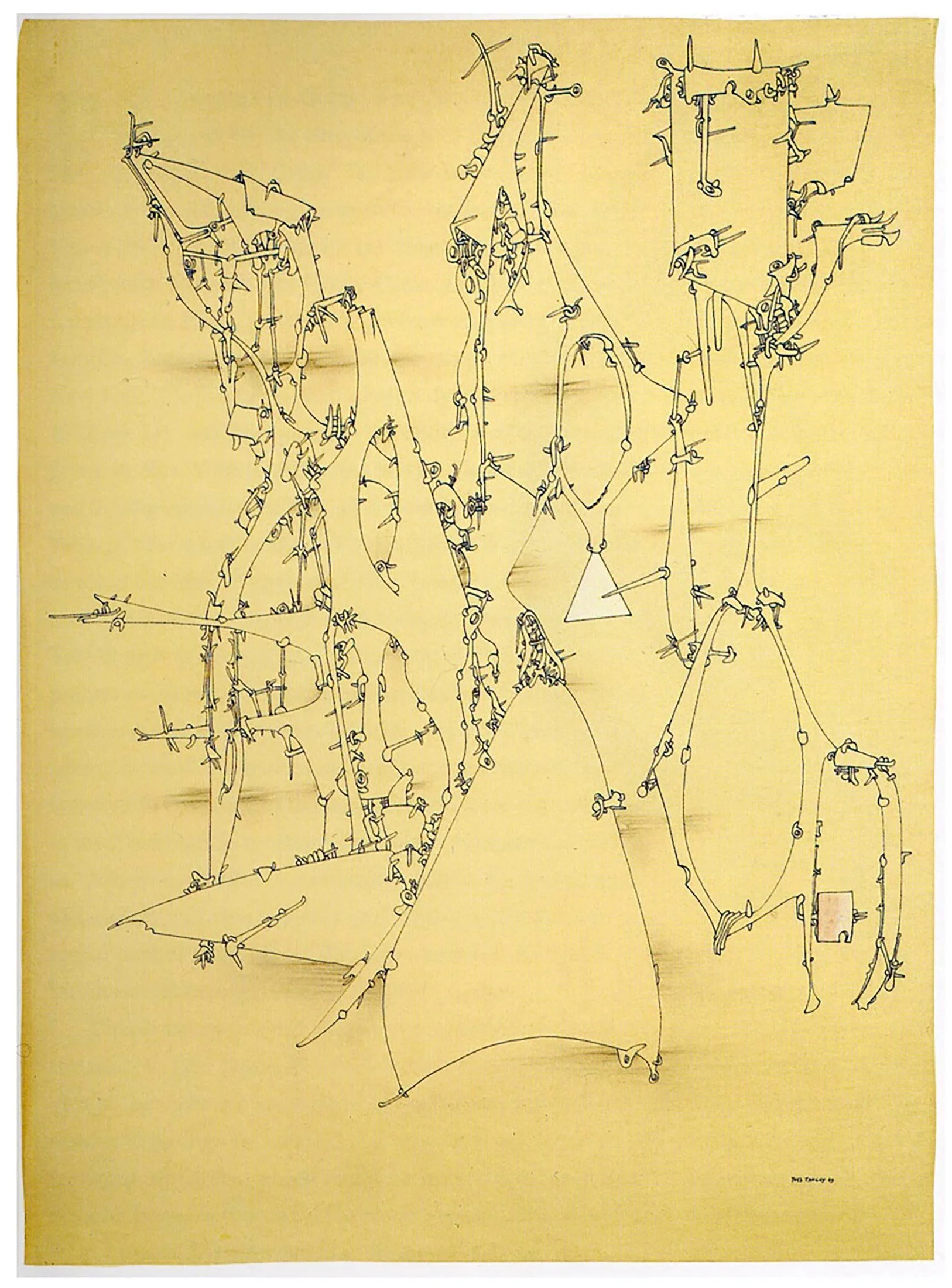
Yves Tanguy, Je vous attends (I Await You). Oil on canvas, 28.5 x 45”, 1934. Collection: Los Angeles County Museum of Art.
The Clown, 1971. Charcoal and pastel on paper, 16 x 12”.
Daydream, 1975. Ink on embossed Bristol, 9 x 7”.
Caliban, 1971. Charcoal silverpoint on treated paper, 4 x 9”.
The Mobile Unit, 1972. ink on Bristol, 6 x 8”. Private collection: Memphis, Tennessee.
Coney Island, 1975. Pencil on paper, 18 x 24”.
Tower of Babel, 1972-74. Ink on stitched ironing board cover, 54 x 12”.
Tower of Babel
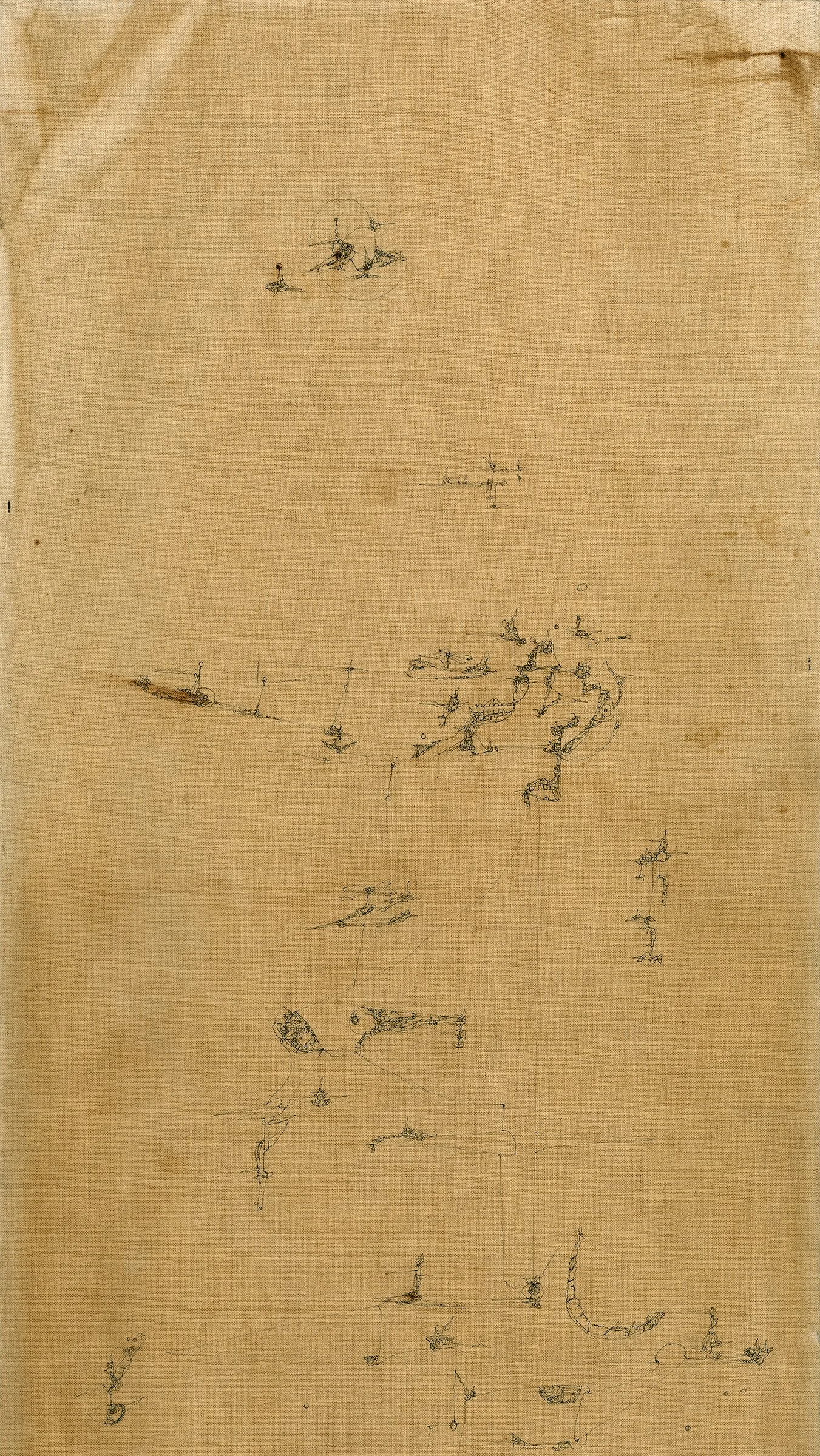
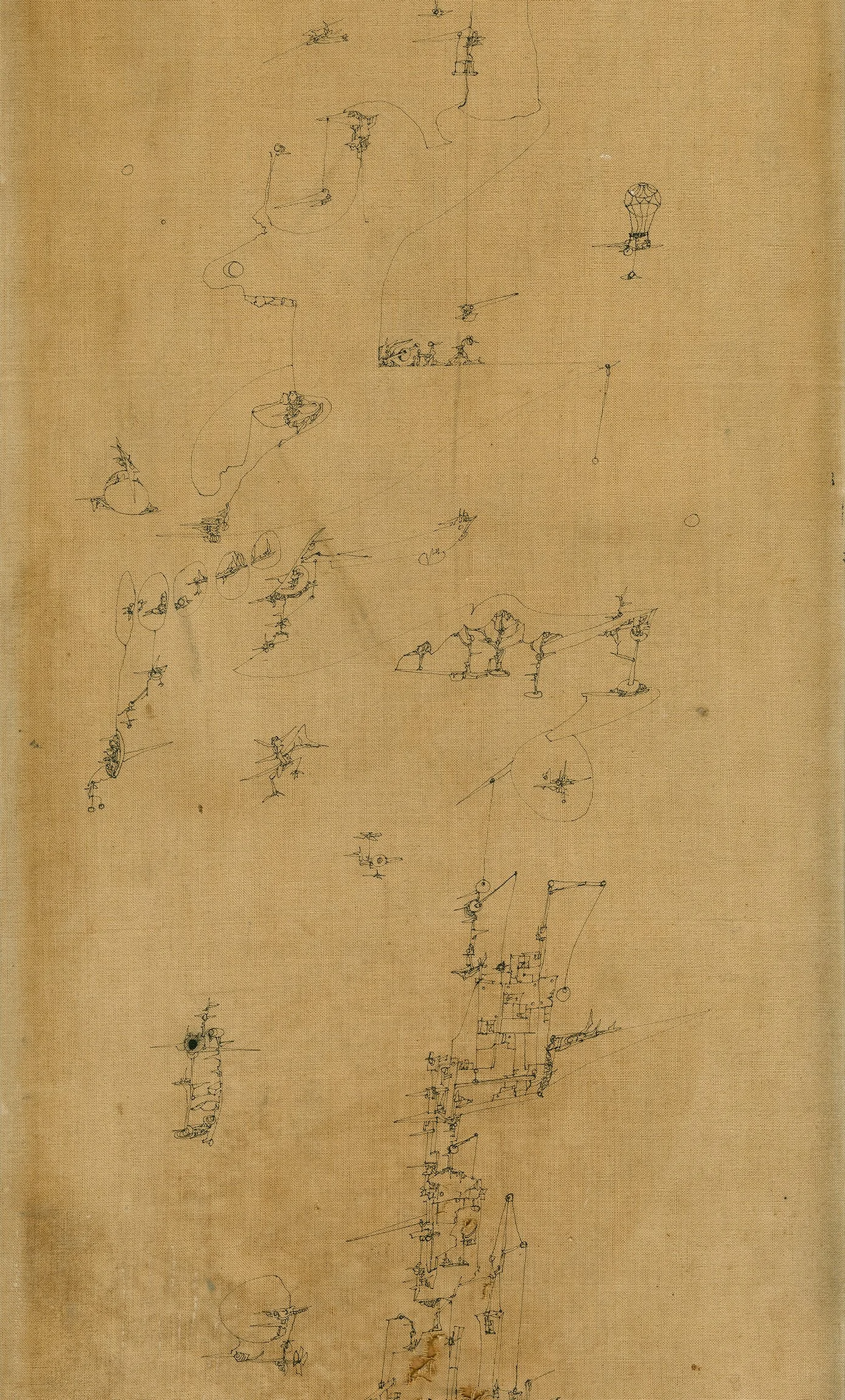
Middle detail
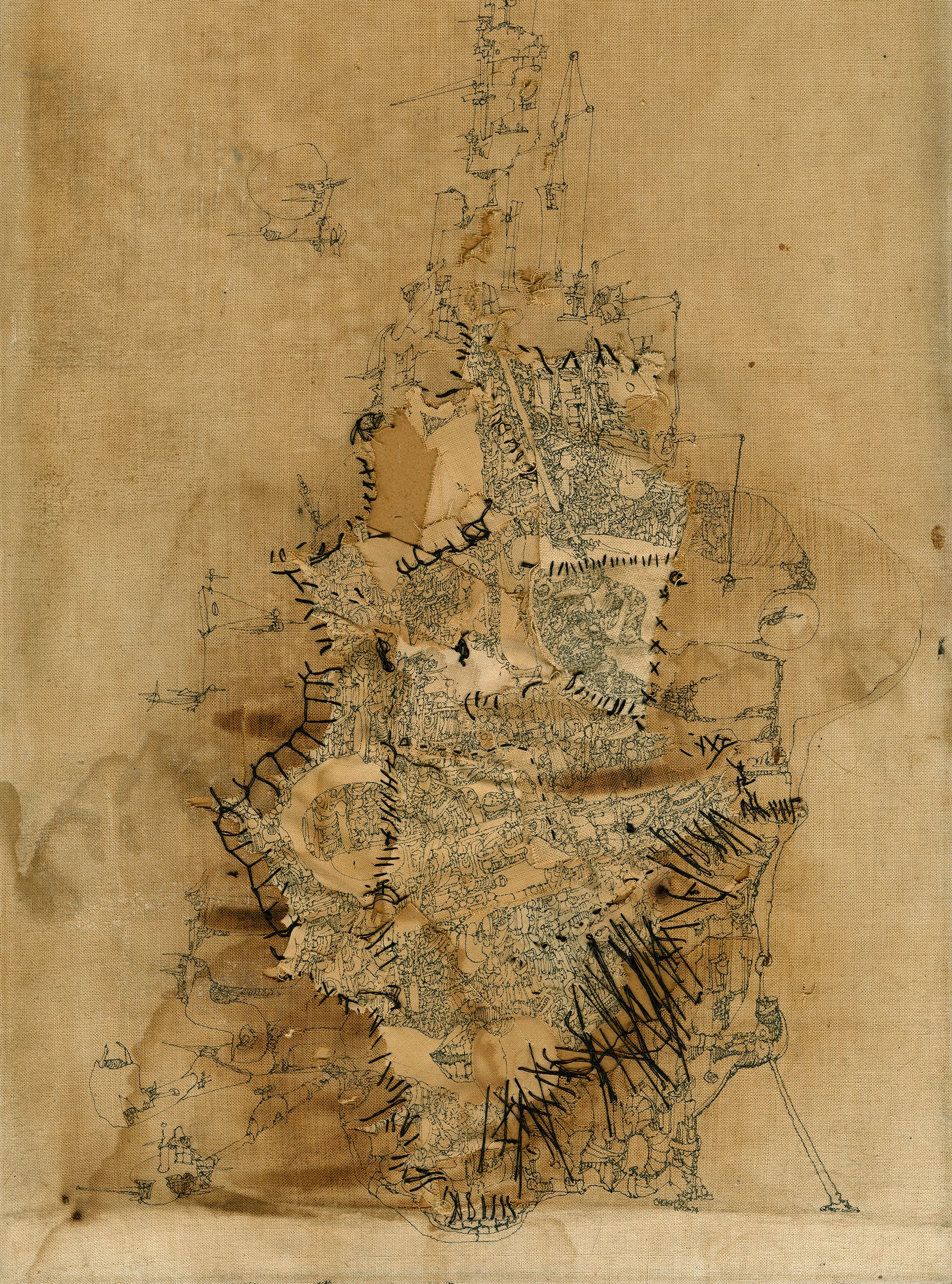
Lower detail
Entrance to the Emerald City, 1975. Acrylic on canvas, 24 x 26”.
The Necromancer, 1975. Oil on canvas, 40 x 30”.
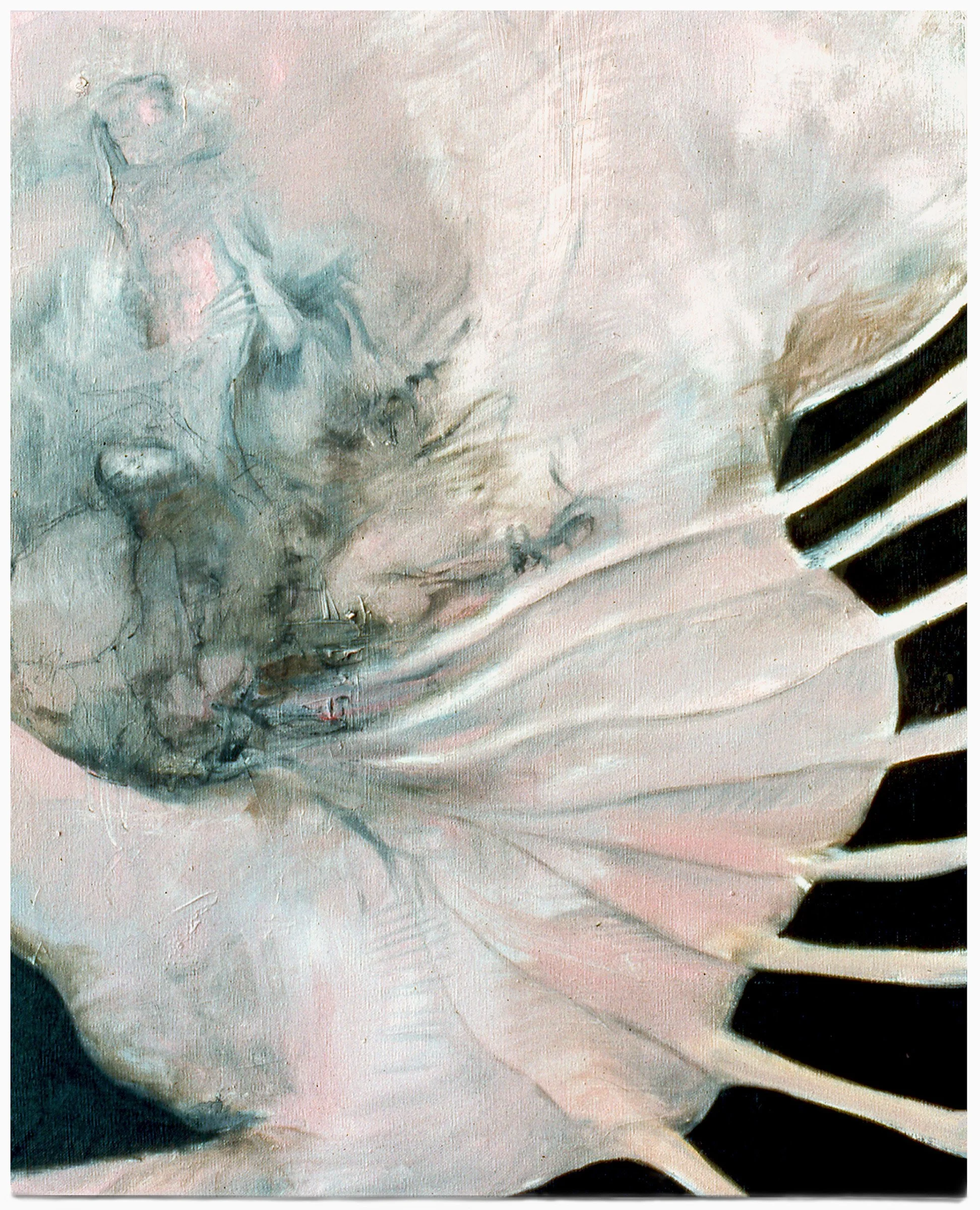
Untitled, 1976. Oil on canvas, 20 x 16”. (Lost.)
The idea that drawing could be three-dimensional came from viewing the work of Lee Bontecou, realizing a stitch is a three-dimensional mark. This insight would direct the course of my practice for the next few decades. Her constructions, hybrid sculpture fusing two- and three-dimensional elements, were equally inspiring and directional. I also admired her “soot” drawings, which suggested another relationship between sculpture and drawing. In this case, the material for her drawing was a byproduct of her welding process. The idea for my emery cloth process drawings probably came from this connection.
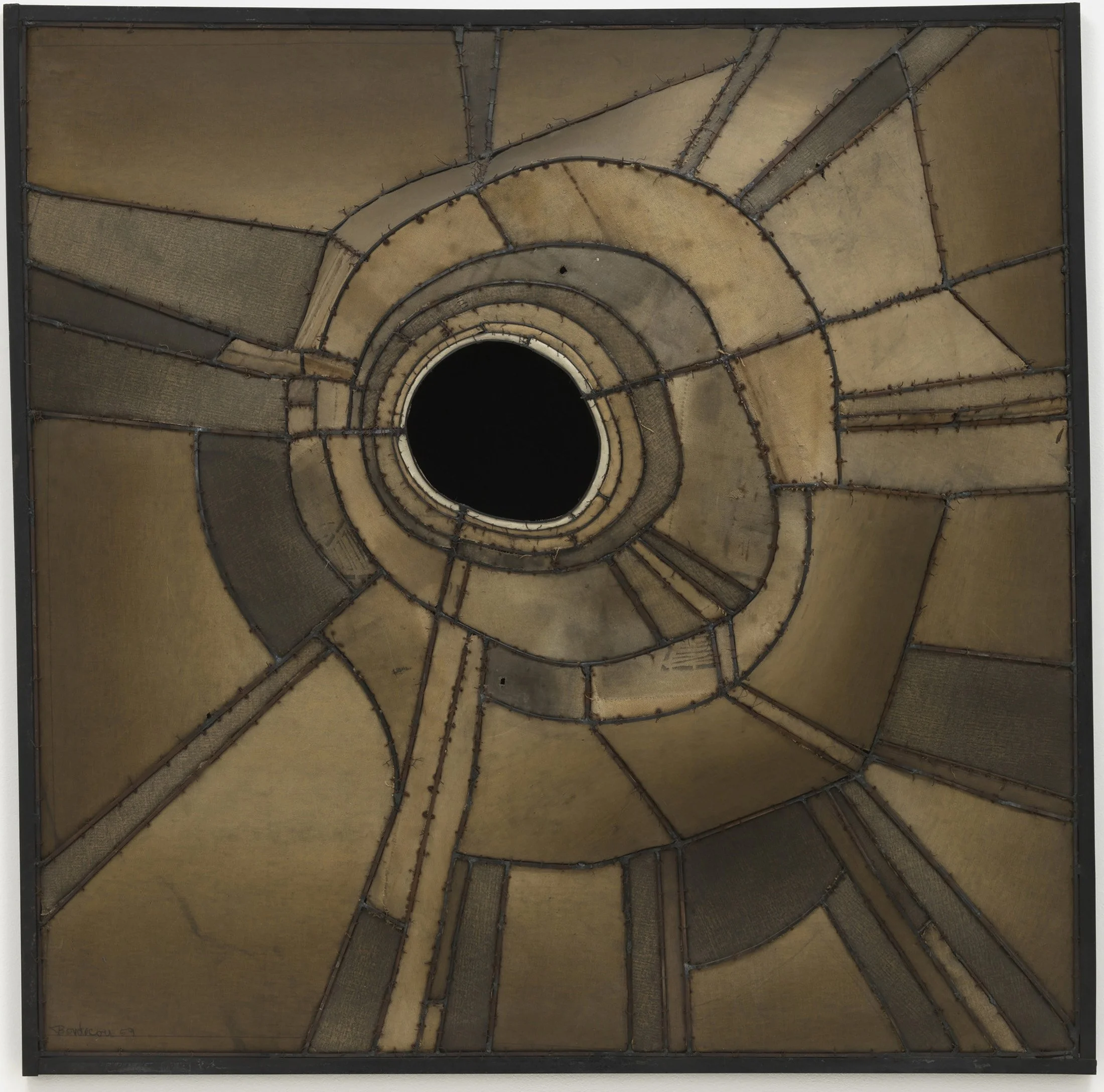
Lee Bontecou, Untitled, 1959. Welded steel, canvas, black fabric, soot and wire, 58 1/8 x 58 1/2x 17 3/8”. Collection: MoMA.
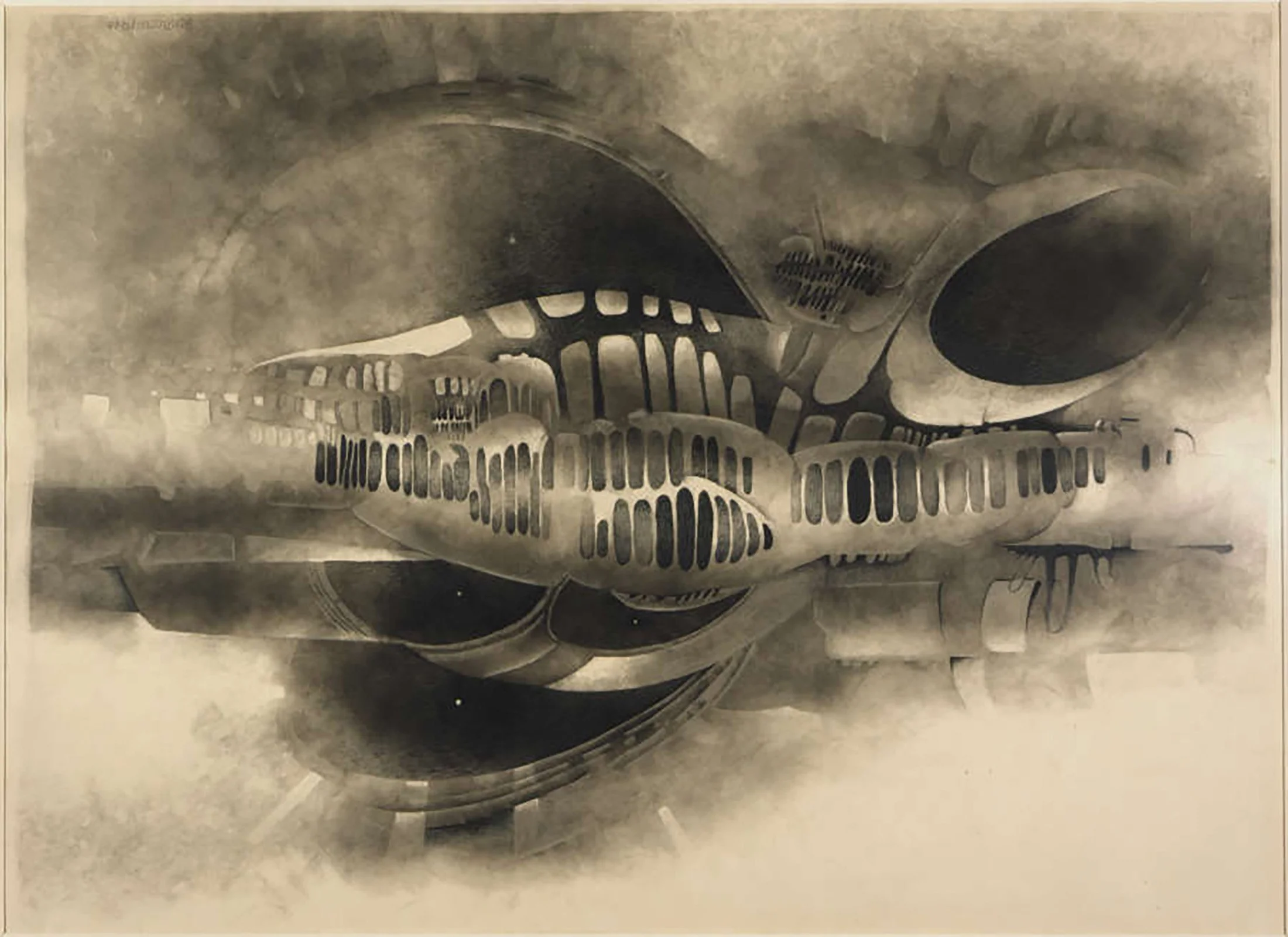
Lee Bontecou, Untitled, 1966. Graphite, soot and erasure on paper, 19.75 x 27 1/8”. Collection: RISD Museum of Art.
My transition from painting to sculpture by way of drawing begins in 1976 with Melmoth, a series of intuitively directed drawings (advanced doodles with a figurative reference). These drawings coupled with inspiration from Lee Bontecou’s stitched sculpture would ignite my interest in drawing dimensionally. Orgma is my first sculpture series to explore this new idea. At this point, I begin working serially, so that I can take an idea through time.
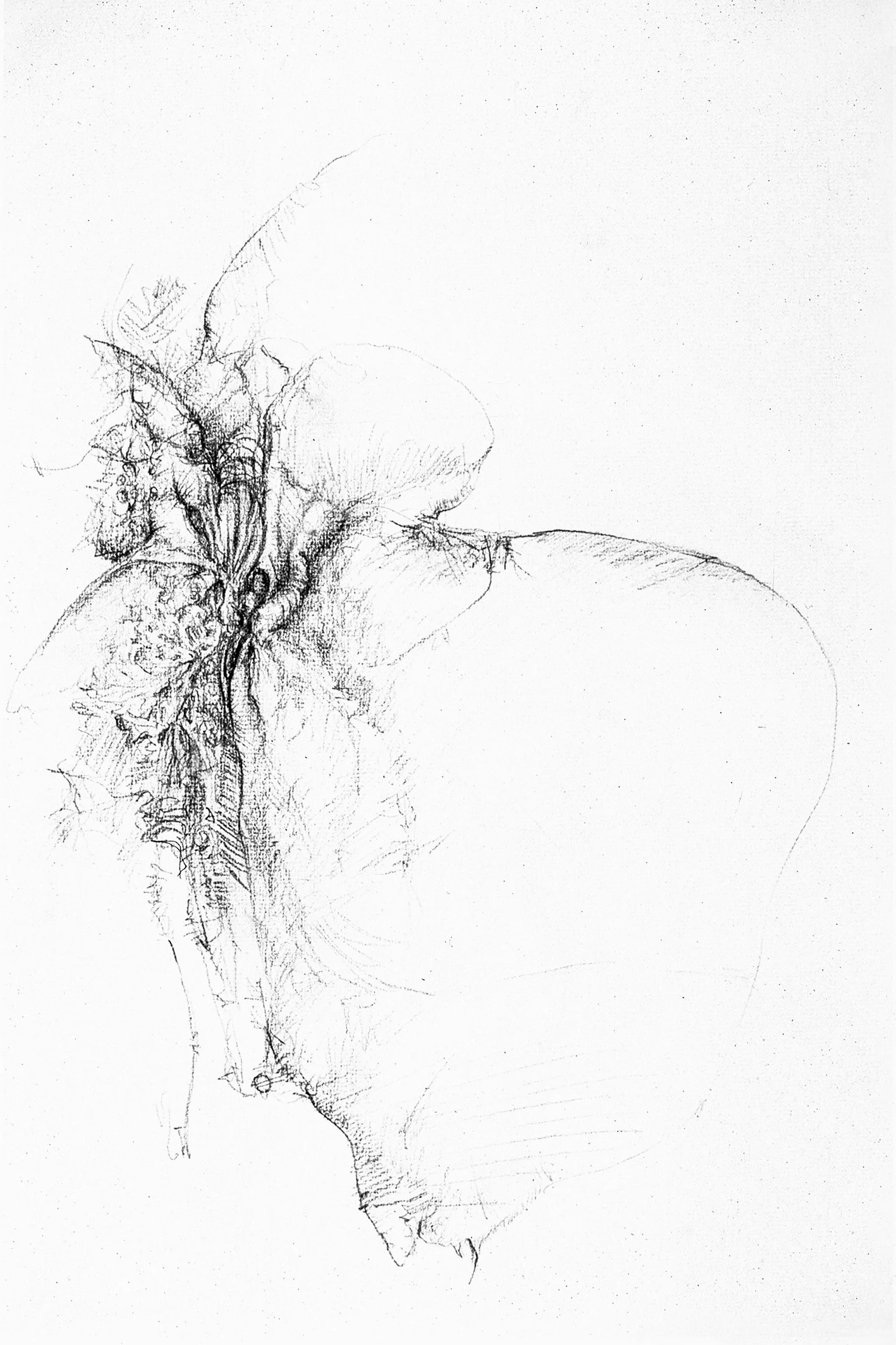
Melmoth 376, 1976. Charcoal on paper 18 x 12”.
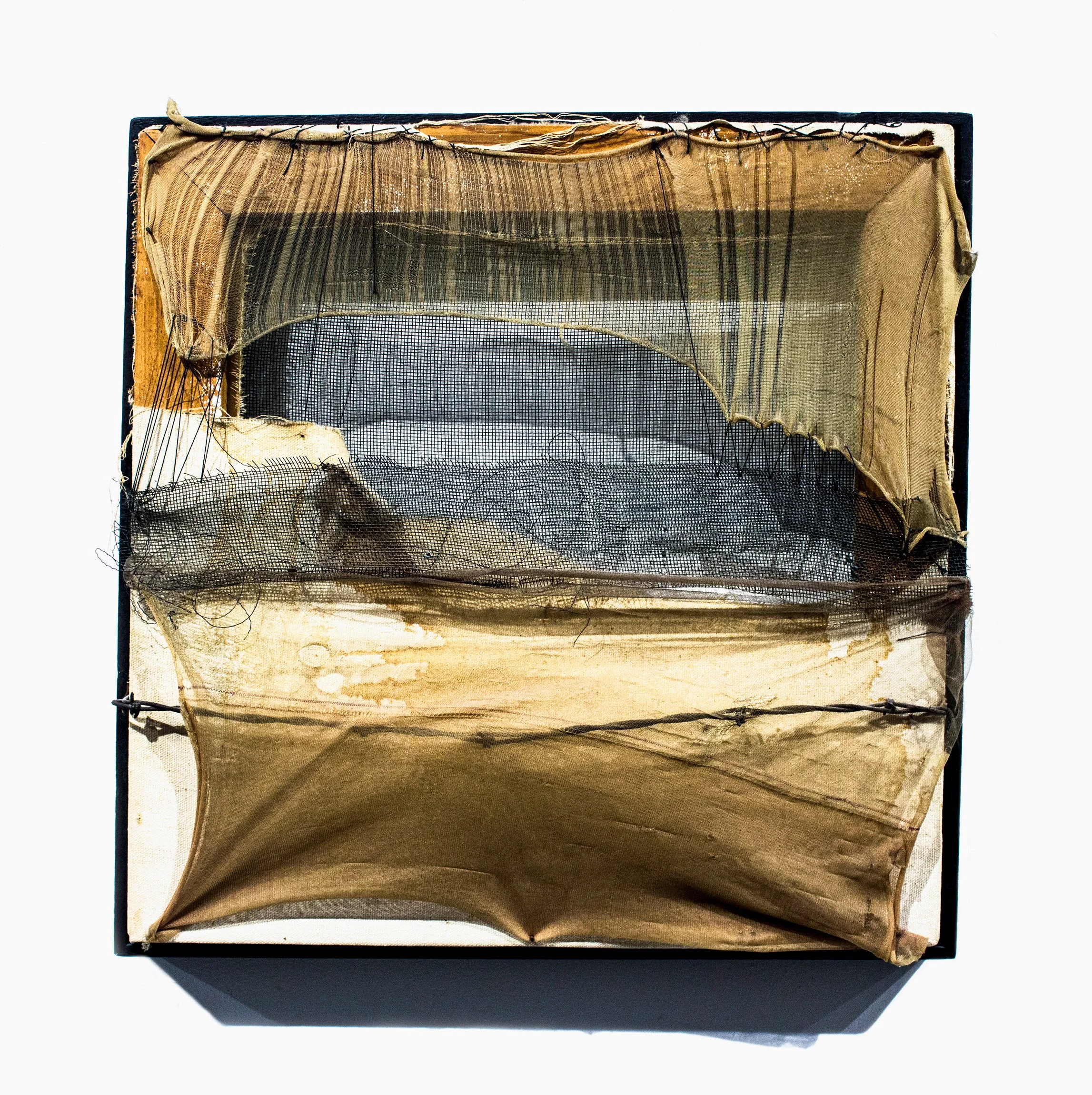
Orgmafem, 1976. Nylon hose, barbed wire, canvas and screen, 15.5 x 15.5”.
My transition to “drawing” three dimensionally started by reversing the canvases that had previously been paintings. It is also when I begin to explore stitching as an incremental marking activity.
Orgma 476, 1976. Canvas, gauze, thread, and acrylic, 24.25 x 15.25 x 1.5”. (Lost.)
Orgma 377, 1977. Screen, wire, barbed wire, hose, thread, and discarded stretcher, 24 x 20”. (Lost.)
Experimenting with surplus or discarded materials such as animal skins, inner tube rubber, windshield glass, and umbrella nylons, helped changed my perception about drawing and processes.
Pliver 277, 1977. Pliver skin, glass, hooks 40 x 25 x .75”. (Lost.)
Pliver 377, 1977. Pliver skin, glass, hooks 36 x 31 x .5”. (Lost.)
Treating the wall plane as a sheet of paper, I explored relationships between ephemeral forms and the act of drawing using suspension, tension, fragility and non-traditional material
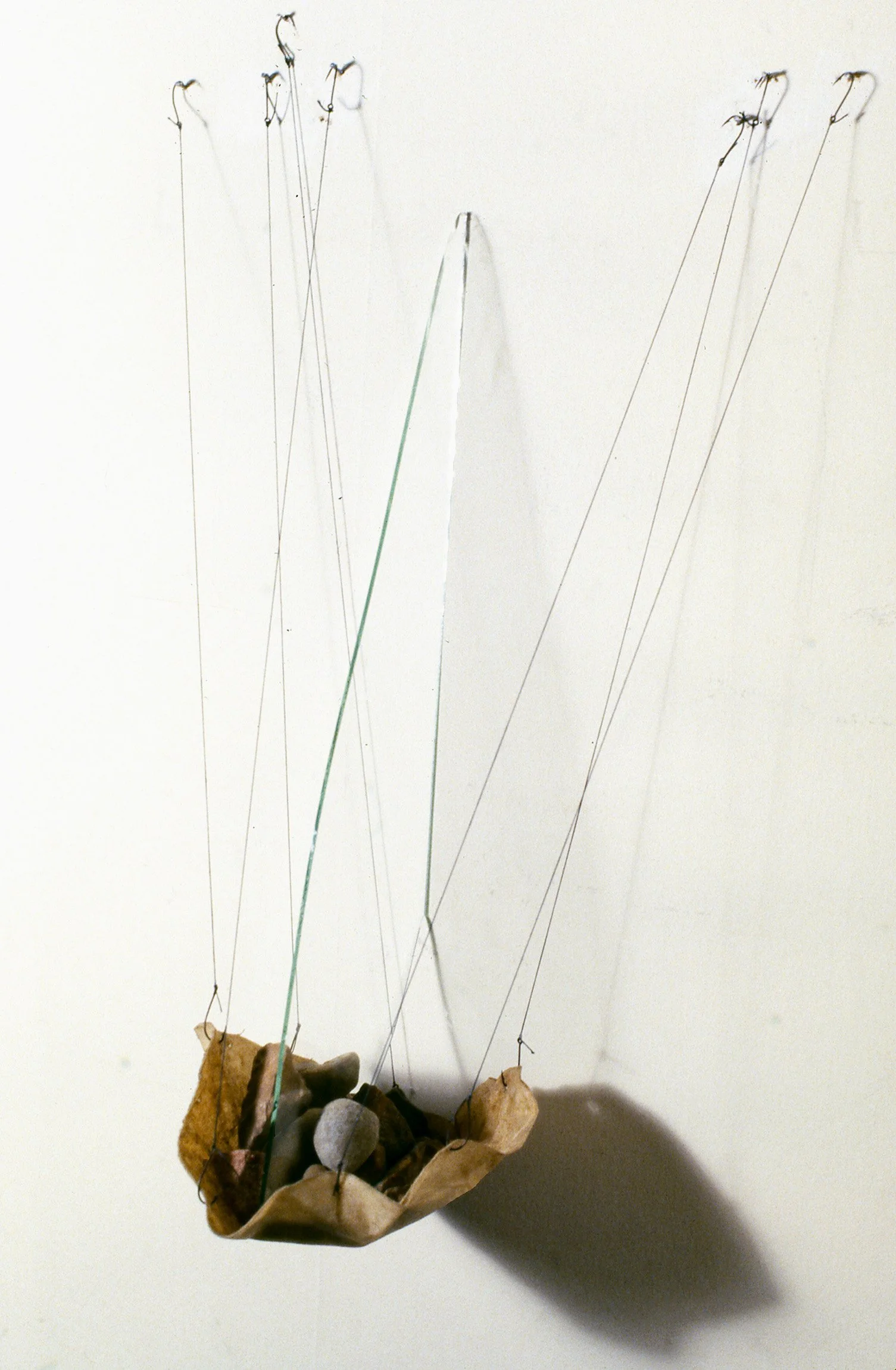
Skellig 477, 1977. Glass, rocks, rawhide, fishing hooks, and thread, 22 x 7 x 5”. (Lost.)
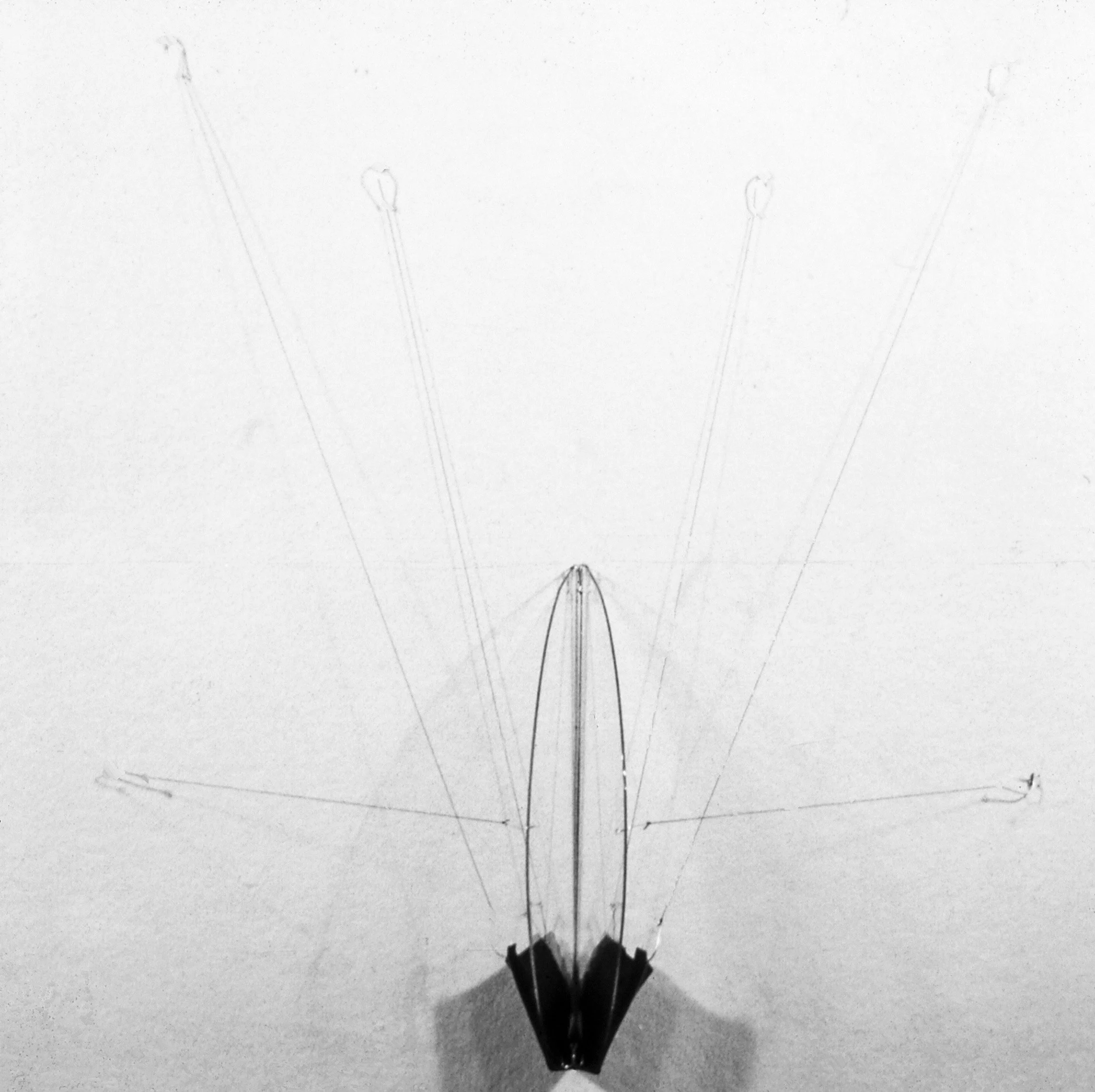
Masch 177 ,1977. Glass, fishing hooks with stitched rubber, 33 x 28 x 3.5”. (Lost.)
Intrigued by Joel Shapiro’s discovery in the early 1970’s of spatial engagement with objects of reduced scale, I created a series of small, intricately constructed sculptures that activated positions on the wall plane away from the reach and slightly out of the normal viewing range as a means of controlling a specific area.
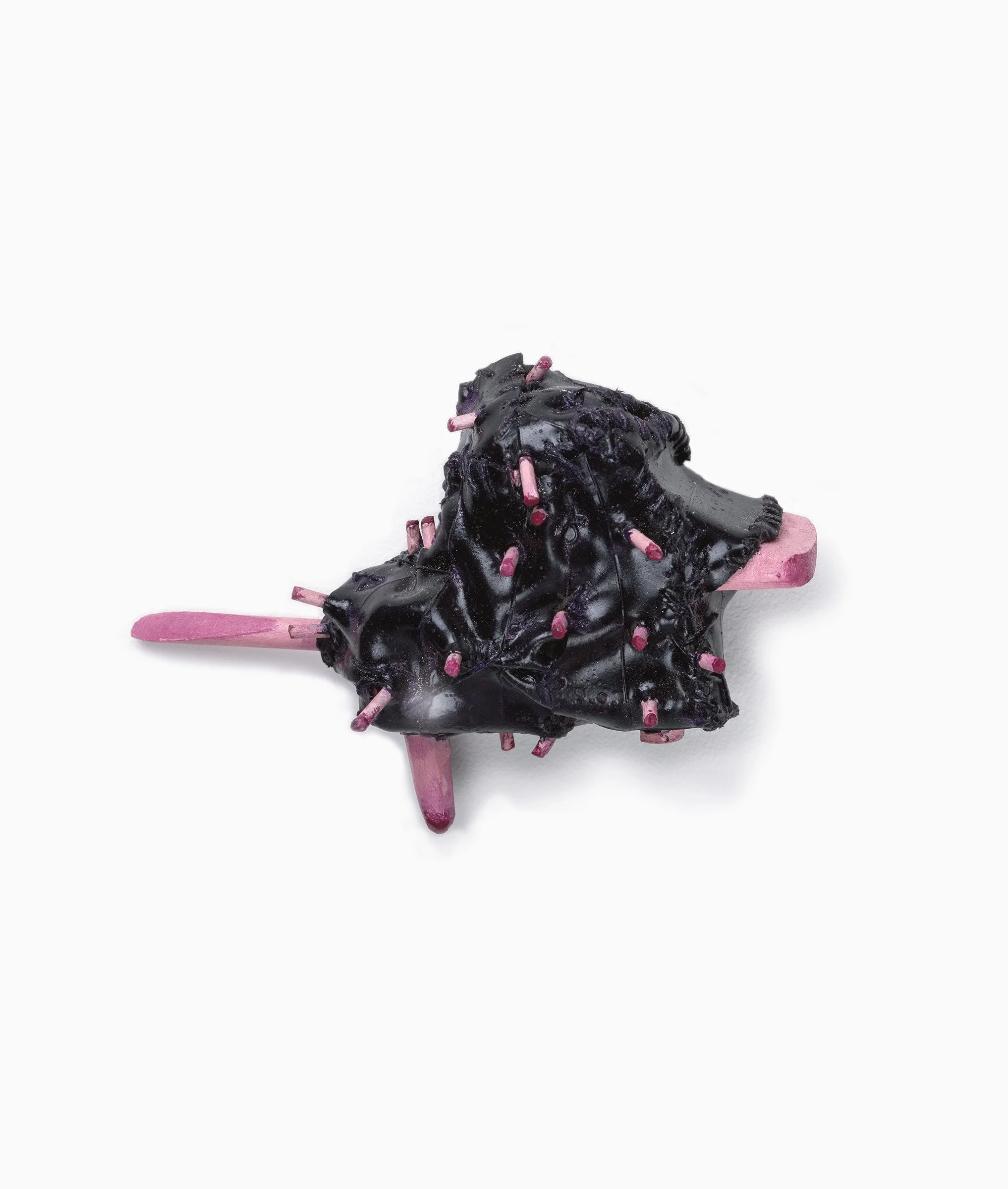
Tchotchke 180, 1980. Plywood covered with stitched bicycle inner-tube rubber and acrylic, 5 x 7 x 2.5”.
Tchotchke 380, 1980. Plywood covered with stitched bicycle inner-tube rubber and acrylic, 7 x 6 x 2”.
Tchotchke 481, 1981. Plywood covered with stitched bicycle inner-tube rubber and acrylic, 12 x 9 x 3”. Private collection, Chicago, Illinois.
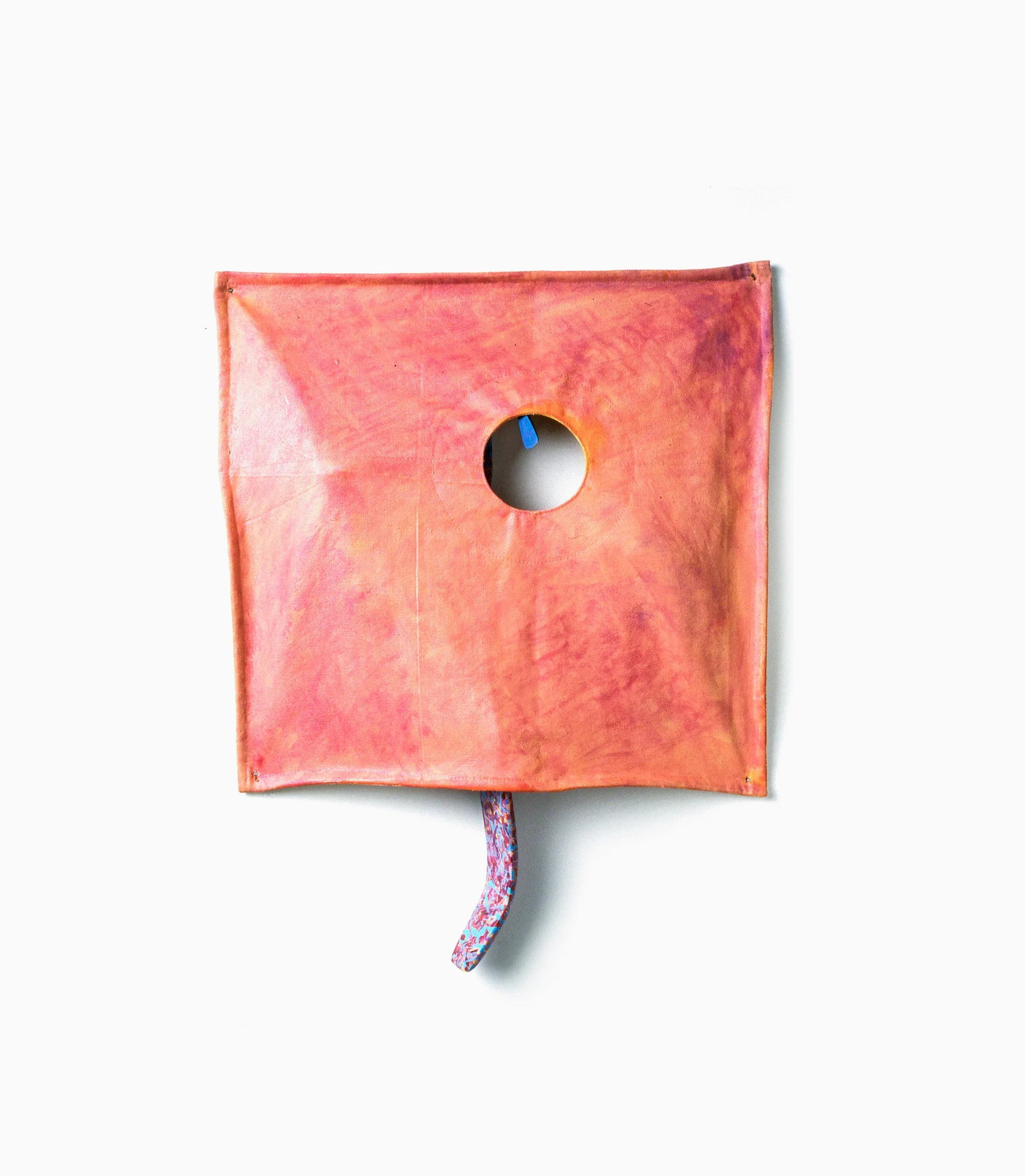
Monkey Tails 280, 1980. Plywood, stitched canvas, and acrylic, 14 x 20 x 3”. (Lost.)
Monkey Tails, a series of three-dimensional, inverted paintings, referenced the fanciful forms that dominated my earlier, Surrealist inspired paintings. These colorful wooden objects residing behind stitched canvas, agitate the surface, protrude from different sides or peek through the central openings teasing the viewer as to their identity.
Monkey Tails 581, 1981. Plywood, stitched canvas, and acrylic, 54 x 23 x 5”.
Monkey Tails 881, 1981. Plywood, stitched muslin, and acrylic, 62 x 20 x 12”. (Lost.)
One of my fondest childhood memories was of the mechanical displays inhabiting the store front windows of jewelry stores during the holiday season. These mechanized puppet shows were an introduction to the potency of a pictorial narrative that later would be the genesis for work like Salute to Asparagus.
Birth
Adult harvest
Adolescent fantasies
Discharge
I'm Late combines the whimsical nature of current work like Tchotchke and Monkey Tails with a tableau reminiscent of de Chirico’s prevalent palazzo shadows and an implied narrative as seen in to Salute to Asparagus.
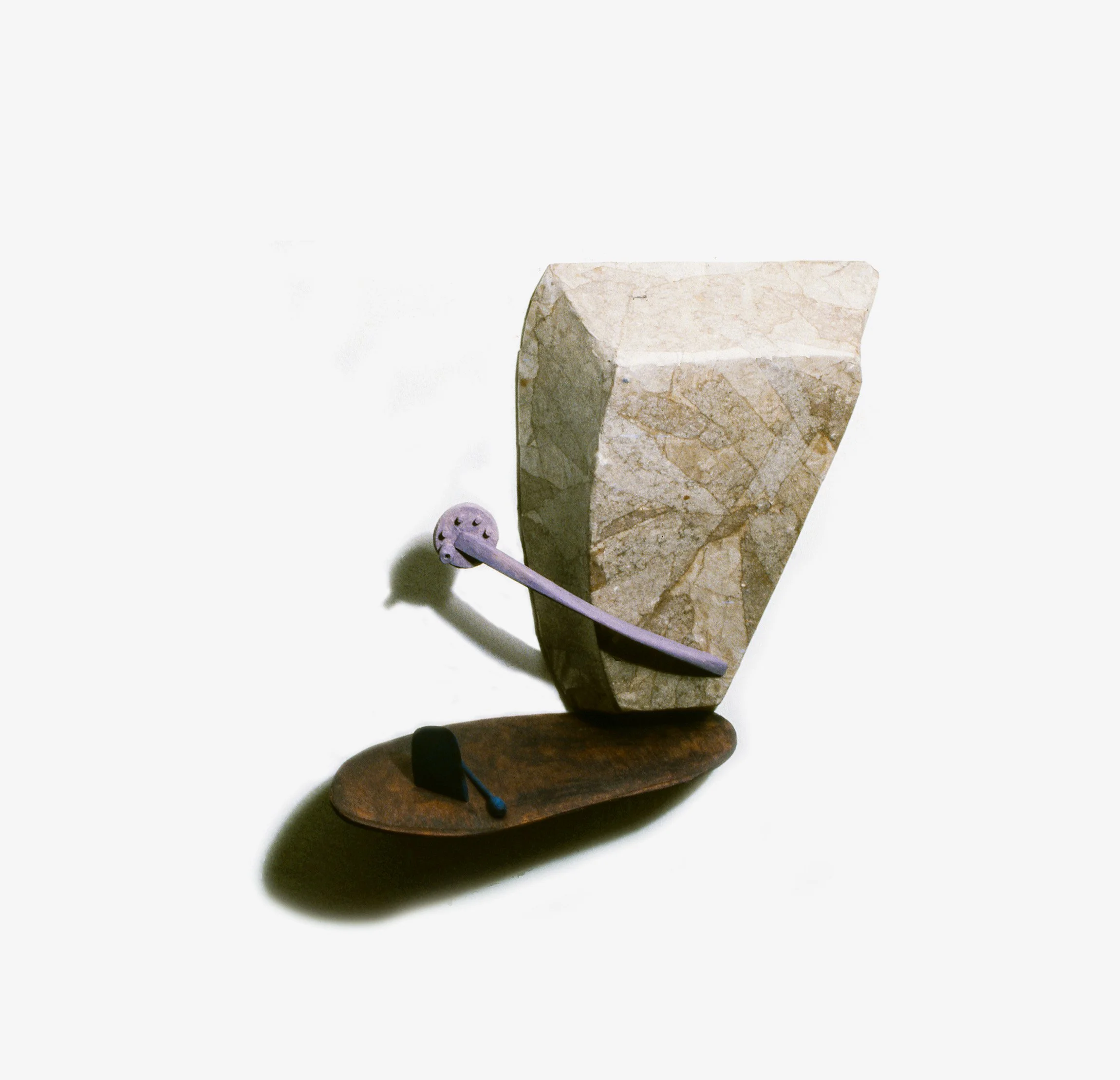
I’m Late 181, 1981. Plywood, paper, rabbit-skin glue, and acrylic, 12 x 12.75 x 5.5”.
I’m Late 281, 1981. Plywood, paper, rabbit-skin glue, and acrylic, 13 x 8 x 5”.
I’m Late 481, 1981. Plywood, paper, rabbit-skin glue, and acrylic, 17 x 21 x 5”. (Lost.)
Minimal forms replaced fanciful ones, constructed from a combination of found and randomly cut plywood shapes, covered with materials such as bicycle inner tubes, umbrella nylon and scrap sheet metal.
Caliban 382, 1982. Plywood and rubber,
33.25 x 10 x 9”. Two views.
Covering with stitched bicycle inner tubes gave way to layering sections of umbrella nylon, which were harvested off the streets of New York City after a storm. The exposed seams of the nylon sections referenced stitching activity without involving the actual process.
Cloakwing 382, 1982. Umbrella nylon and plywood, 69 x 49 x 4”.
Bishop Widow 782, 1982. Umbrella nylon and plywood, 92 x 33 x 11”.
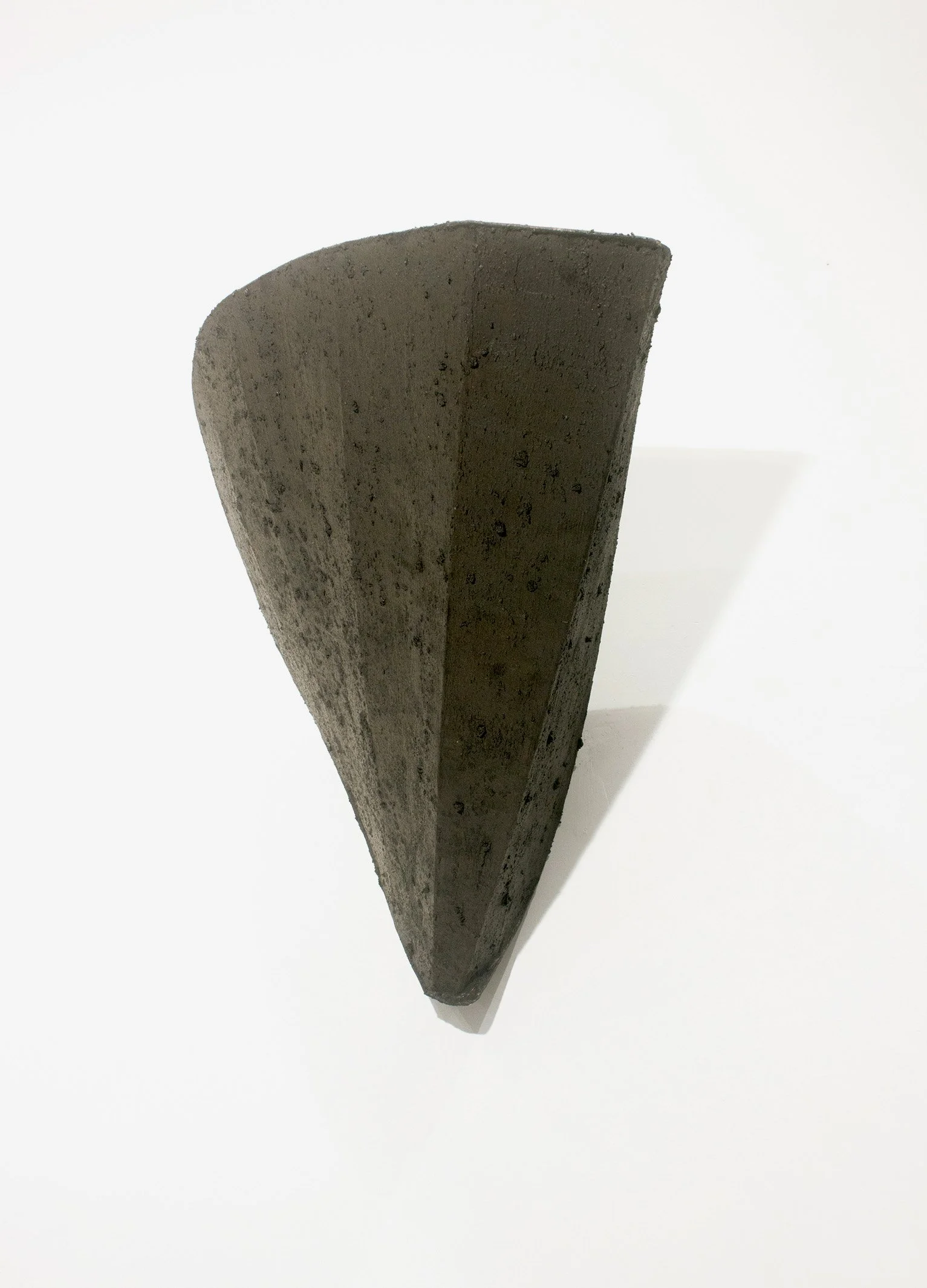
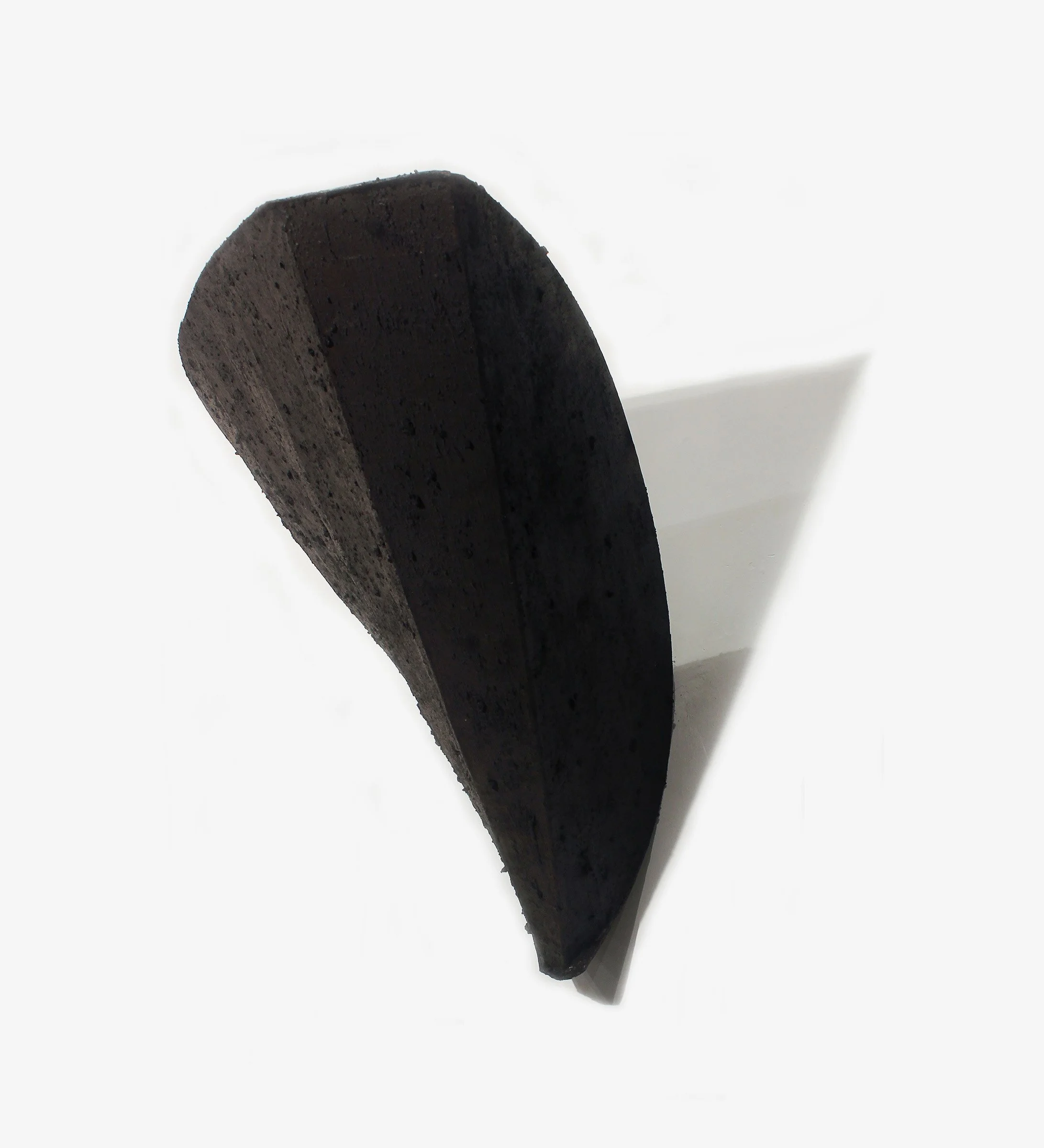
Orlach 784, 1984. Plywood, dowels, stretched paper rubbed with copper dust and charcoal, 36 x 22 x 27”. Two views.
As a visual parallel to stitching, escutcheon pins were used to fasten metal sections.
Traveler 1084, 1984. Plywood, paper, charcoal, aluminum, and tar, 27 x 13 x 24”. Private collection, Memphis, Tennessee.
Two views.
For less weight and more flexibility, linear shapes were cut from plywood sheets, internally supported by wooden dowels and covered with stretched paper.
Trench, 1985. Paper, plywood, and charcoal. Installation view; each object is 60” high.
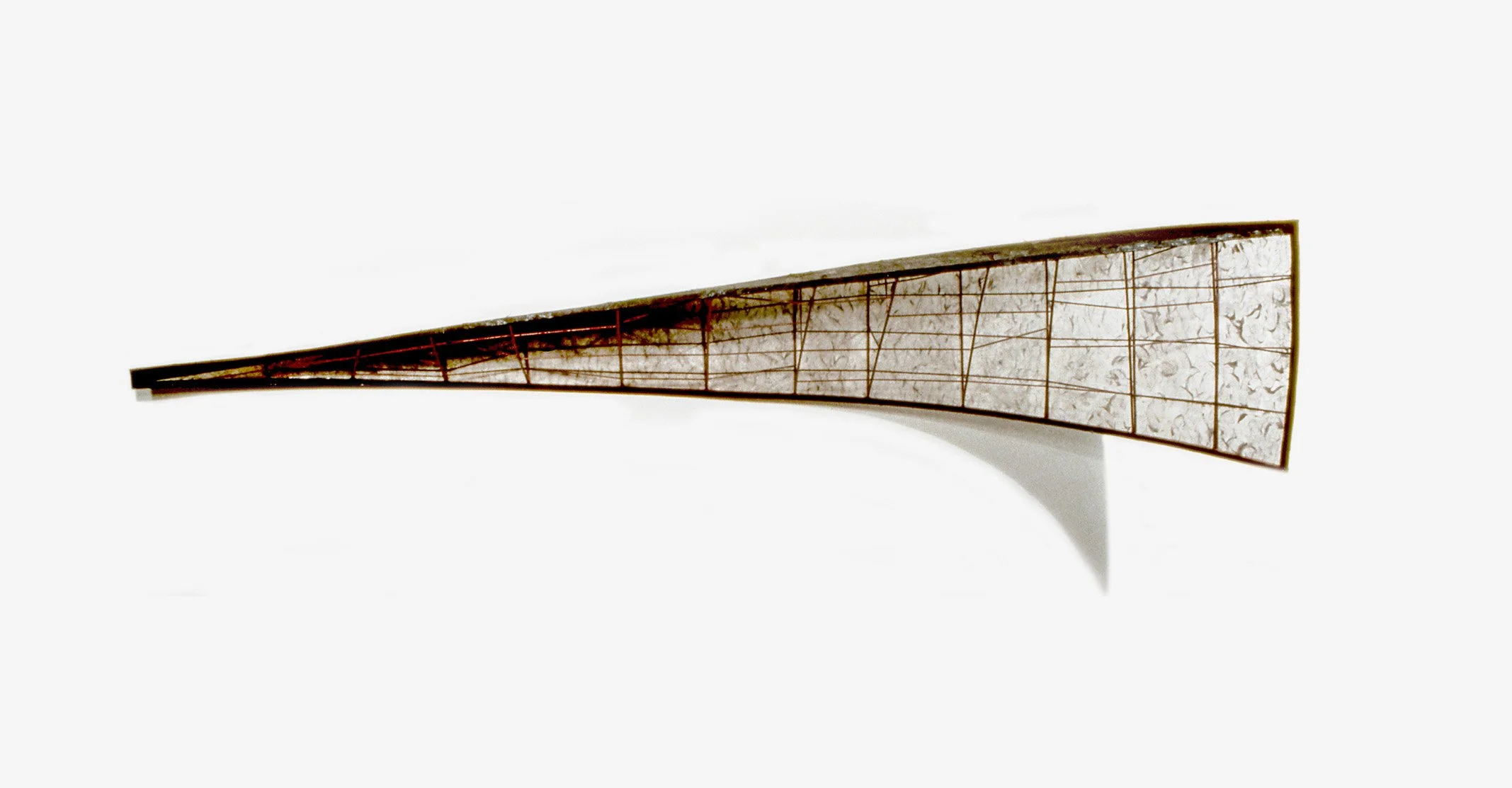
Mascara, 1985. Plywood, paper, and acrylic, 18 x 83 x 15.5”. (Lost.)
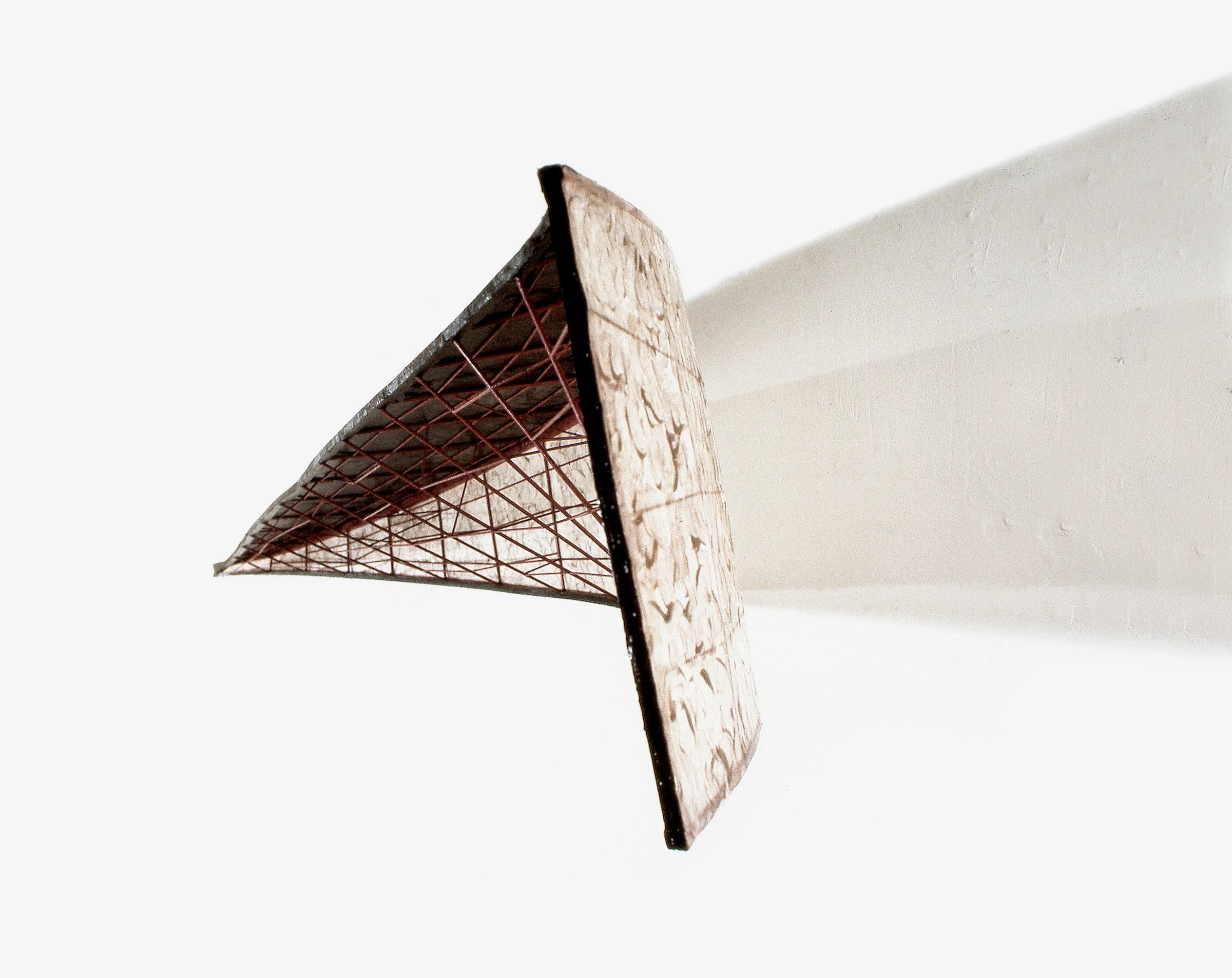
Alternate view.
My sculpture process now mimicked drawing activity.
Between 1984-1987, my process for making sculpture was so much like drawing that I made only intimate studies mostly related to traveling in Europe. Emery cloth, being more durable than sandpaper, was used to smooth the tips of wooden dowels before becoming part of a skeletal structure. Partially erased, the cloth’s surface became the repository of glue drops, acrylic smudges, along with the activities used in construction, thus documenting the sculpture’s development. By 1987 my sculpture process changed, discontinuing the need for emery cloth.
Trench, 1985. Emery cloth with traces of glue and acrylic, in two pieces, 14 x 11”. Private collection: New York City.
Montauk, 1986. Emery cloth with traces of glue, 9 x 11”.
Two of the studies made during my travels in Europe.
Shell 787, 1987. Graphite on paper, 14 x 11”.
Pupa 187, 1987. Graphite on paper, 14 x 11”.
Drawing (constructing) the form to be seen inside and out and from multiple angles simultaneously.
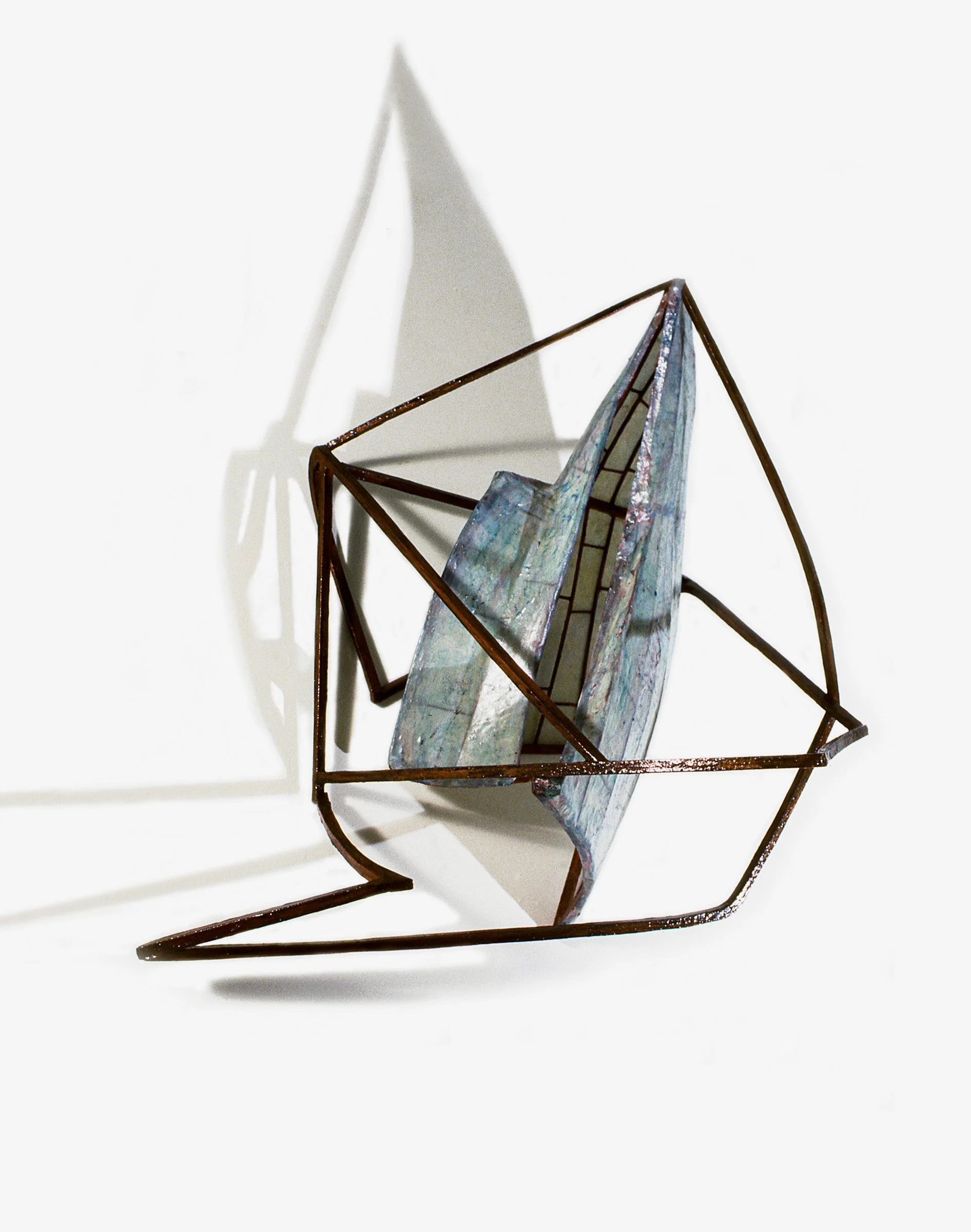
Shell 387, 1987. Plywood, paper, acrylic, and fiberglass, 33.5 x 30 x 22”. Private collection: Colorado.
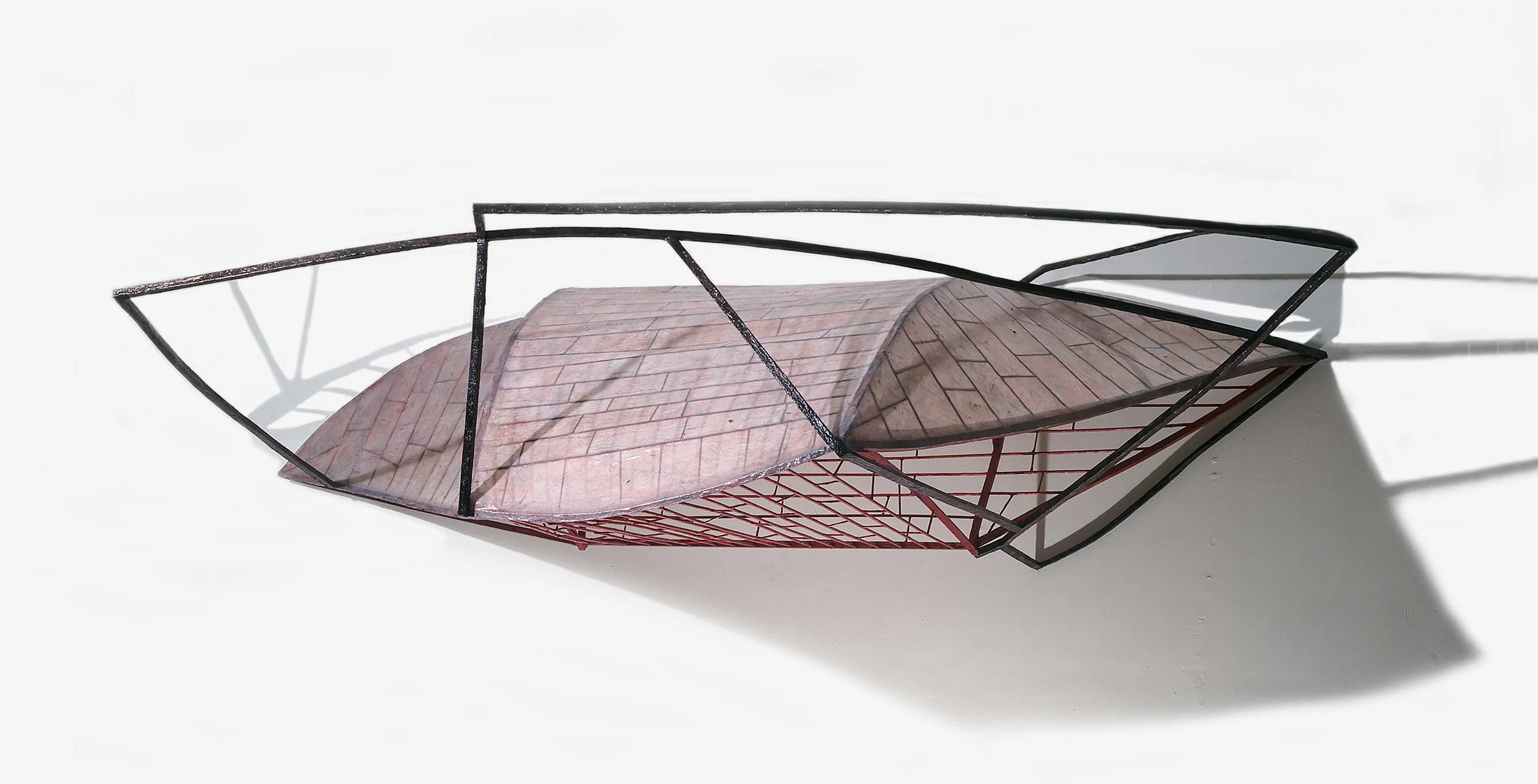
Tep, 1987. Plywood, paper, acrylic, and fiberglass, 21 x 84 x 46”. Private collection: Arizona.
Bringing the viewer into the drawing process by puncturing the form and exposing various developmental stages.
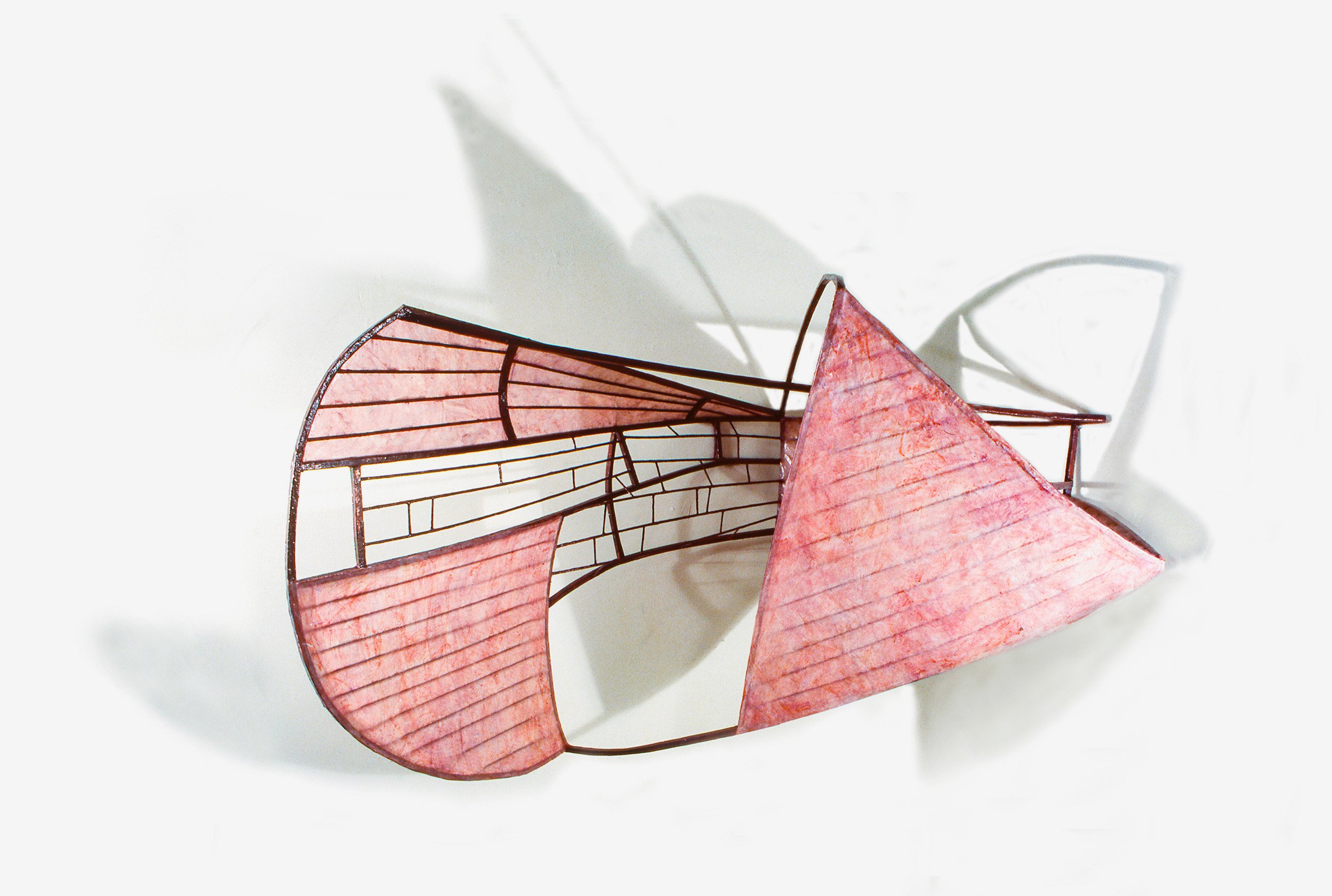
Spiderwing 287, 1987. Plywood, paper, acrylic, and fiberglass, 35 x 57 x 41.5”. Private collection: New Jersey.
Trace 496, 1996. Acrylic resist on stretched paper with fiberglass covering and steel frame, 30 x 30”. Collection of Edward Albee, New York City.
Trace 897, 1996. Acrylic resist on stretched paper with fiberglass covering and steel frame, 30 x 30”.
The materials and process used to create the patterned membranes for works such as Tep and series like Shell and Spiderwing would itself become a series of acrylic resist drawings titled, Trace, from 1995-1997.
Tor, 1988. Pencil on paper, six panels, each 17 x 14”; 16 x 70” installed.
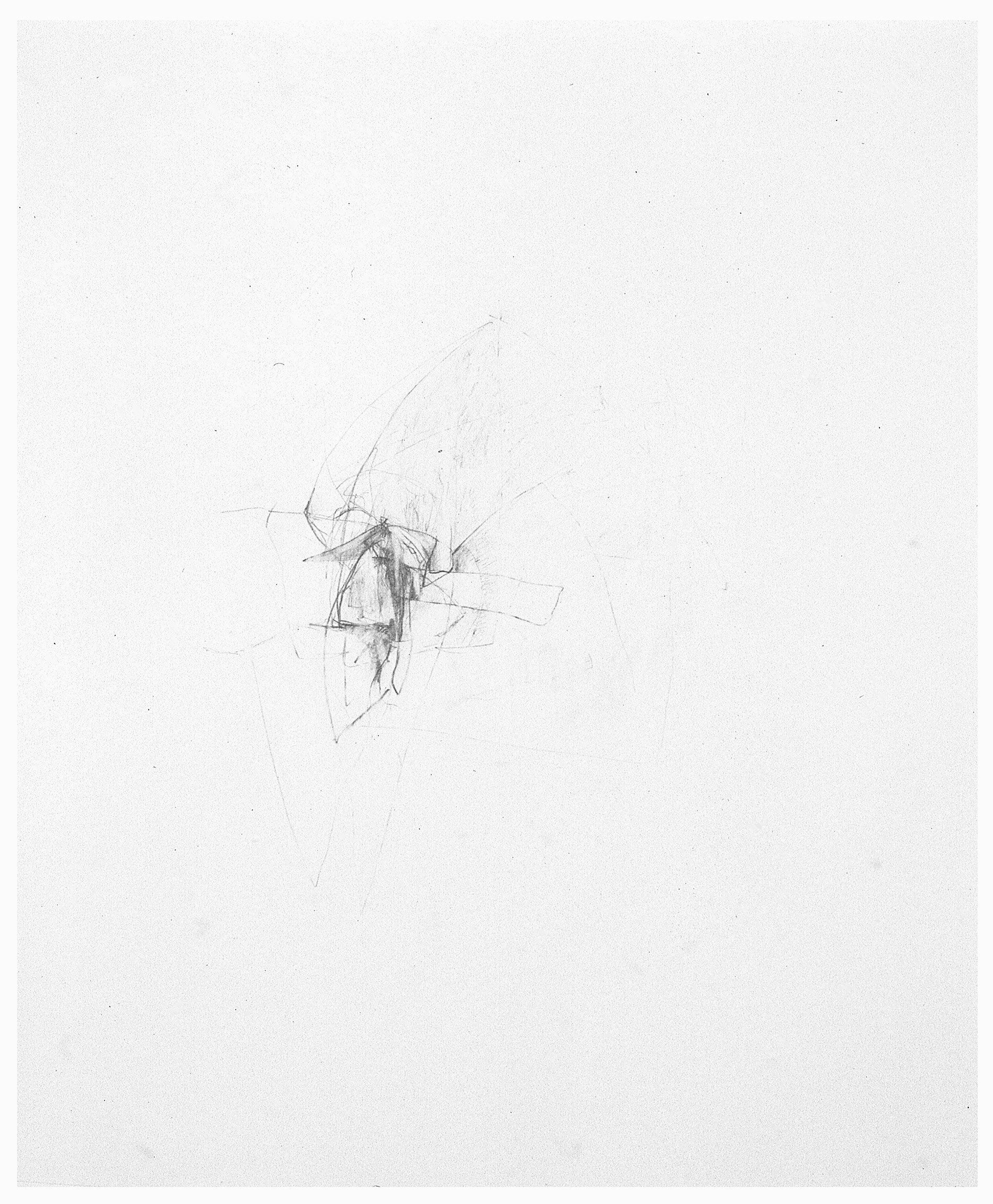
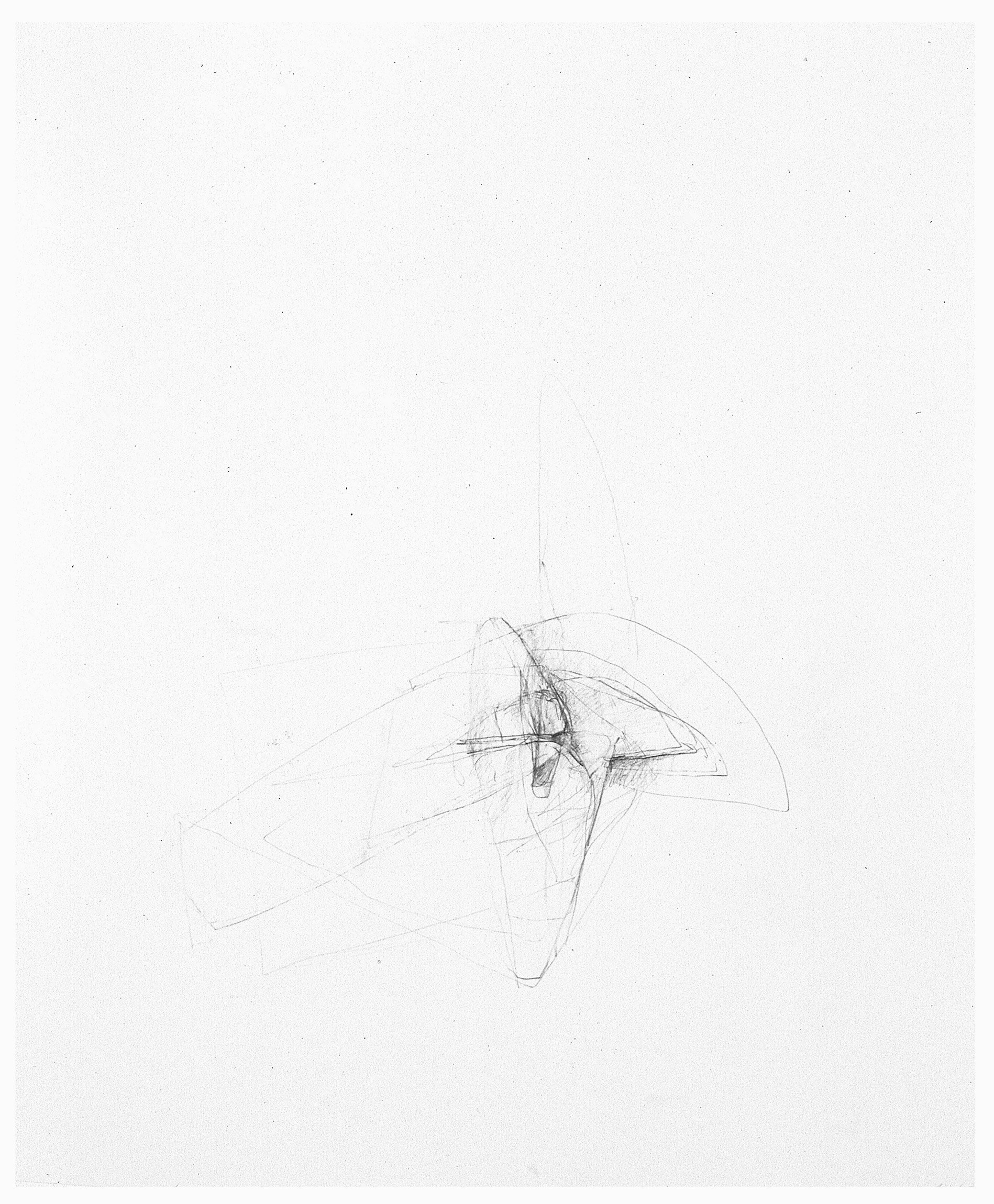
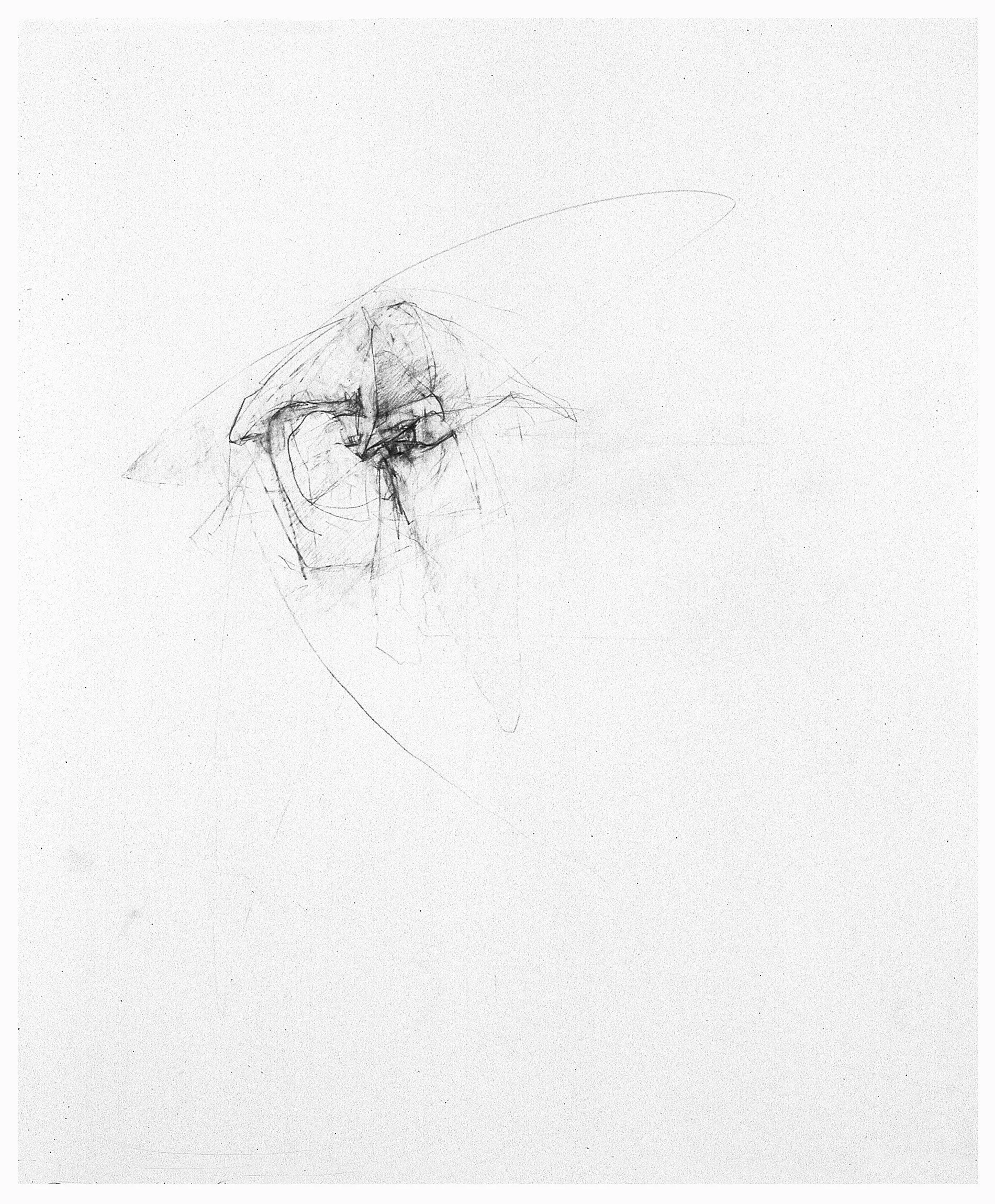
To capture a sense of history, I created a drawing that were in sequential episodes. The inspiration occurred while traveling in Europe where I became aware of how history can be viewed through layers of process. The most common example was seen in the structure and condition of stone walls.
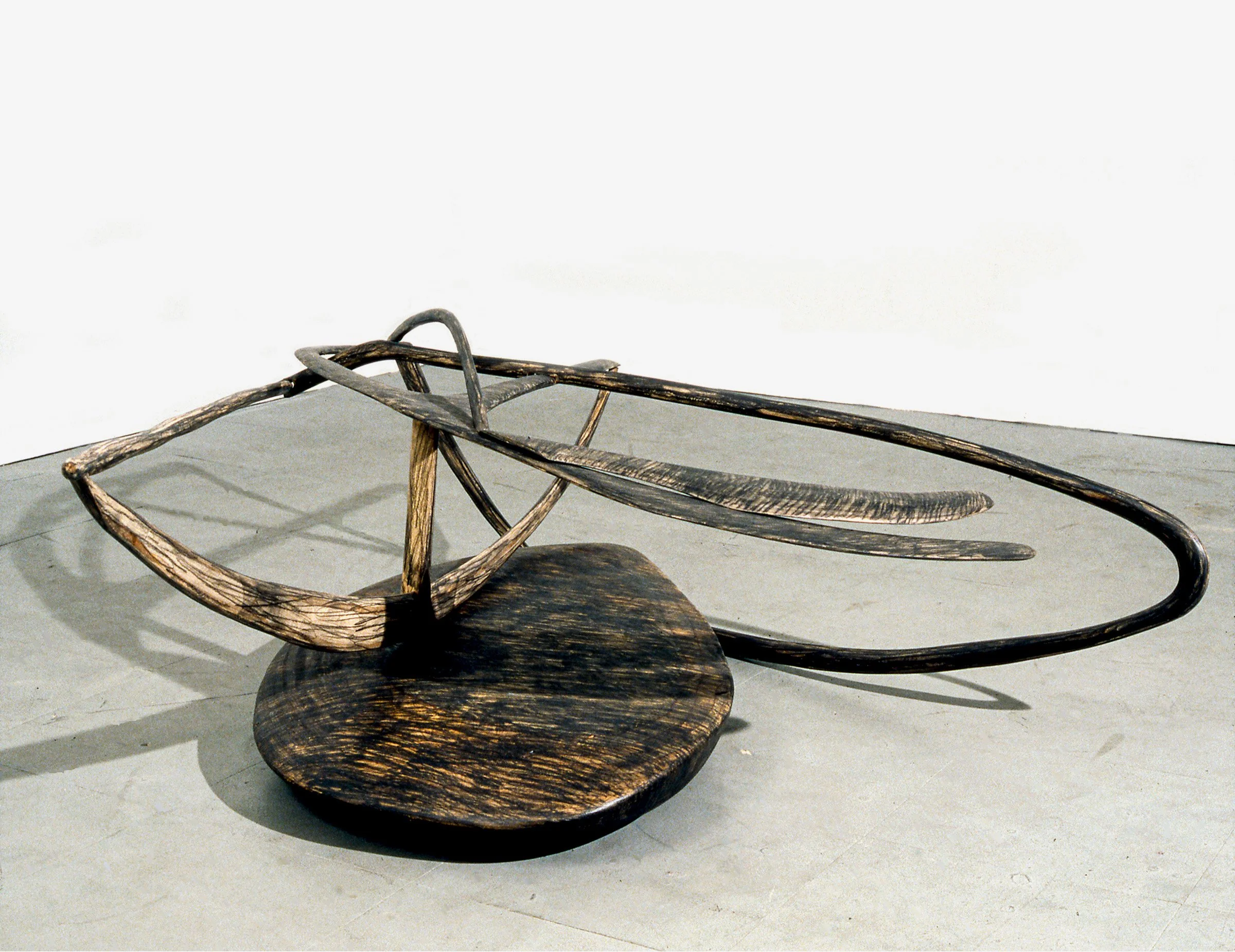
Alef 589, 1989. Graphite and acrylic on plywood, 17 x 59 x 45”. Collection: Brooklyn Museum.
Alef is the first series in which the paper membrane is replaced with graphite drawing as a surface, making the sculpture a drawing within a drawing. Erasure is seen here as an act of physical removal and replacement.
Here amputation and substitution function as erasure.
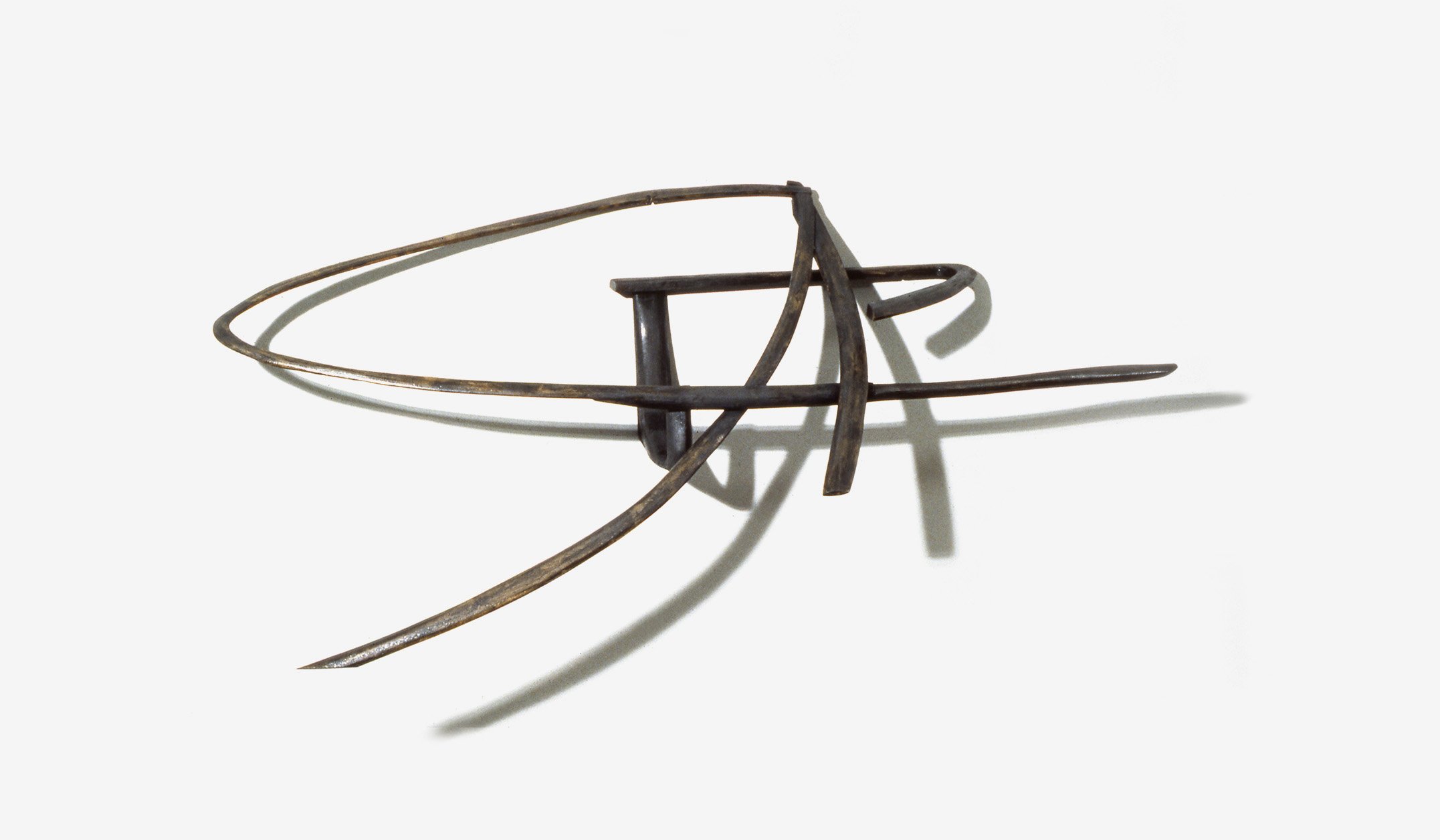
SbSE 590, 1990. Graphite and shellac on plywood, 24 x 56 x 18.5”.
Series such as Draughon and Harcourt examine drawing as a construction of multiple marking units.
Draughon 488, 1988. Plywood and acrylic, 16.75 x 40 x 106”. An homage to Alberto Giacometti’s Woman with Her Throat Cut (1932).
Alternate view.
A series of parallel concept drawings of the same name.
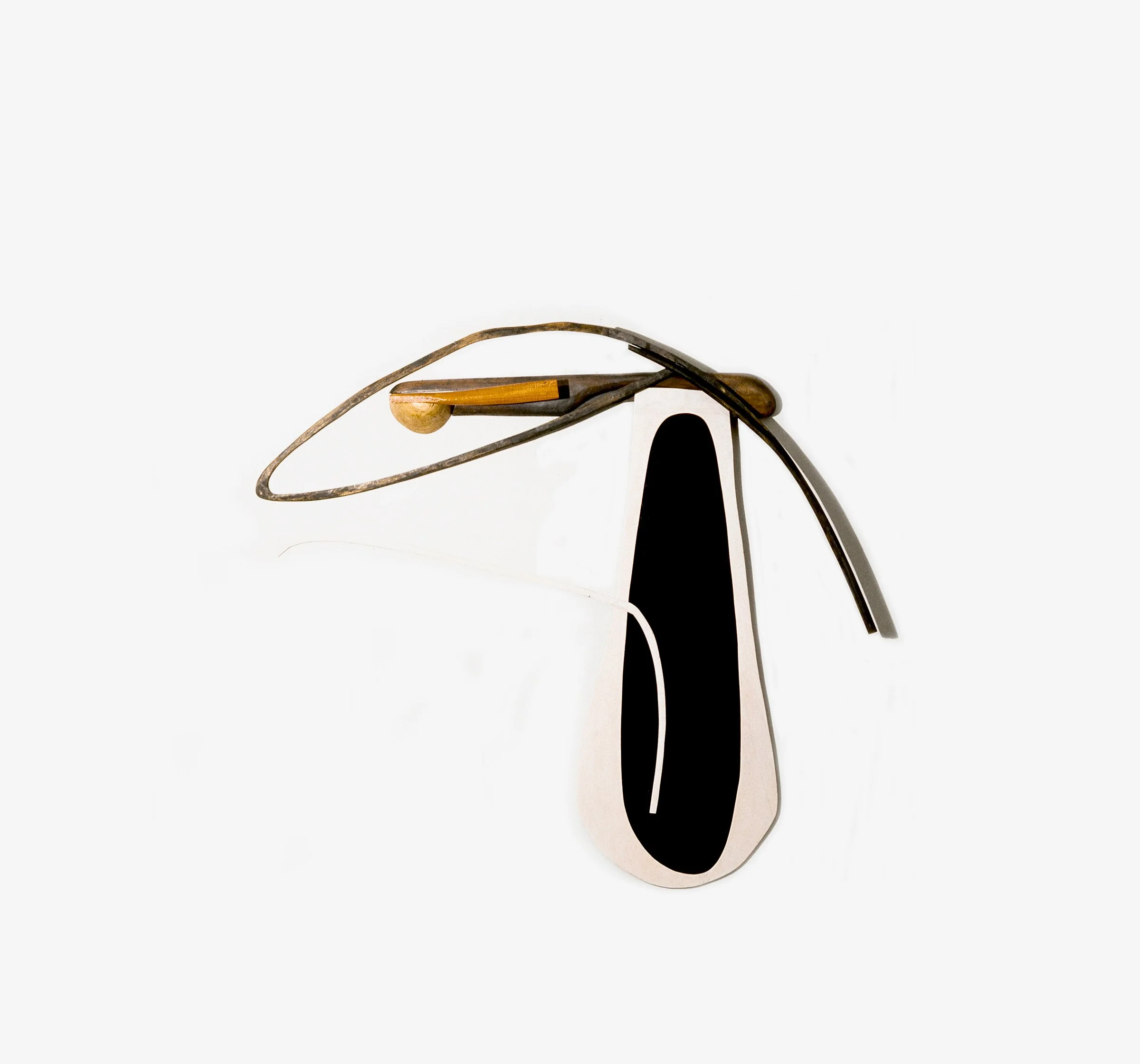
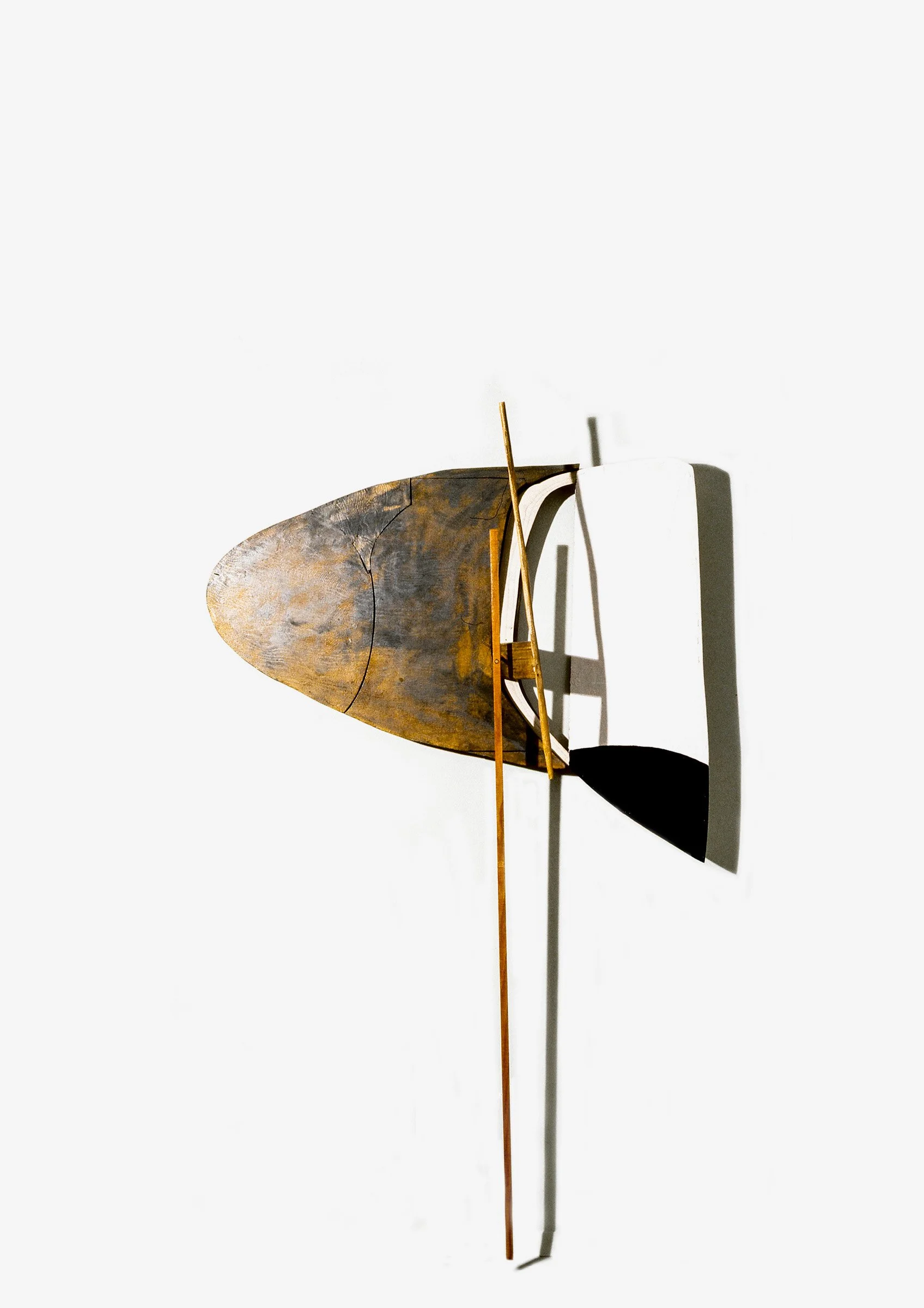
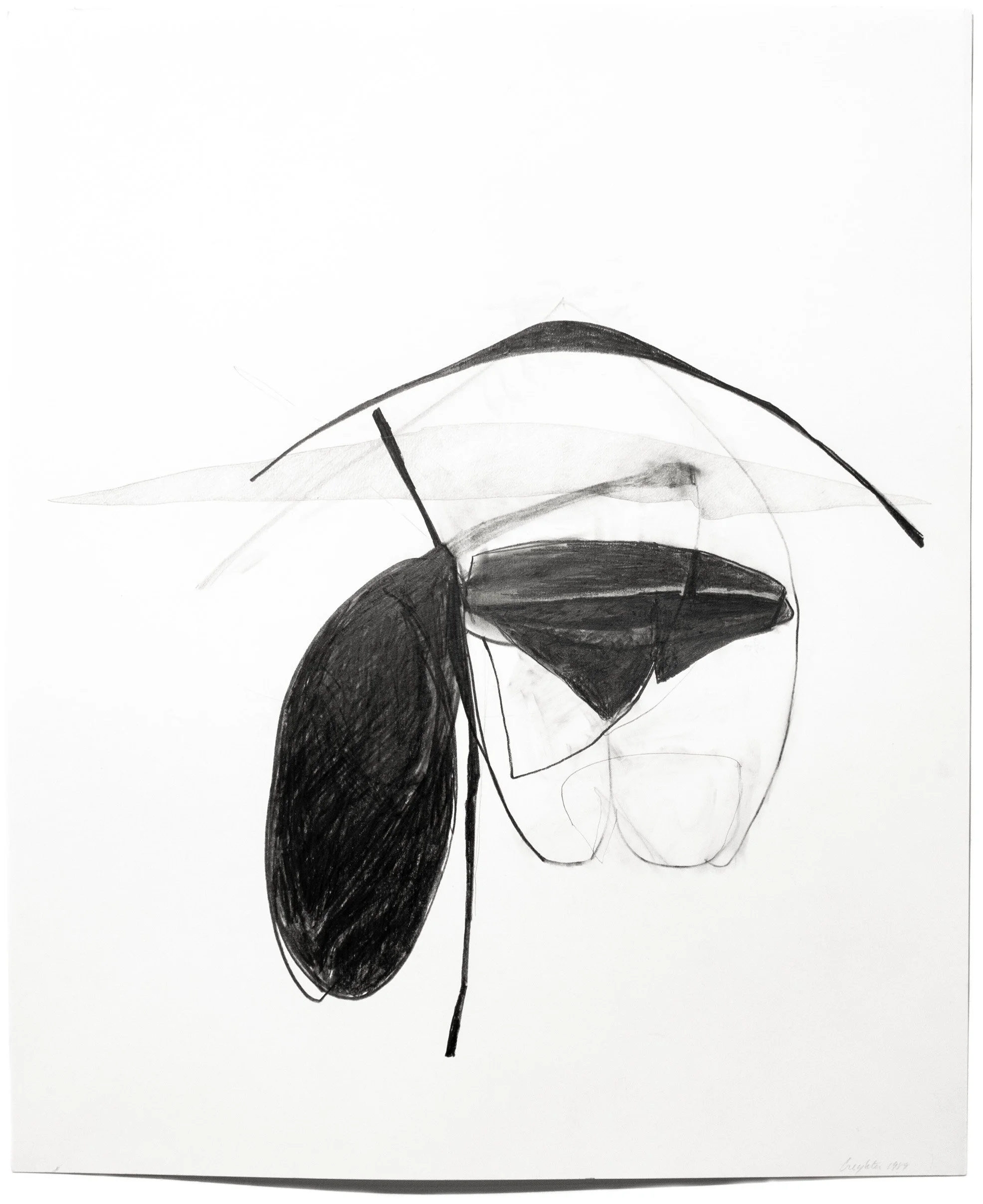
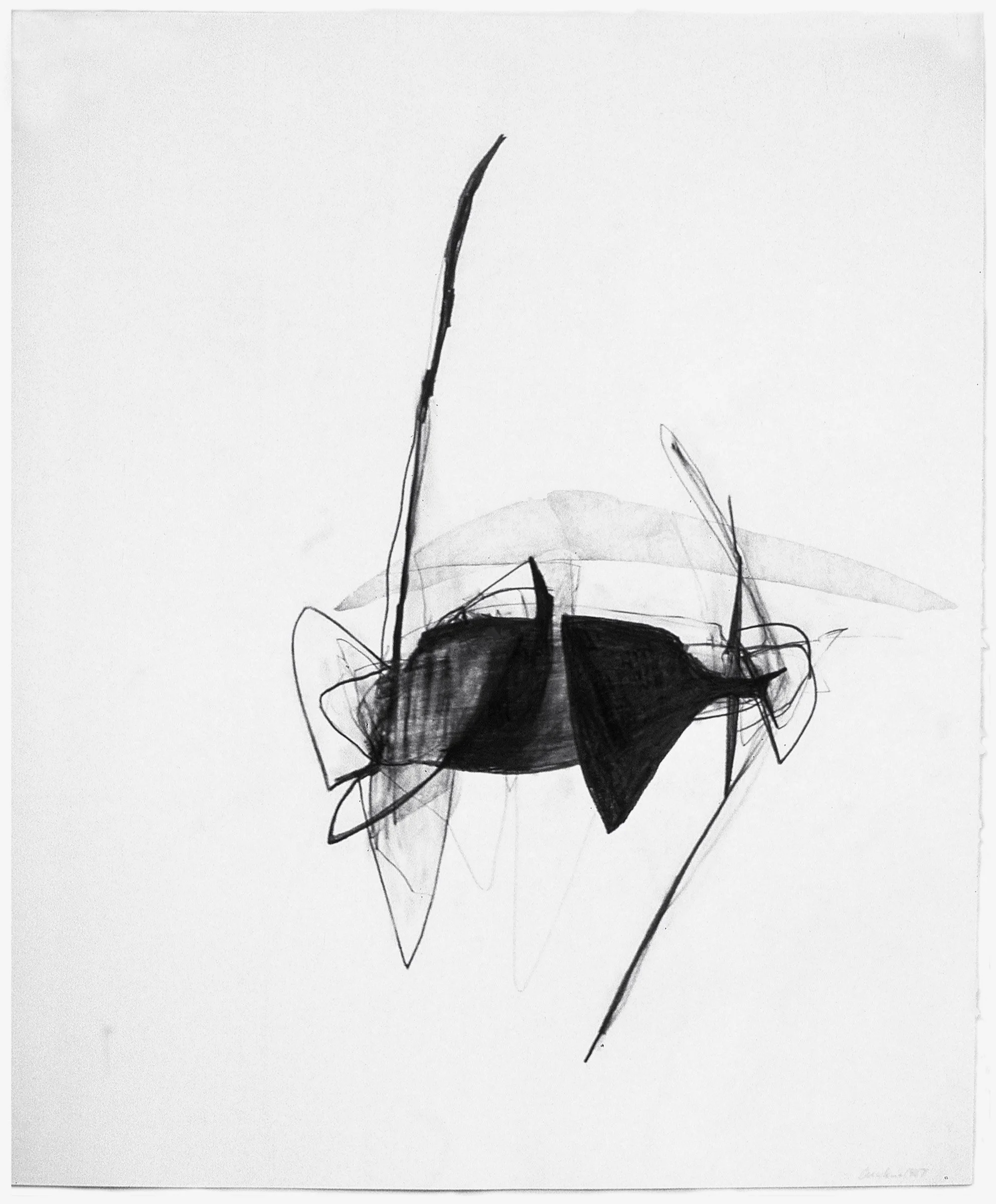
Moving to the Hudson Valley from New York City in 1990 had profound effects on my work. I returned to painting after a fourteen-year hiatus but continued to make sculpture as well as works on paper. Each of the disciplines would continue be informed by the dazzling array of natural patterns and structures, the mechanics of drawing, as well as the discoveries learned from various explorations.
Water Music Part 1, 1991. Graphite on Bristol, six panels (each 14 x 11”); 16 x 70” installed.
In the Consort series, conifer branches are joined with cut plywood shapes to create forms whose existence seem momentary. Pairing a gesture with agitated marking activity helps to achieve this tenuous balance.
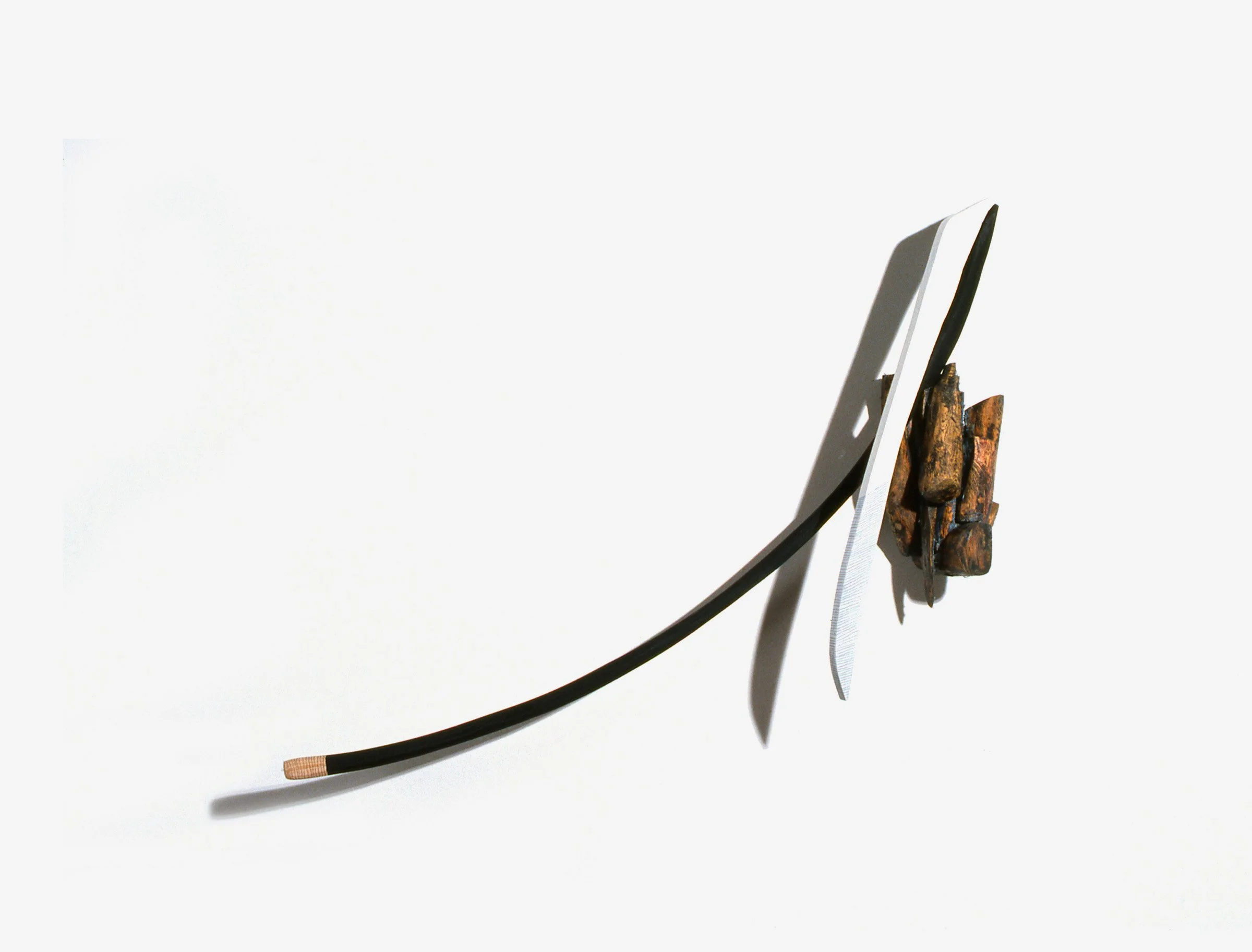
Consort 291, 1991. Acrylic and graphite on plywood with conifer wood coated with wax and acrylic, 24 x 31 x 7.5”. Private collection: Denver, Colorado.
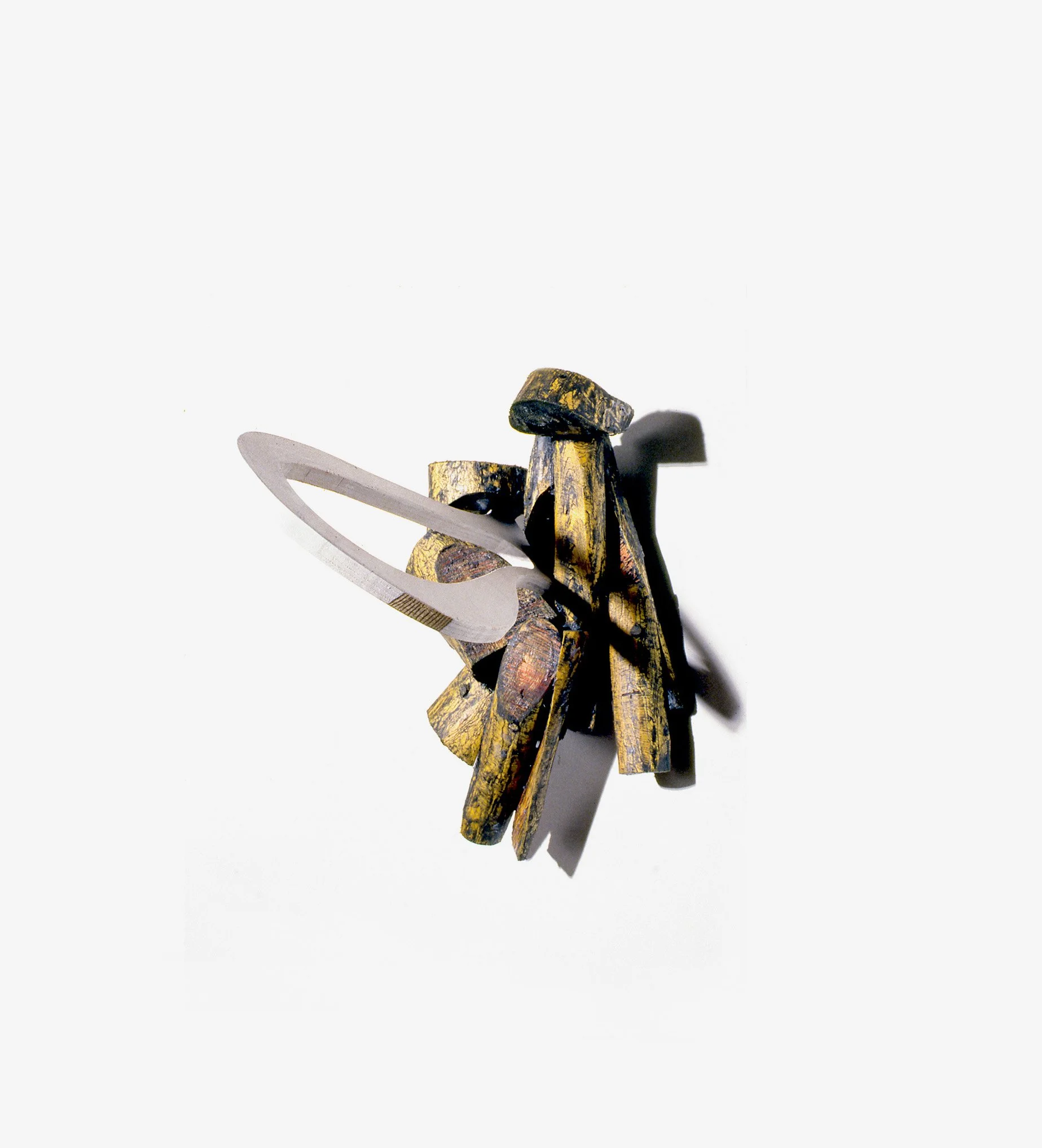
Consort 491, 1991. Acrylic and graphite on plywood with conifer wood coated with wax, acrylic, and graphite, 15 x 8 x 4”.
These two parallel concept drawing series examined emergence and structure as the related sculptures were being developed.
Consort 189, 1989. Graphite on Bristol board, 17 x 14”.
Armature-Consort 592, 1992. Charcoal on Bristol board, 14 x 11”.
Following the surface drawing that began with the Alef series, Conifer combines pine branches with plywood and stretched paper to simulate marking activity and erasure with resulting ghost images.
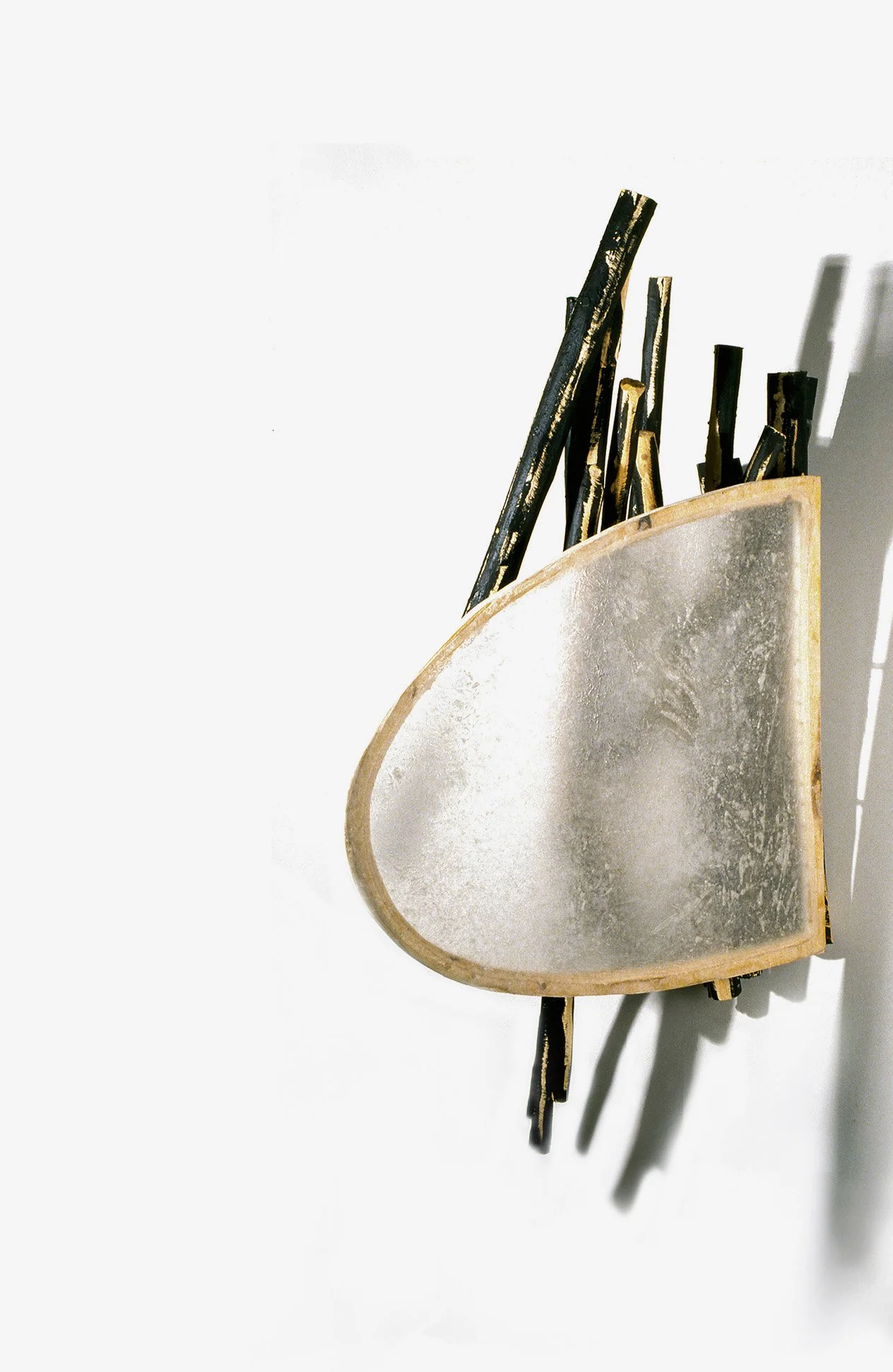
Conifer 1292, 1992. Plywood, stretched paper, and conifer branches, 48 x 15 x 27”. Collection: David Winton Bell Gallery, Brown University.
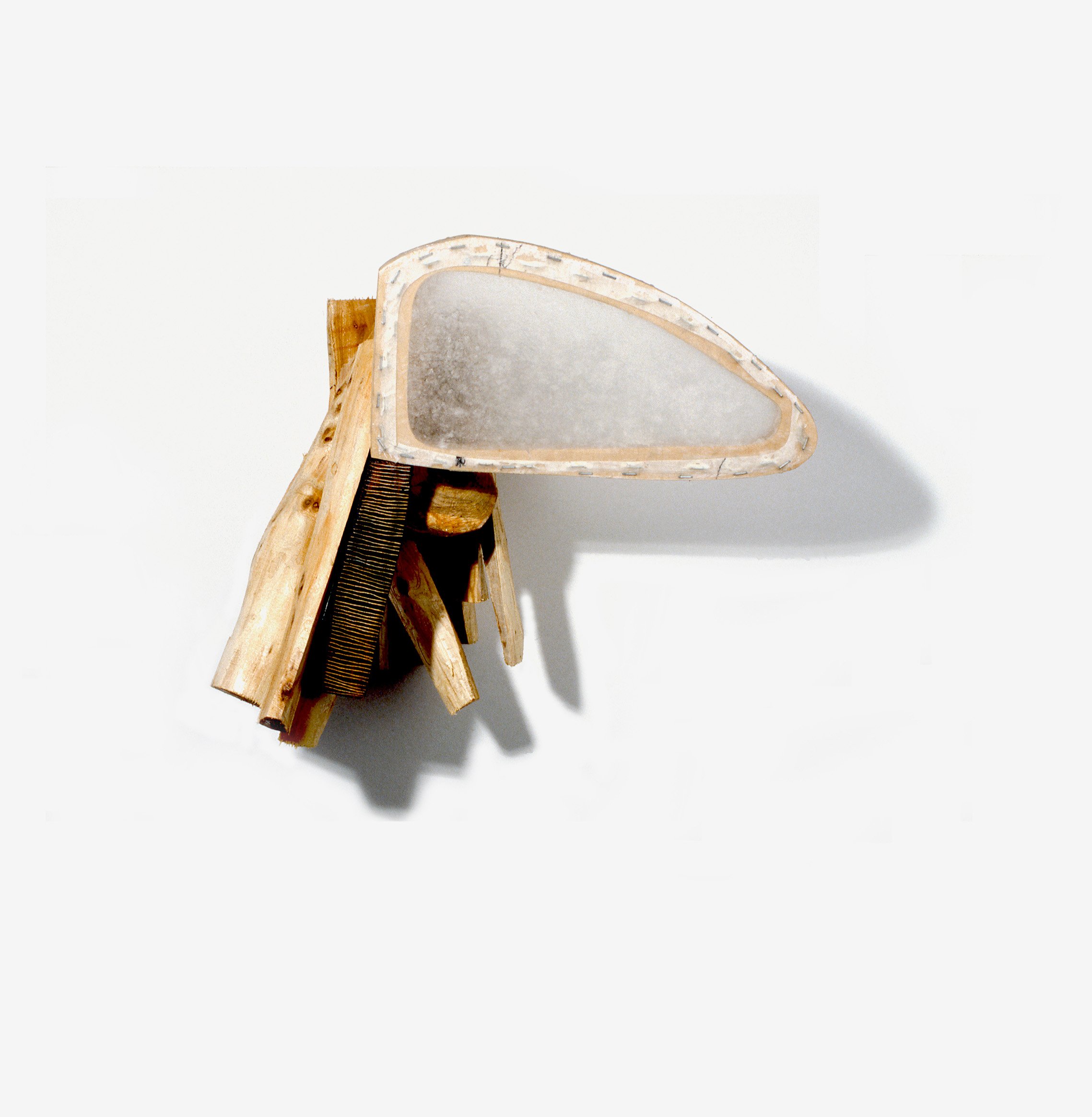
Conifer 191, 1991. Plywood, stretched paper, and conifer branches, 15.5 x 18 x 11”.
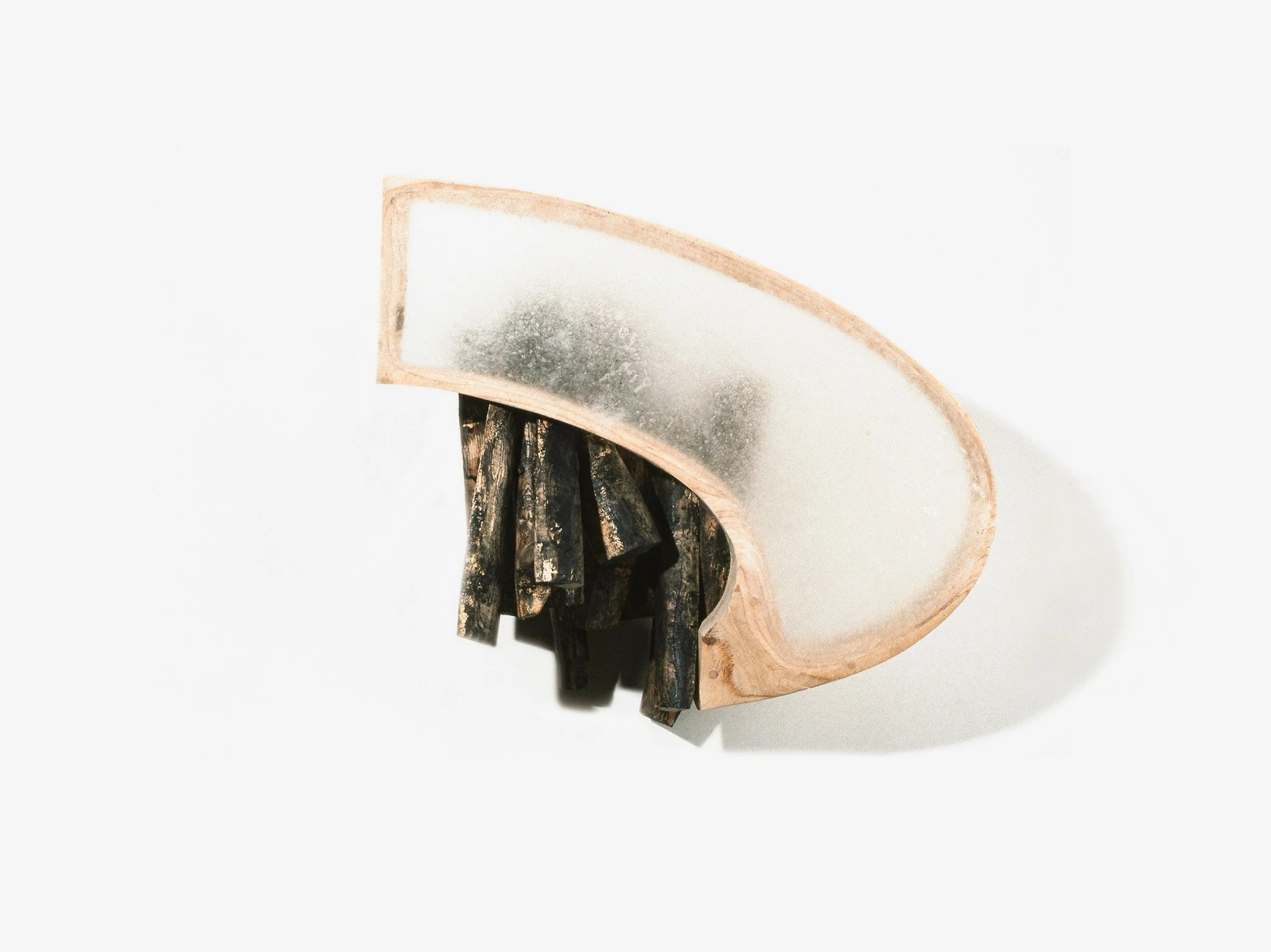
Conifer 691, 1991. Plywood, stretched paper, and conifer branches, 18.5 x 22.5 x 11”.
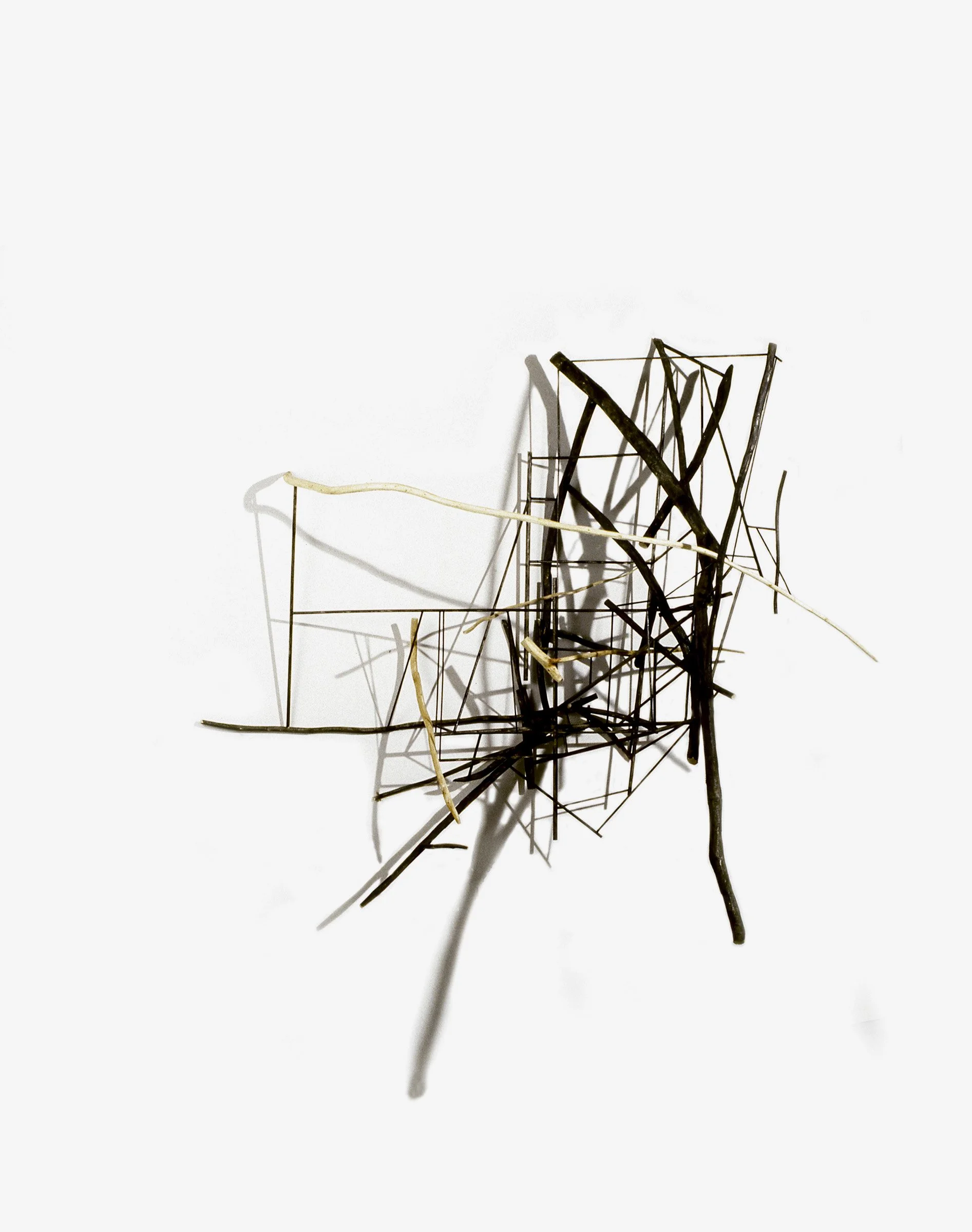
MP 693, 1993. Graphite- and shellac-coated conifer branches and dowels, 52 x 57 x 39”. Lost.
MP 593, 1993. Graphite- and shellac-coated conifer branches and dowels, 67 x 62 x 33”. Lost.
Shadows not only aid in the spatial perception of an object but they also mimic the movements and motions occurring during drawing activity.
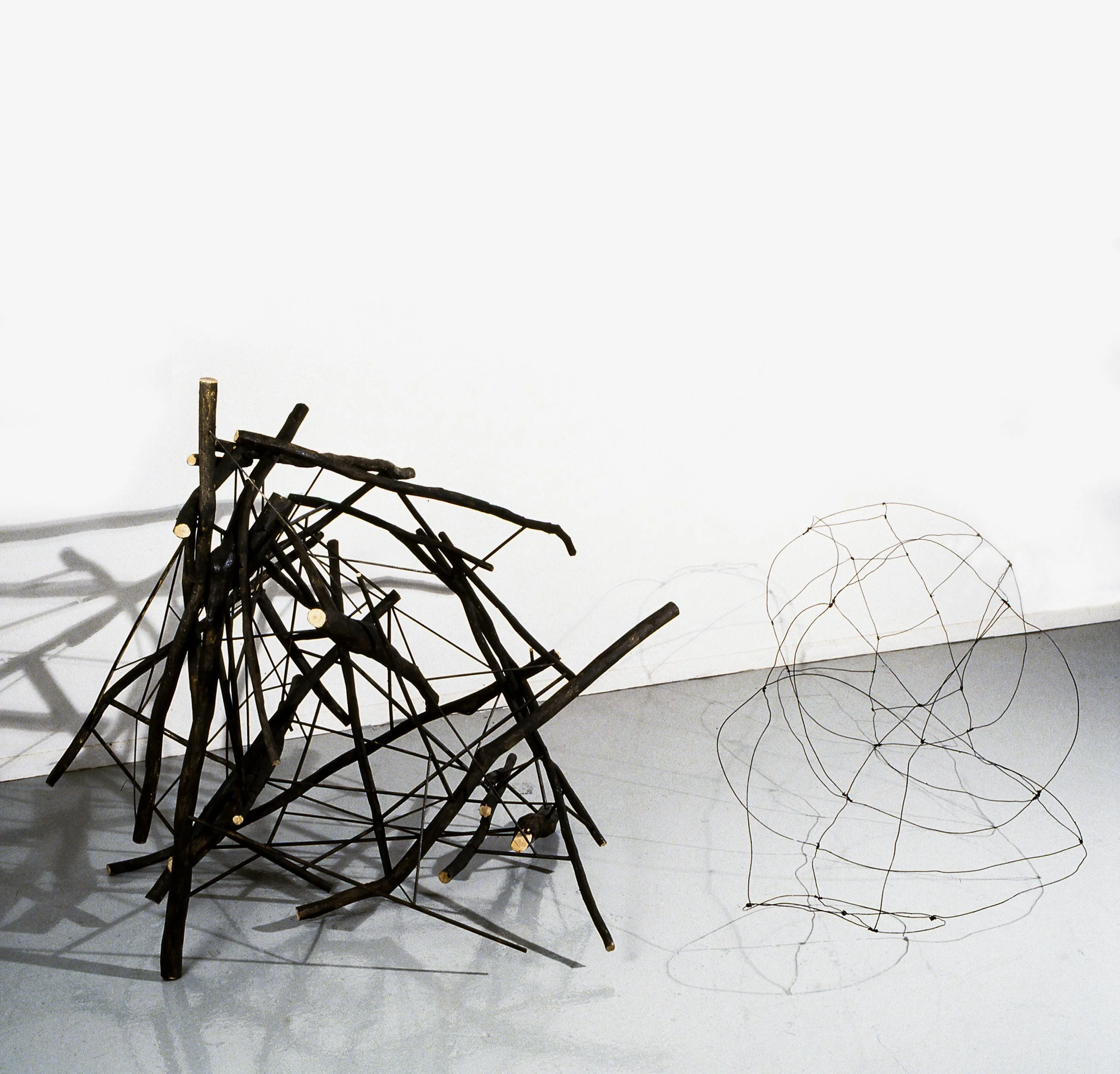
MP 793, 1993. Wood, graphite, shellac, and wire, 43.5 x 56 x 62”; wire section: 26 x 32 x 72”. (Lost.)
Double comparisons: marks and lines; thick and thin; static and fluid; graphite and ink.
With a commission from the Katonah Museum of Art for their sculpture garden, I began the use of maquettes with fabrication. The maquette for Vector 694 allows the viewer to arrange and rearrange the sculpture’s configuration creating a possibility for multiple outcomes. This added element of viewer participation will reemerge as a cornerstone in the development of dimensional drawing, specifically with the Grid series in 2002.
Vector 694, 1994. Painted steel; dimensions vary. Commissioned by the Katonah Museum of Art. Private collection: New York.
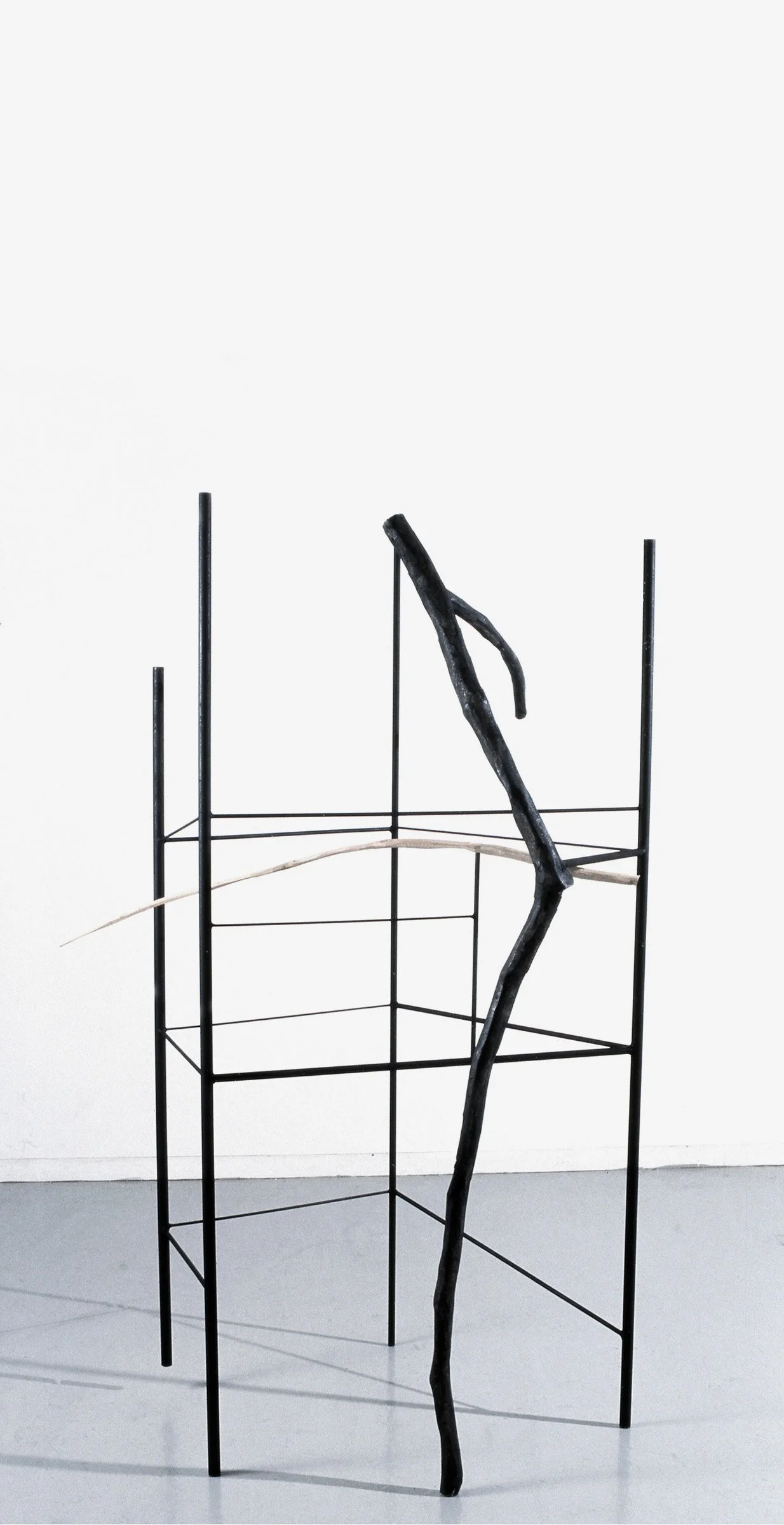
Teahouse 195, 1995. Welded steel with graphite- and shellac-coated conifer branches, 60 x 34 x 30”. Private collection: Connecticut.
With Teahouse the use of maquettes was replaced with drawing in space, “conducting” two fabricators on the intuitive construction of the steel framework. Once the metal structures were welded, they were moved to my studio, where two modified conifer elements, one dark (graphite and shellac coated) and light (coated with shellac) would be added to each form completing the sculpture. Teahouse, a five-part drawing in wet shellac with graphite, complements the sculpture series.
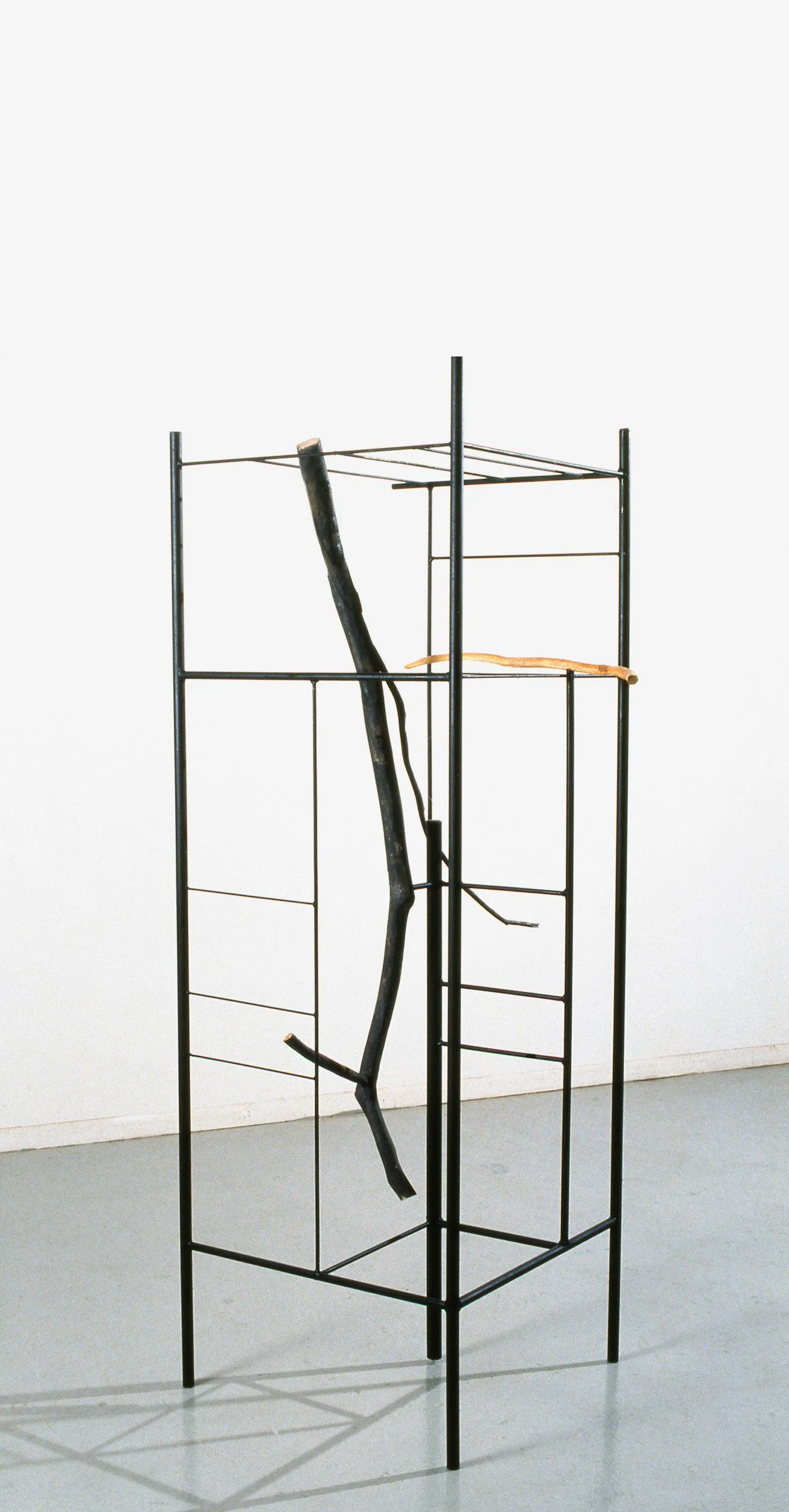
Teahouse 395, 1995. Painted steel, plywood, and natural wood with shellac, 63 x 28 x 27”.
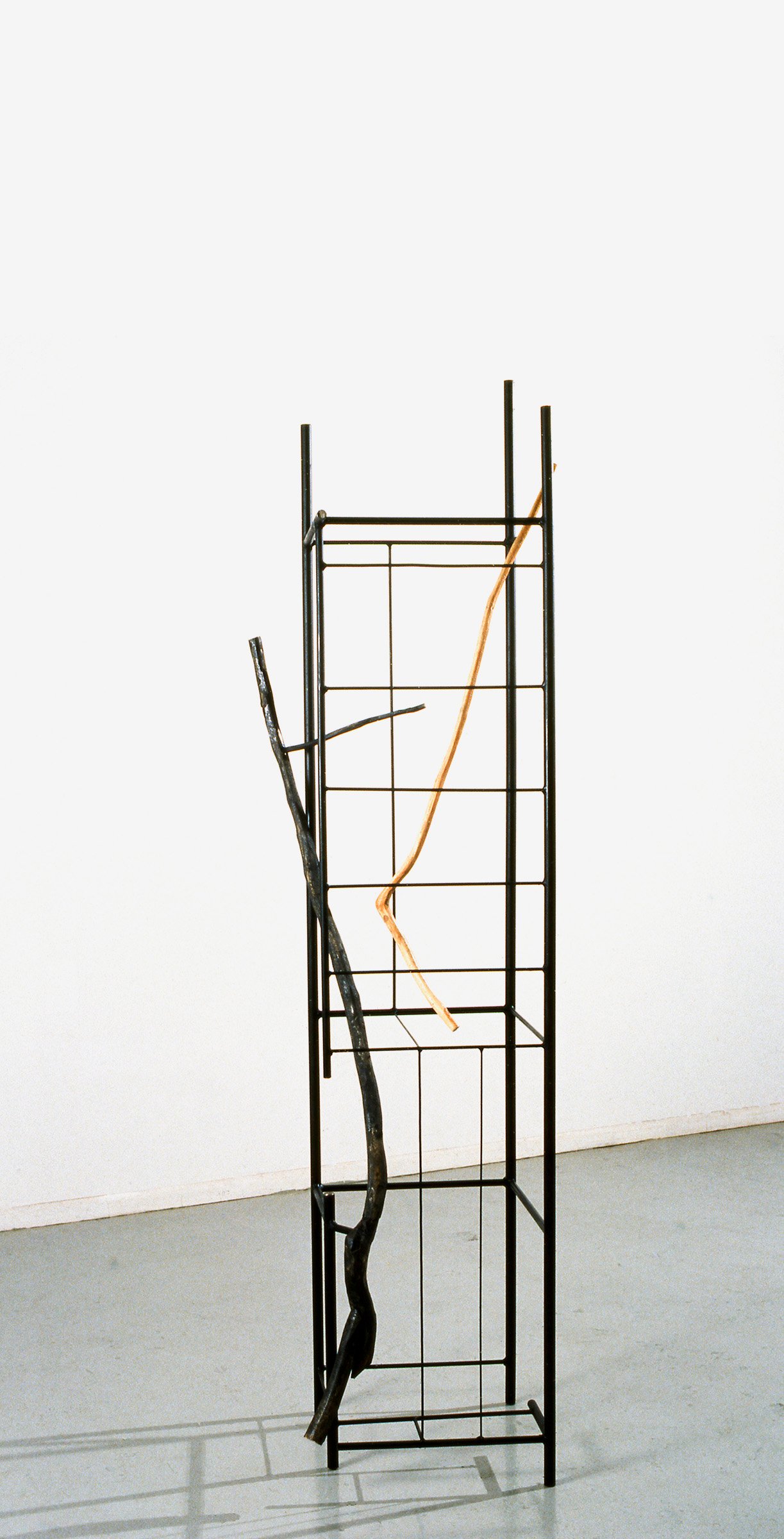
Teahouse 595, 1995. Welded steel with graphite- and shellac-coated conifer branches, 73 x 22 x 18”. Private collection: New York City.
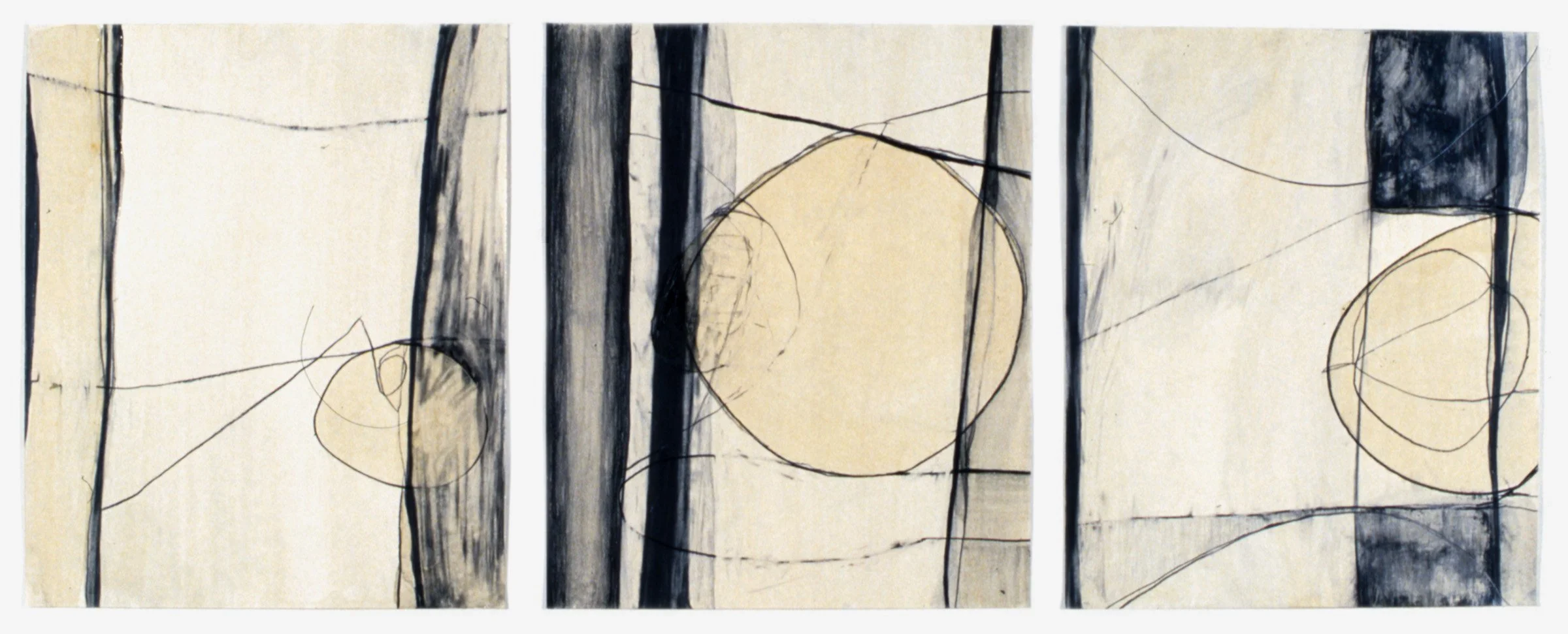
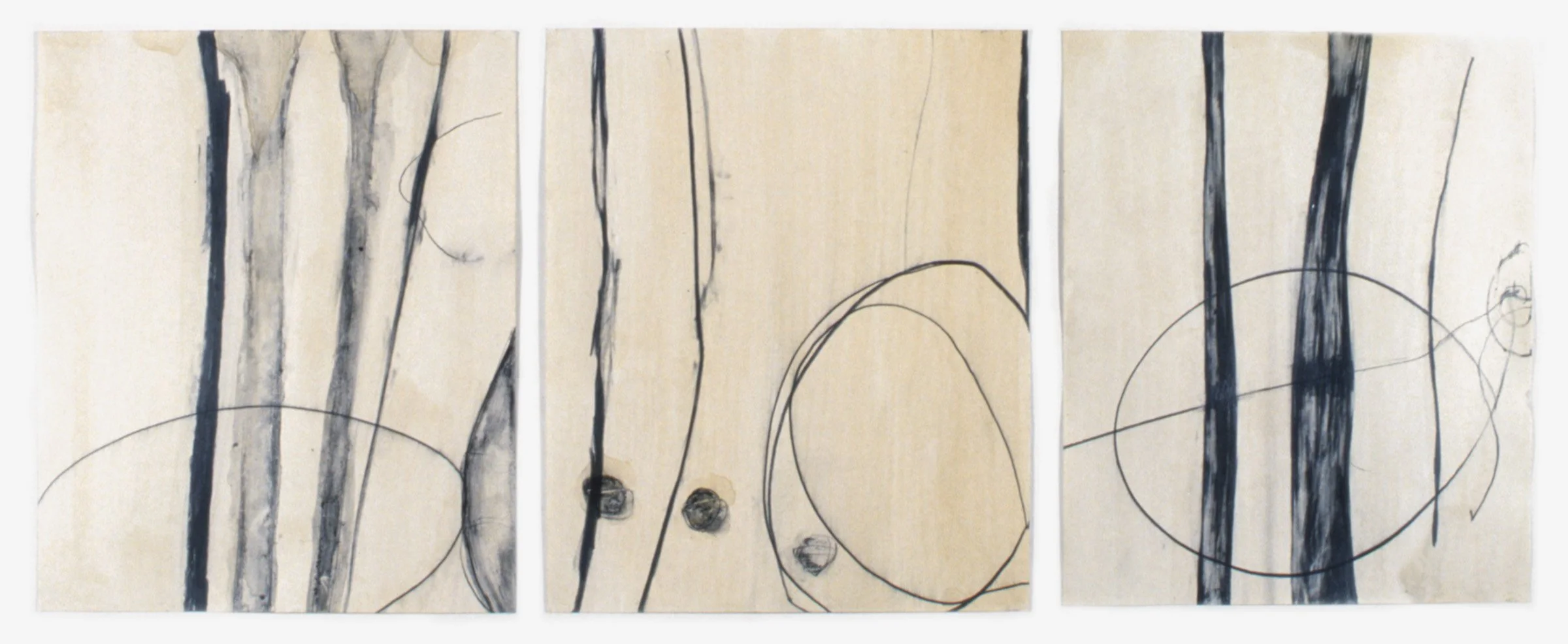
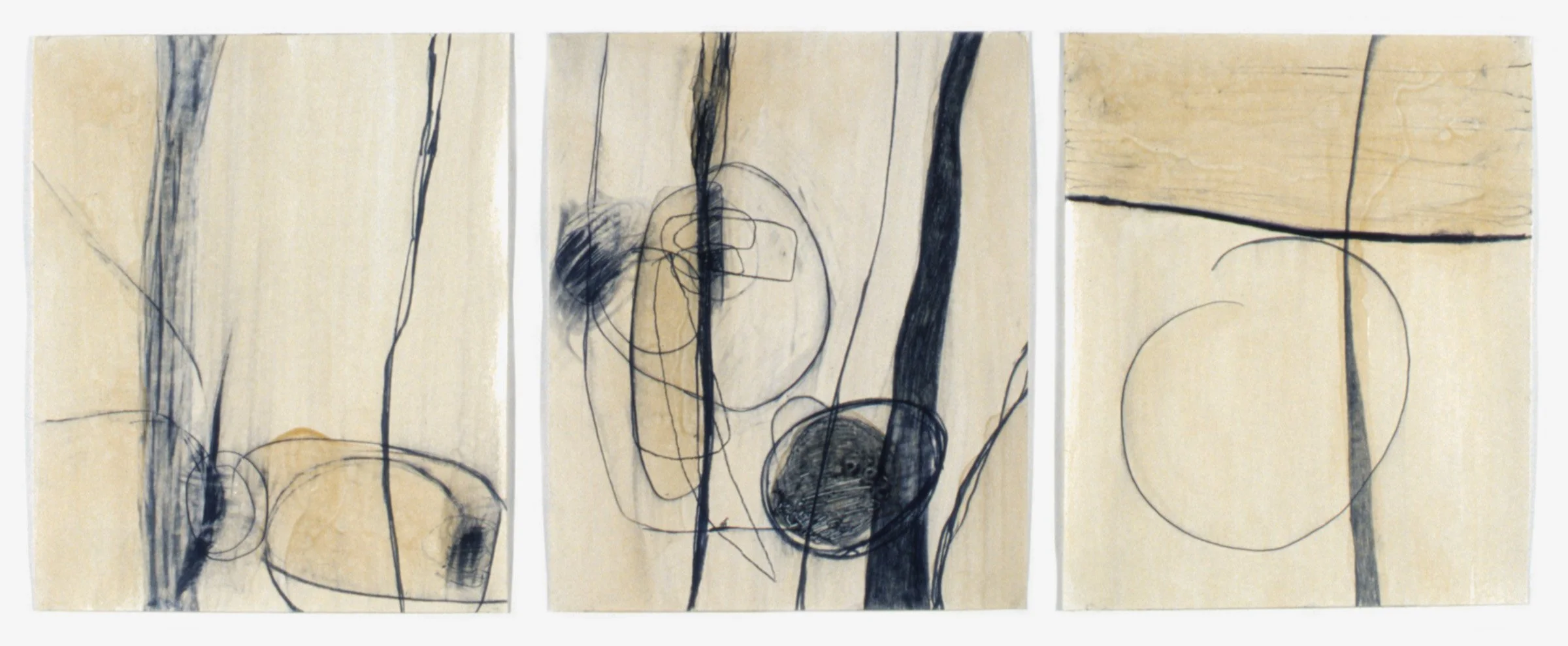
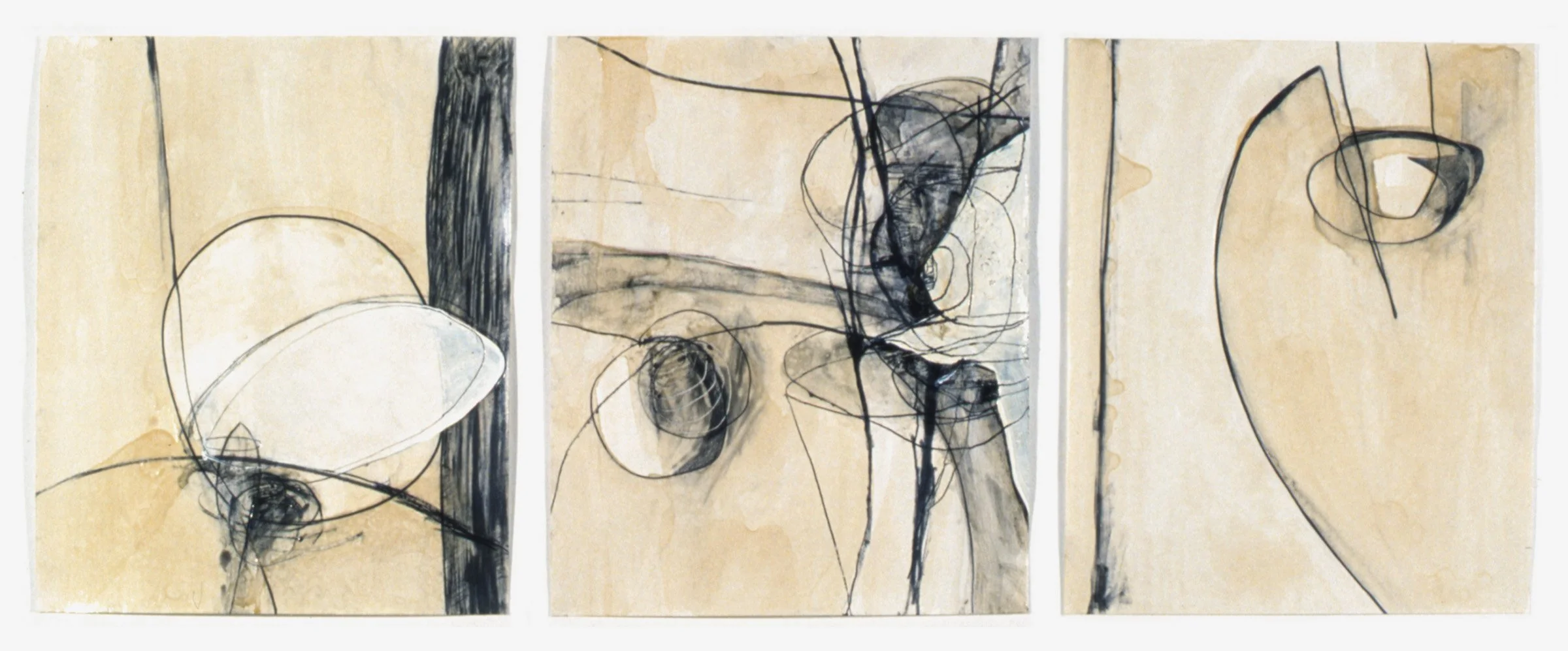
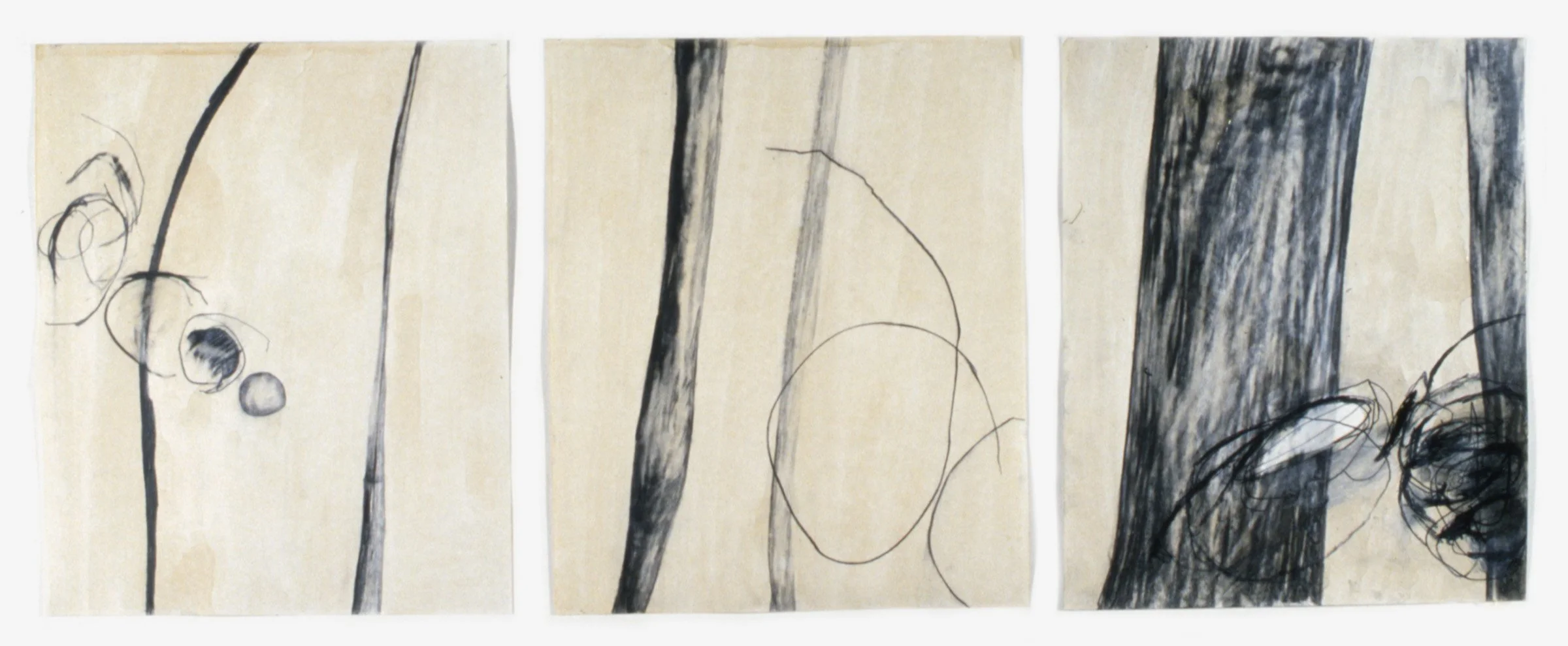
This limited group of pedestal sculptures, titled Narrative, incorporates as well as references the materials, processes and influences from my last twenty years of making sculpture. Five fifteen-panel concept drawings with the same title complement this chronicle of my sculpture practice.
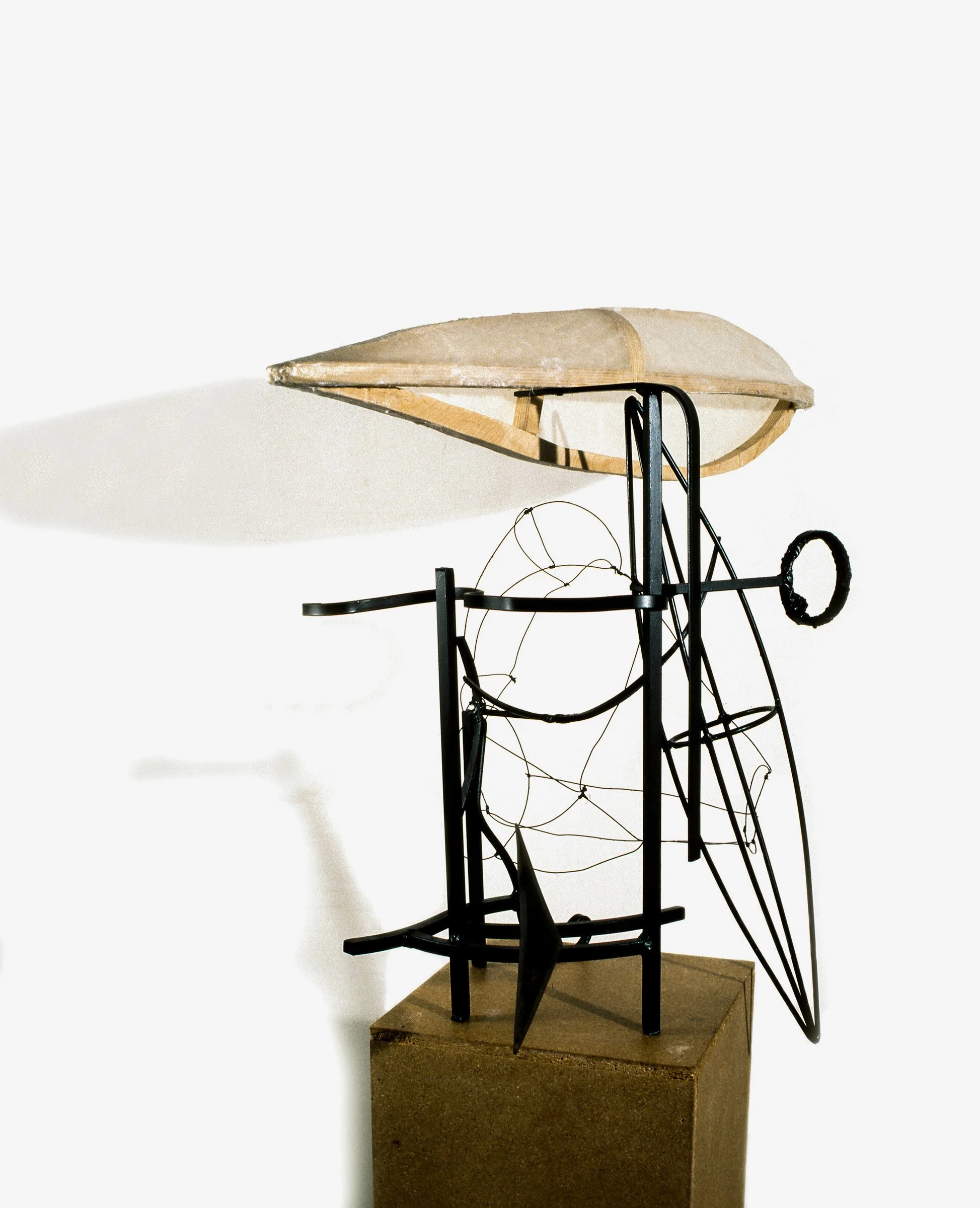
Narrative 196, 1996. Welded steel, plywood, paper, and fiberglass, 27 x 35 x 21”.
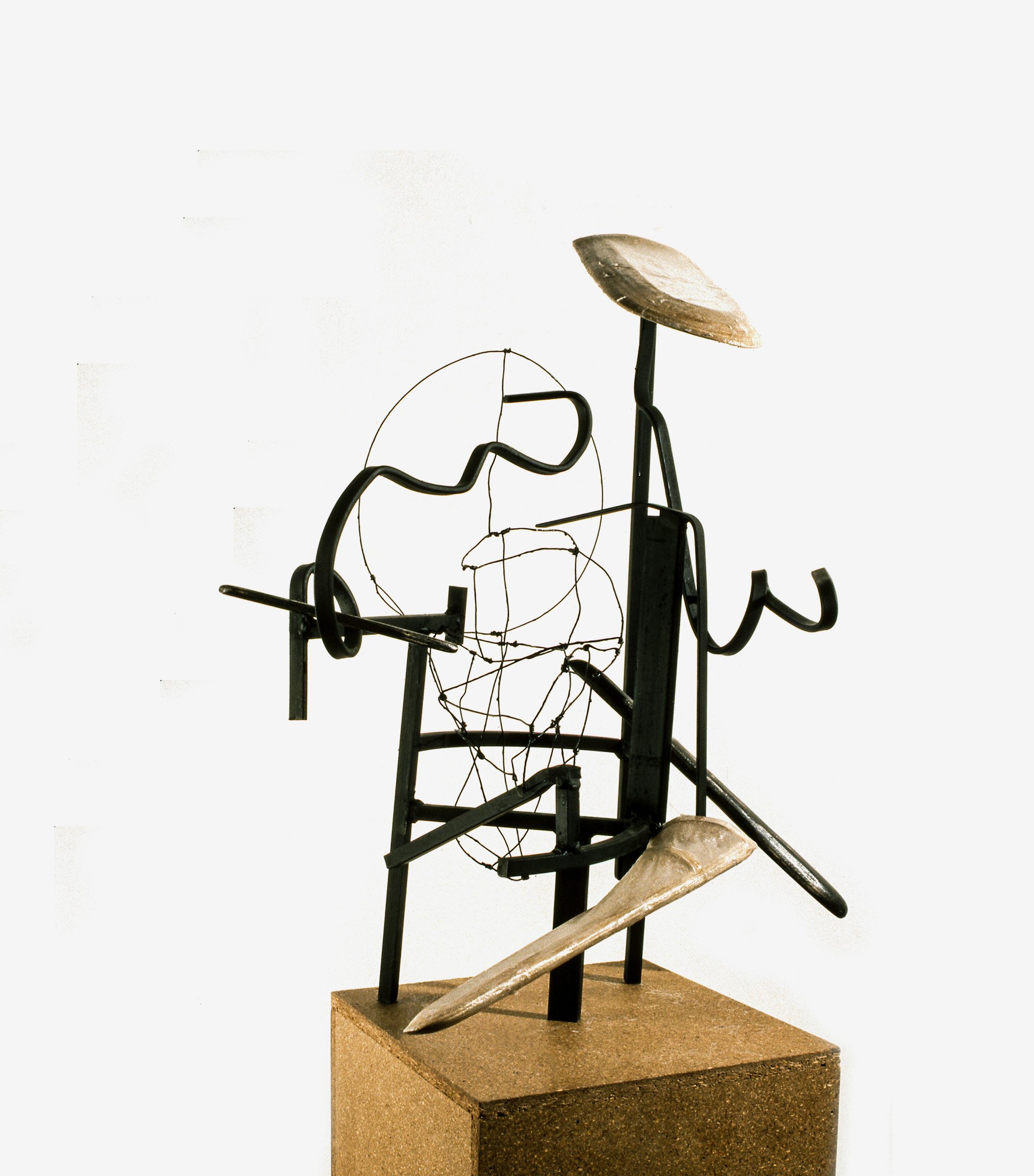
Narrative 296 alt., 1996. Welded steel, plywood, paper, and fiberglass, 26 x 35 x 16”.
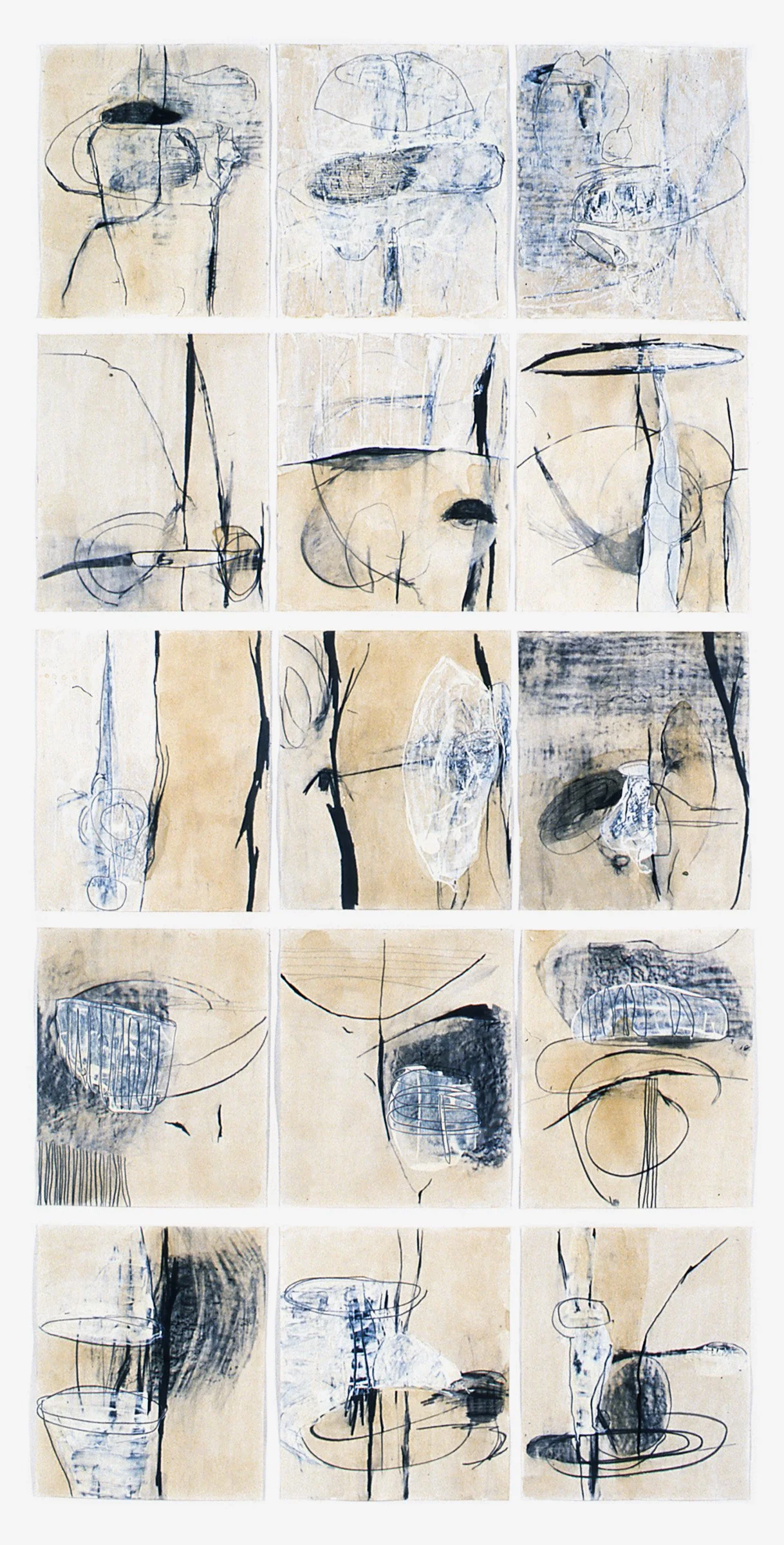
Narrative 195, 1995. Graphite, shellac, and gesso on Bristol, 89 x 43”. Private collection: New York City.
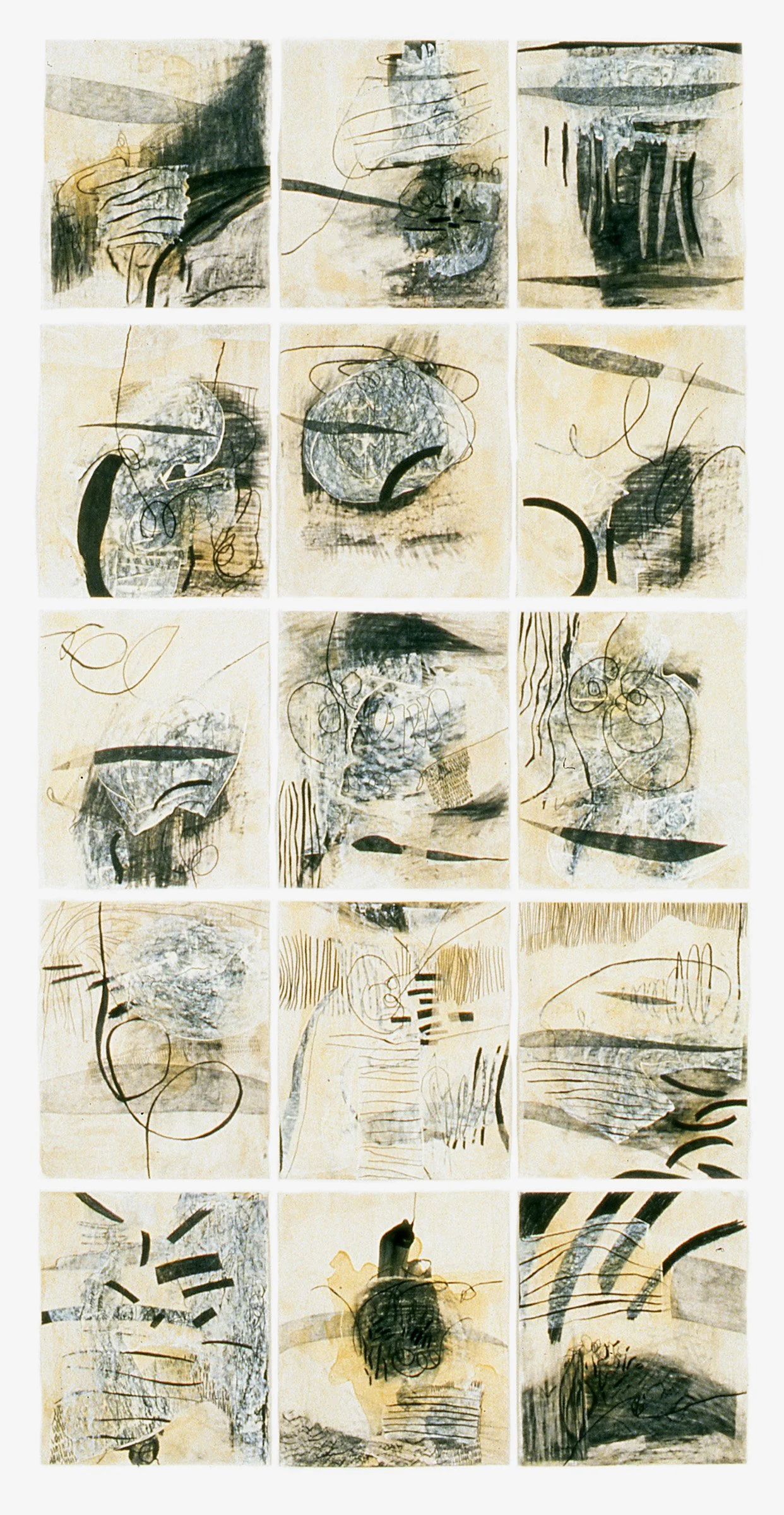
Narrative 395, 1995. Graphite, shellac, and gesso on Bristol, 89 x 43”. Collection: AT&T, New Jersey.
From 1996-2002 I made no sculpture, focusing instead on developing my painting and works on paper.