Drawing Primarily: Creighton Michael
a brief and annotated history of my relationship with drawing
Part 4 B
exploring the digital landscape
My practice has a long history of ideas being shared between different disciplines. With the inclusion of digital techniques, I was able to greatly expand that process.
My process of layering various marking episodes from different disciplines and time frames continues with the addition of new materials and techniques.
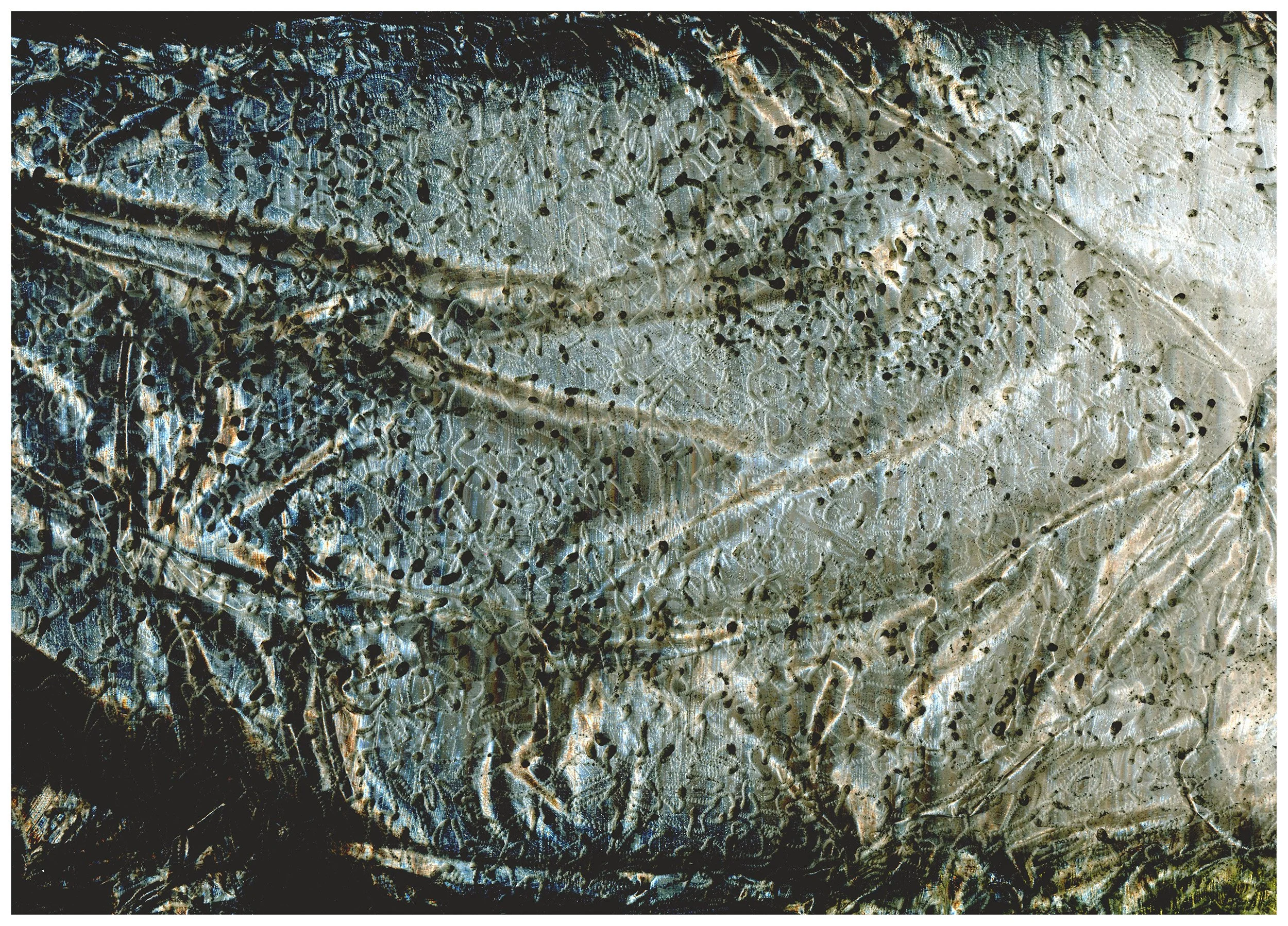
Medieval 418 A.P., 2018. Composite archival pigment print, 20 x 28”.
Lucent 711 A.P., 2011. Composite digital print, 18 x 12”.
Immerse 1111 A.P., 2011. Composite archival pigment print, 18 x 12”.
In an attempt at creating the spatial effect of a light box without having one, the same image is printed on two separate sheets of plexiglass using complementary color profiles, then framed and layered together, resulting in an image more anaglyphic than holographic.
Hive 421part1v1, 2022. Dual-image digital print on plexiglass, 18 x 14”. Photo credit: Margaret Fox.
Stir121v3, 2023. Dual-image digital print on plexiglass, 24 x 30”. Photo credit: Margaret Fox.
Drawings developed with my motion capture process continue to use a variety of nontraditional marking tools.
Looking 212, 2025. Motion-capture digital print, 14 x 18”.
Shade Trilogy, 2016. Motion-capture, unique archival pigment print, installation: 30 x 108”. Collection: Camden College Foundation, Blackwood, New Jersey.
The Blindsight Project, which began at the suggestion of Dr. Jeffrey G. Odel, explores some of my reactions to vision loss. Divided into five parts, The Blindsight Project, is an attempt at sharing my vision. Part 1 is Panorama, which tries to simulate my vision. Riffing on that simulation is Part 2, Metaphor.
Panorama 0118 A.P., 2018. Archival pigment print, 40 x 20”.
Metaphor 1418 A.P., 2018. Archival pigment print, 40 x 20”.
Parts 3 & 4, Lens and Filter focus on optical experiences like peripheral glimmer and floaters either monochromatically or with muted color. Viewed together, The Blindsight Project hopefully conveys some of the emotions and mystery associated with my vision loss.
Lens 0718 A.P., 2018. Manipulated archival pigment print on acetate, 20 x 40”.
Filter1718, 2018. Manipulated archival pigment print, 20 x 40”. Edition of 2.
Earlier series are revisited and updated as I learned more about digital technology and its possibilities.
Lace 2011v2, 2024. Motion-capture digital print on plexiglass, 18 x 14”.
Lace 3611v2, 2024. Motion-capture digital print on plexiglass, 18 x 14”.
Orchid 10211v3, 2022. Motion-capture digital print on plexiglass, 18 x 14”.
Three variations from the initial content created using a motion capture process of drawing with sculpture debris. To enhance the sense of space, twin images in complementary colors are printed on separate plexiglass sheets and layered together as seen in Mangrove 423v3.
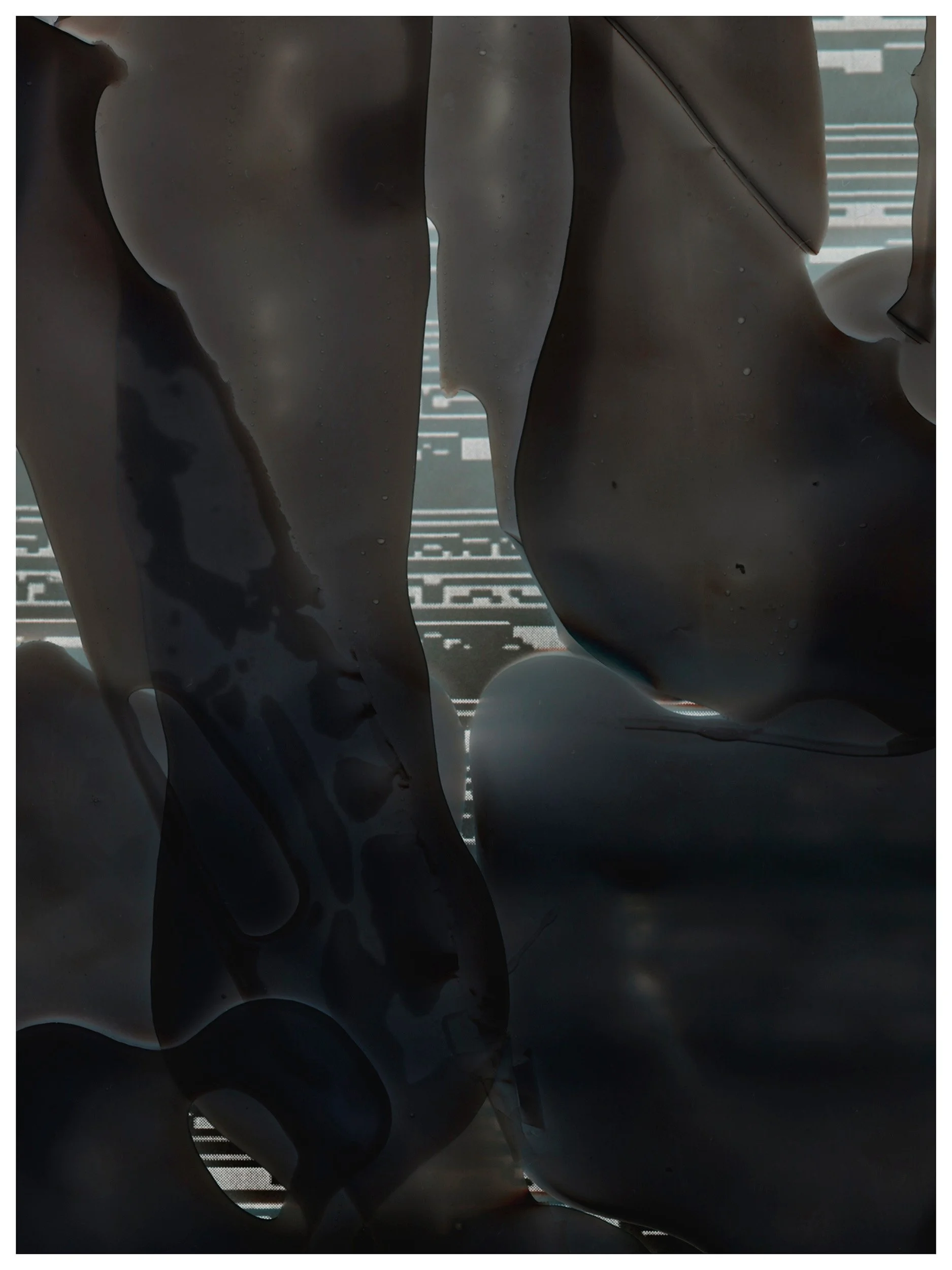
Mangrove 419, 2019. Motion-capture archival digital print, 20 x 15”.
Mangrove 423v2, 2023. Motion-capture archival digital print, 36 x 14”.
Mangrove 423v3, 2023. Motion-capture dual-image archival digital print on two sheets of plexiglass, 36 x 14”. Photo credit: Margaret Fox.
Another example of dual-image layering, which in this case gives Phantasm111v2 the illusion of greater dimensionality and texture.
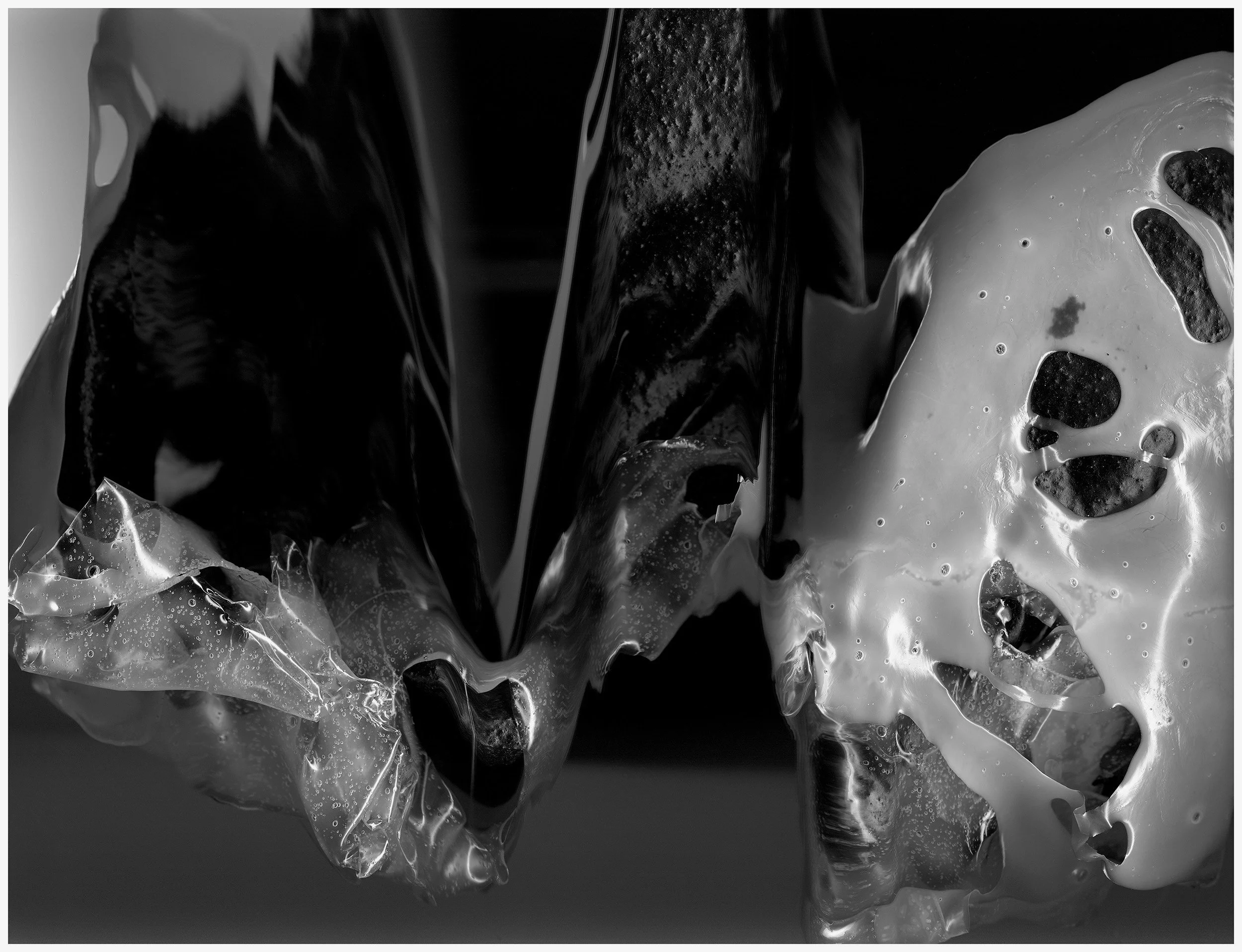
Phantasm111 A.P., 2011. Motion-capture archival pigment print, 29 x 38”.

Phantasm111v2, 2023. Motion-capture dual-image digital print on two sheets of plexiglass, 20 x 30”. Photo credit: Margaret Fox.
Expanding on the visual possibilities offered by digital technology, four related series of intaglio monoprints were produced that paralleled similar developments in my painting and drawing. Over the next two years, Filigree, Plot, Shade and Nib experimented with varying color palettes and image sources, ranging from my video stills to details from my paintings.
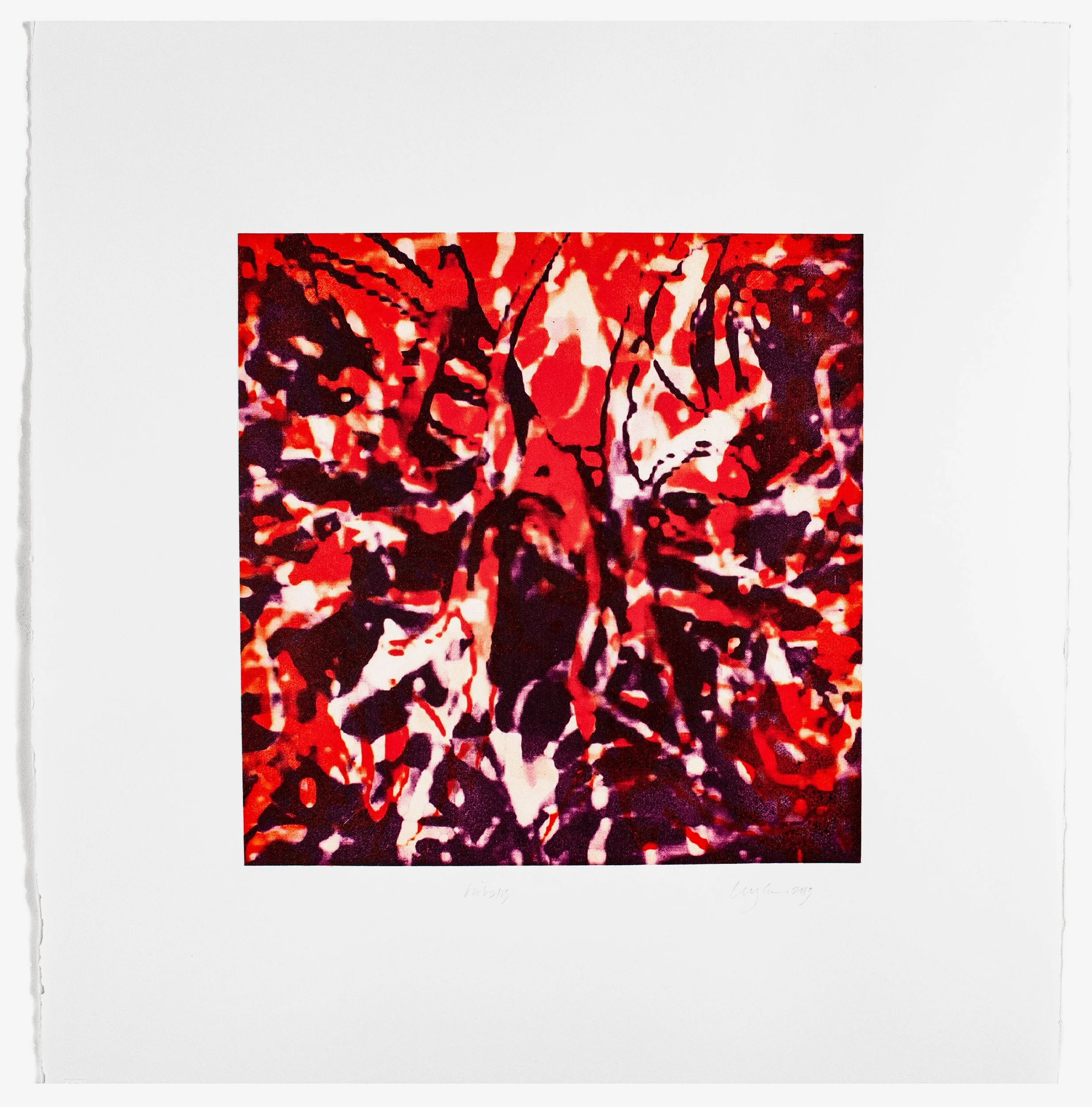
Nib 2113, 2013. Unique solar plate intaglio, 23.5 x 22”. Private collection: New York City.
Filigree 312, 2012. Unique solar plate intaglio, 23.5 x 22”.
Plot 812, 2012. Unique solar plate intaglio, 23.5 x 22”.
Shade 112, 2012. Unique solar plate intaglio, 23.5 x 22”.
With Punctuation, a series of multi drop, solar plate intaglios, I would attempt to replicate Moholy-Nagy’s process of disengagement used in his1922 Telephone Paintings, by e-mailing nine digital files containing previous drawing activity and color samples to Christopher Shore at the Center for Contemporary Printmaking. His instructions were to exhaust pattern and color possibilities. No further communication or instructions would occur until the prints were finished and ready to be signed.
Punctuation 214, 2014. Image size: 16 x 16”; paper size: 23 x 22”. Printed by Christopher Shore at the Center for Contemporary Printmaking, Norwalk, Connecticut.
Punctuation 914, 2014. Image size: 16 x 16”; paper size: 23 x 22”. Printed by Christopher Shore at the Center for Contemporary Printmaking, Norwalk, Connecticut.
Punctuation 1014, 2014. Image size: 16 x 16”; paper size: 23 x 22”. Printed by Christopher Shore at the Center for Contemporary Printmaking, Norwalk, Connecticut.
Cicada began with an idea of replicating as well as mapping the process of drawing. In Cicada 3420v2 using a dual image process, I was able to continue my decades long exploration of the relationship between drawing and sculpture.
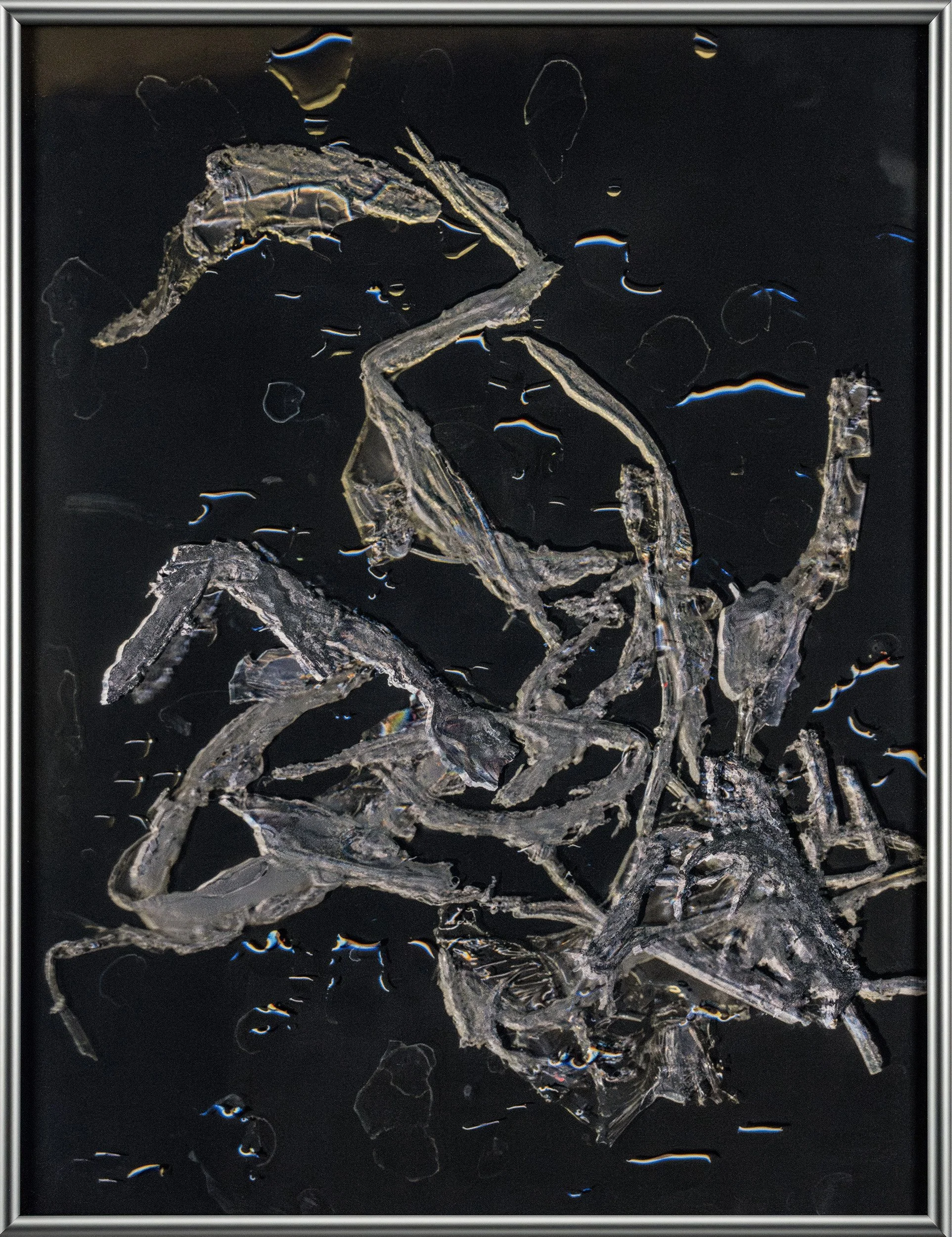
Cicada 3420v2, 2023. Dual-image composite digital print on two sheets of plexiglass, 18 x 14”. Photo credit: Margaret Fox.
Cicada Study 2121v2, 2025. Composite digital print, 22 x 26”.
Cicada Study 2121v3, 2025. Composite digital print, 24 x 26”.
rgbDrawing was a collaboration with Ben Diep that resulted in two exhibitions. The eight related series of digital prints were created using a motion capture process that compressed the extended activity of a drawing episode into a single image. The unusual drawing tools used were patterns produced from former dimensional drawing installations through a computer anomaly that occurred while opening a raw image file. These works complete a cycle of image to pattern, pattern to image.
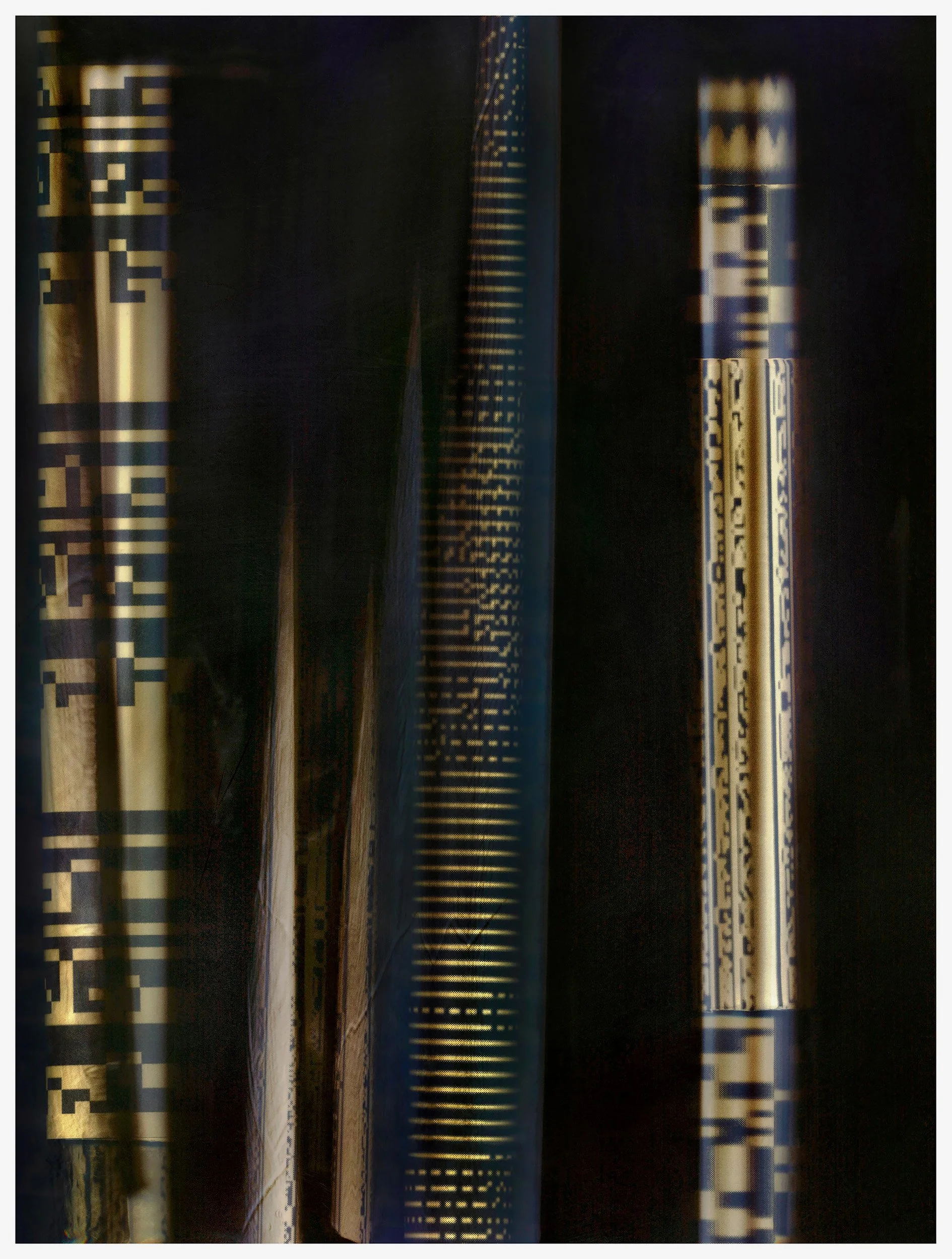
Sacred 1516, 2016. Motion-capture archival pigment print, 30 x 40”.
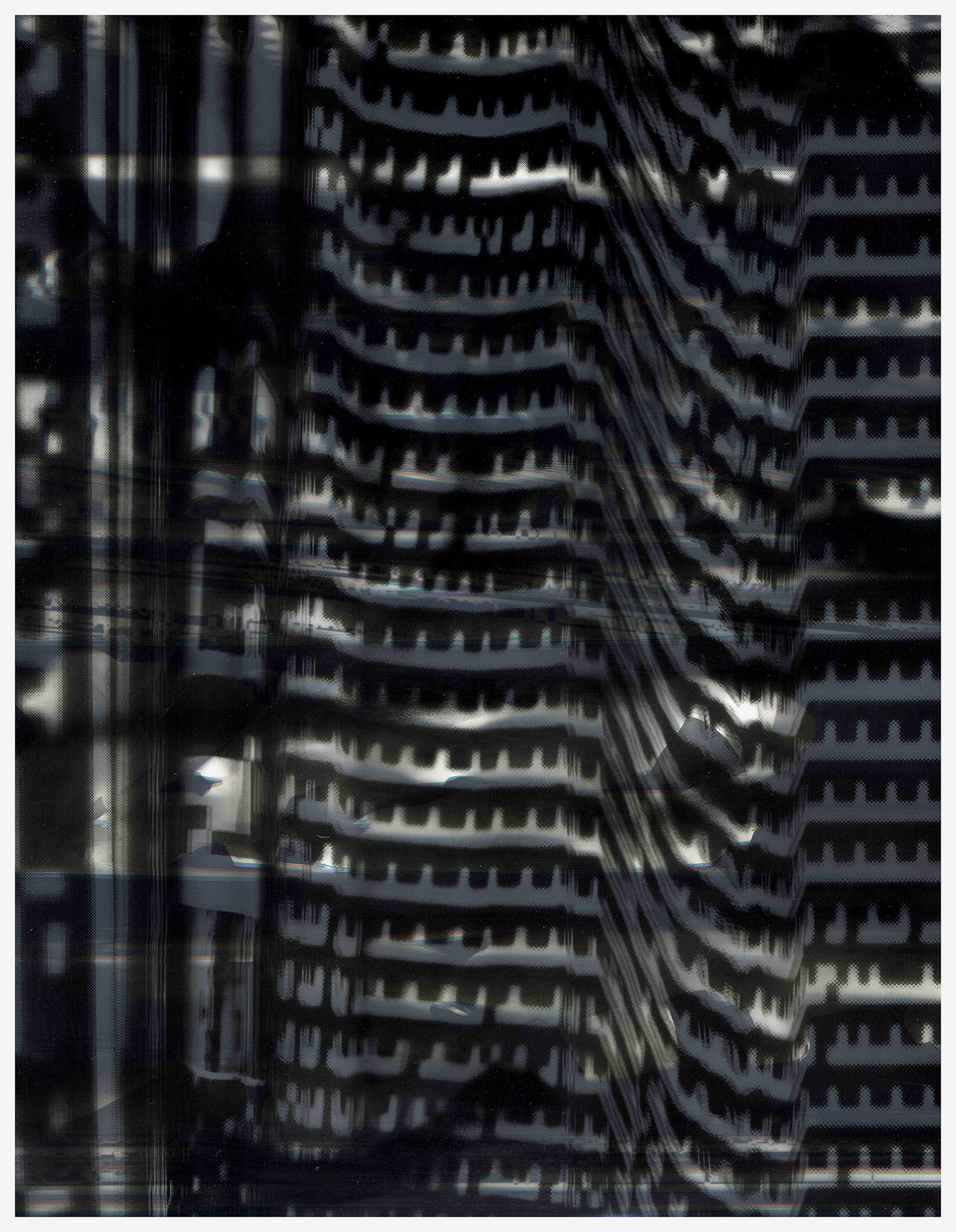
Metropolis 316, 2016. Motion-capture archival pigment print, 30 x 40”.
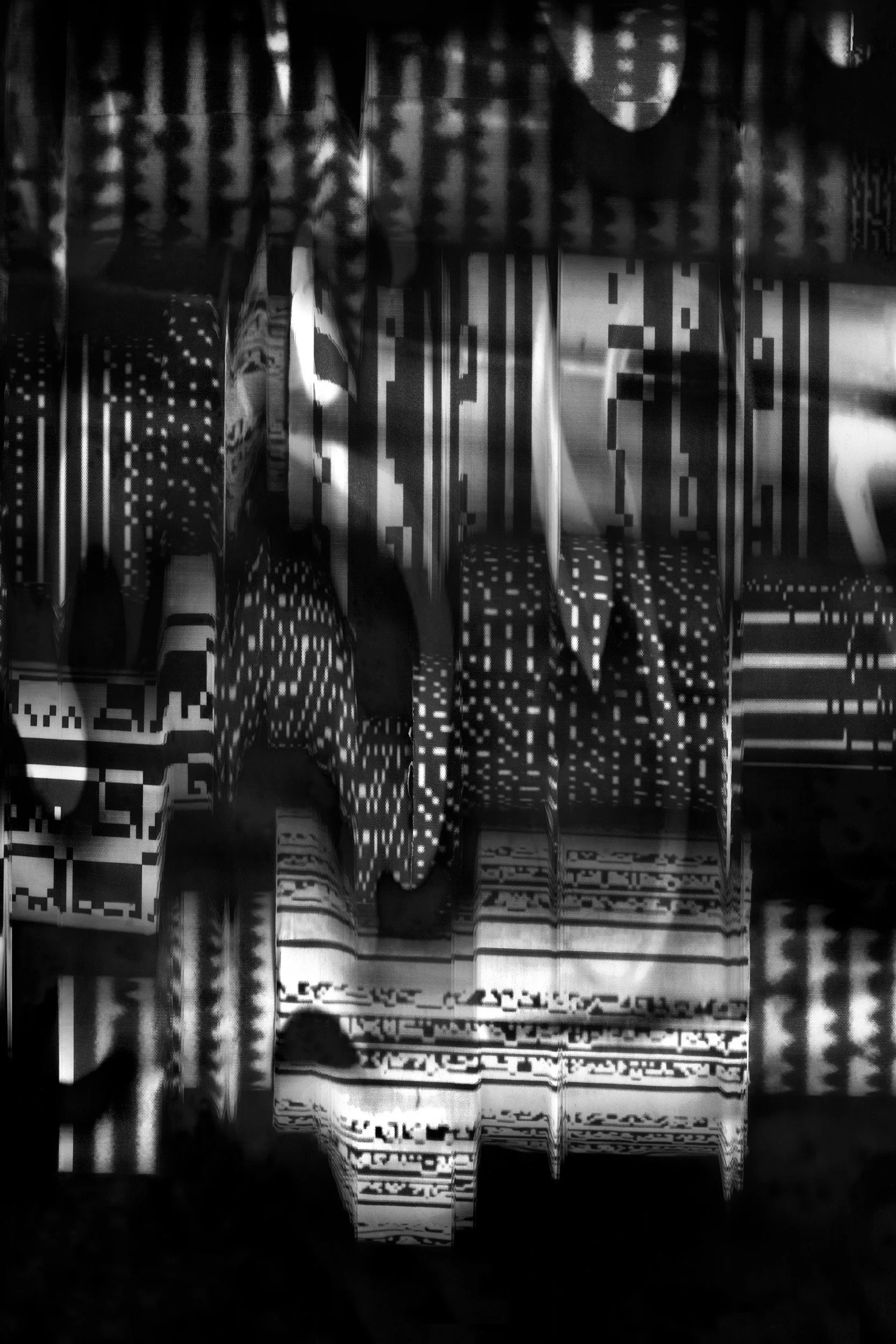
Squeeze 116, 2025. Motion-capture digital print on plexiglass, 18 x 12”.
In 2019, I began playing with cut shapes of paper and various lighting techniques attempting to simulate the wonderful experiences of looking into an aquarium, something I have enjoyed since my childhood.
Tank 5420v2 A.P., 2023. Constructed archival pigment print, 12 x 18”.
Tank 2019v3 A.P., 2025. Constructed archival pigment print, 28 x 18”.
Tank1219v2 A.P., 2020. Constructed archival pigment print, 28 x 18”.
My underwater fascination that began with the Tank series continues in such series as Stir, Shallows, Drift, Reef, and Swoosh.
Shallows122v2, 2025. Dimensions: 12 x 24”.
Swoosh 122v2, 2024. Unique constructed digital image on plexiglass, 18 x 14”.
Reef 323v2, 2023. Unique constructed digital image on plexiglass, 18 x 14”.
Drift 122v2, 2024. Unique constructed digital image on plexiglass with layered acrylic lattice, 16 x 20”.
In 2022 I began having digital images printed on thin plexiglass sheets, first with a sealed backing not requiring a frame, then clear coating that was framed to allow light to bounce off the backing board creating more dimensionality in the image. One of the first series to be printed on plexiglass was Persistent Memory, an homage to Salvador Dali’s 1931, The Persistence of Memory.
Persistent Memory 4, 2022. Constructed digital print on plexiglass, 12 x 36”. Private collection: Philadelphia, Pennsylvania.
The Squid series evolves from ideas and experiments that began while developing Persistent Memory.
Squid122v1, 2022–24. Constructed digital print, 12 x 30”.
My first attempt at converting a digital print to sculptural relief through 3D printing.
Hive 524v1, 2024. Constructed digital print on plexiglass, 14 x 18”.
Hive 524v1, 2024. Cast resin, 13.75 x 17.75 x 2”. Produced by Carolina Muñoz Awad.
These three series were created from a common source of digital static and developed using electronic erasure as a drawing tool.
Reflection 125v2, 2025. Unique digital print, 26 x 16”.
Parting 124v2, 2024. Unique digital print, 26 x 14”.
Arras725, 2025. Unique digital print, 36 x 18”.
In late 2025, I developed a method for adding color to the “digital noise” I had been using as drawing material.
Brocade 225 v2, 2025. Constructed digital print, 26 x 24”.
Myth 125 Study, 2025. Constructed digital print, 28 x 30”.
With the addition of color, I began a renewed interest in exploring relationships between deferred marking and resulting patterns.
Nineveh125v3, 2025. Constructed digital print, 12 x 16”.
Arles 126, 2026. Constructed digital print,
17.5 x 18”.